Pesah : “An Only Kid,’ and ‘Who Knows One’

Pesah Lyrics….Un Kavritiko and Kien Su Piense

Every year, I like to post the lyrics to two Pesah songs from the Parade of Hits we enjoy at our Seder – the Ladino versions of ‘An Only Kid’…’Un Kavretiko’ and ‘Who Knows One’…..’Kien Su Pience.’   (click on the links next to the songs to hear Yehoram Gaon sing them).

Everyone looks forward to these songs.  They help define ‘our’ Seder.  Our folks sang these songs when they were growing up, be it here in L.A., in Seattle or Montgomery, Alabama.   And their parents before them in our beloved Rhodes. (There was always a part when my Dad, of Blessed Memory, who grew up in Seattle and my Aunt Belina, of Blessed Memory, who grew up in Montgomery, would add a line to ‘Kien Su Piense’ that both their parents’ had used…. “Eloenu shebashamayim, nos iremos a Yerushalayim, con la caravana grande.’”…..we always waited for them to chime in with that!!!).  Our kids and grandchildren have learned them, their spouses and friends as well.  L’dor v’dor.  May we keep singing them for generations to come!

I find myself playing this music, along with my other favorite Ladino albums and Middle Eastern tunes when I’m in the midst of holiday cooking.  It conjures up memories of days gone by, generations past.  That invisible chain that connects us….how I love that feeling and that bond.

Have a good week as you prepare to greet your family for a Pesah Alegre…..a good, meaningful, joyful celebration together. Moadim LeSimha!

~Bendichas Manos

AN ONLY KID – LADINO VERSION: UN KAVRETIKO

Un kavretiko ke lo merko mi padre por dos levanim, por dos levanim.
HAD GADYA, HAD GADYA!

Y vino el gato, y komio al kavretiko ke lo merko mi padre, por dos levanim, por dos levanim.
HAD GADYA, HAD GADYA!

Y vino el perro, y modrio al gato, ke komio el kavretiko ke lo merko mi padre por dos levanim, por dos levanim.
HAD GADYA, HAD GADYA!

Y vino el palo, y aharvo el perro, ke modrio al gato, ke komio al kavretiko ke lo merko mi padre por dos levanim, por dos levanim.
HAD GADYA, HAD GADYA!

Y vino el fuego, y kemo al palo, ke aharvo al perro, ke modrio al gato, ke komio al kavretiko ke lo merko mi padre por dos levanim, por dos levanim.
HAD GADYA, HAD GADYA!

Y vino la agua, y amato al fuego, ke kemo al palo, ke aharvo al perro, ke modrio al gato, ke komio al kavretiko ke lo merko mi padre por dos levanim. por dos levanim.
HAD GADYA, HAD GADYA!

Y vino el buey, y bebio a la agua, ke amato al fuego, ke kemo al palo, ke aharvo al perro, ke modrio al gato, ke komio al kavretiko ke lo merko mi padre por dos levanim, por dos levanim.
HAD GADYA, HAD GADYA!

Y vino el shochet, y degoyo al buey, ke bebio a la agua, ke amato al fuego, ke kemo al palo, ke aharvo al perro, ke modrio al gato, ke komio al kavretiko, ke lo merko mi padre por dos levanim, por dos levanim.
HAD GADYA, HAD GADYA!

Y vino el Malach Hamavet, y degoyo al shochet, ke degoyo al buey, ke bebio a la agua, ke amato al fuego, ke kemo al palo, ke aharvo al perro, ke modrio al gato, ke komio al kavretiko ke lo merko mi padre por dos levanim, por dos levanim.
HAD GADYA, HAD GADYA!

Y vino el Santo Bendicho, y degoyo al Malach Hamavet, ke degoyo al shochet, ke degoyo al buey, ke bebio a la agua, ke amato al fuego, ke kemo al palo, ke aharvo al perro, ke modrio al gato, ke komio al kavretiko ke lo merko mi padre por dos levanim, por dos levanim.
HAD GADYA, HAD GADYA!

WHO KNOWS ONE? LADINO VERSION: KIEN SU PIENSE LADINO VERSION: KIEN SU PIENSE

Kien su piense y entendiense alavar al Dio kriense, Kualo es el uno?
UNO es el Kriador, baruch Hu uvaruch shemo!

Kien su piense y entendiense alavar al Dio kriense, Kualo son los dos?
DOS Moshe y Aharon, uno es el Kriador, baruch Hu uvaruch shemo!

Kien su piense y entendiense alavar al Dio kriense, Kualo son los tres?
TRES muestros padres son, dos Moshe y Aharon, uno es el Kriador,
baruch Hu uvaruch shemo!

Kien su piense y entendiense alavar al Dio kriense, Kualo son los kuatro?
KUATRO madres de Yisrael, tres muestros padres son, dos Moshe y
Aharon, uno es el Kriador, baruch Hu uvaruch shemo!

Kien su piense y entendiense alavar al Dio kriense, Kualo son los cinko?
CINKO livros de la Ley, kuatro madres de Yisrael, tres muestros padres son, dos Moshe y Aharon, uno es el Kriador, baruch Hu uvaruch shemo!
Kien su piense y entendiense alavar al Dio kriense, Kualo son los sesh?
SESH dias de la semana, cinko livros de la Ley, kuatro madres de Yisrael, tres muestros padres son, dos Moshe y Aharon, uno es el Kriador, baruch Hu uvaruch shemo!
Kien su piense y entendiense alavar al Dio kriense, Kualo son los siete?
SIETE dias kon el Shabbat, sesh dias de la semana, cinko livros de la Ley, kuatro madres de Yisrael, tres muestros padres son, dos Moshe y Aharon, uno es el Kriador, baruch Hu uvaruch shemo!

Kien su piense y entendiense alavar al Dio kriense, Kualo son los ocho?
OCHO dias de la millah, siete dias kon el Shabbat, sesh dias de la semana, cinko livros de la Ley, kuatro madres de Yisrael, tres muestros padres son, dos Moshe y Aharon, uno es el Kriador, baruch Hu uvaruch shemo!
Kien su piense y entendiense alavar al Dio kriense, ” Kualo son los nueve?
NUEVE mezes de la prenyada, ocho dias de la millah, siete dias kon el Shabbat, sesh dias de la semana, cinko livros de la Ley, kuatro madres de Yisrael, tres muestros padres son, dos Moshe y Aharon, uno es el Kriador, baruch Hu uvaruch shemo!

Kien su piense y entendiense alavar al Dio kriense, Kualo son los diez?
DIEZ mandamientos de la Ley, nueve mezes de la prenyada, ocho dias de la millah, siete dias kon el Shabbat, sesh dias de la semana, cinko livros de la Ley, kuatro madres de Yisrael, tres muestros padres son, dos Moshe y Aharon, uno es el Kriador, baruch Hu uvaruch shemo!

Kien su piense y entendiense alavar al Dio kriense, Kualo son los onze?
ONZE ermanos sin Yosef, diez mandamientos de la Ley, nueve mezes de la prenyada, ocho dias de la millah, siete dias kon el Shabbat, sesh dias de la semana, cinko livros de la Ley, kuatro madres de Yisrael, tres muestros padres son, dos Moshe y Aharon, uno es el Kriador, baruch Hu uvaruch shemo!
Kien su piense y entendiense alavar al Dio kriense, Kualo son los doje?
DOJE hermanos kon Yosef, onze hermanos sin Yosef, diez mandamientos de la Ley, nueve mezes de la prenyada, ocho dias de la millah, siete dias kon el Shabbat, sesh dias de la semana, cinko livros de la Ley, kuatro madres de Yisrael, tres muestros padres son, dos Moshe y Aharon, uno es el Kriador, baruch Hu uvaruch shemo

Kien su piense y entendiense alavar al Dio kriense, Kualo son los treje?
TREJE son los Ikarim, doje hermanos kon Yosef, onze hermanos sin Yosef, diez mandamientos de la Ley, nueve mezes de la prenyada, ocho dias de la millah, siete dias kon el Shabbat, sesh dias de la semana, cinko livros de la Ley, kuatro madres de Yisrael, tres muestros padres son, dos Moshe y Aharon, uno es el Kriador, baruch Hu uvaruch shemo!

Getting into the Pesah Mood

Haggadah Highlights in the ‘Rhodesli Tradition’ from Neil Sheff

Thanks to Neil Sheff who has grown up in Los Angeles with the Rhodeslis and absorbed the soul of this community – we now can hear the words, melodies and tones of the Haggadah as it’s been chanted by our parents and grandparents in the Rhodesli tradition.  Neil, a leader of the Sephardic community throughout the world, is also the President of the Sephardic Educational Center as well as a practicing attorney in Beverly Hills, CA.  Click on the links below, close your eyes and let your heart smile (as mine has been doing all evening!).  You’ll love this!

Neil…..this is an unbelievably beautiful gift you have given us.  It’s like having long missed generations here with us again. Thank you, Pasha!

Neil Sheff – Pesah 1  

Neil Sheff – Pesah 2 

Neil Sheff – Pesah 3 

Neil Sheff – Pesah 4 

Neil Sheff – Pesah 5 

Neil Sheff – Pesah 6 

Neil Sheff – Pesah 7 

A SEPHARDIC ROSH HASHANAH CEREMONY COMBINES ELEMENTS OF TASHLICH AND A HEALING RITUAL.

From Marcia Weingarten

This Sunday our family will gather at Venice Beach for our yearly ‘Lavar La Cara,’ (literally ‘wash the face) at the ocean. Our tradition combines elements of ‘Tashlich’ from the Hebrew “to cast off,” referring to the custom of tossing bits of bread in the water to symbolize the casting off of our sins. The second element is a healing ritual of the Rhodeslis — those who trace roots to the island of Rhodes, tossing ailments, fears, concerns into the ocean and receiving renewed health and blessings from HaShem along with the blessings and love from our elders.

Over the generations, our family tradition had been to go to the beach on the first day of Rosh Hashanah. Now that we live in disparate parts of Los Angeles, have differing synagogue schedules and levels of observance, our extended families (about 40+ of us, spanning five generations – Mashala🧿) come from throughout the greater Los Angeles area and meet at Venice Beach on the Sunday morning between Rosh Hashanah and Yom Kippur, bringing our beach chairs and enjoying some time together after our ritual by the shore. It truly has become one of the most treasured traditions of all generations.

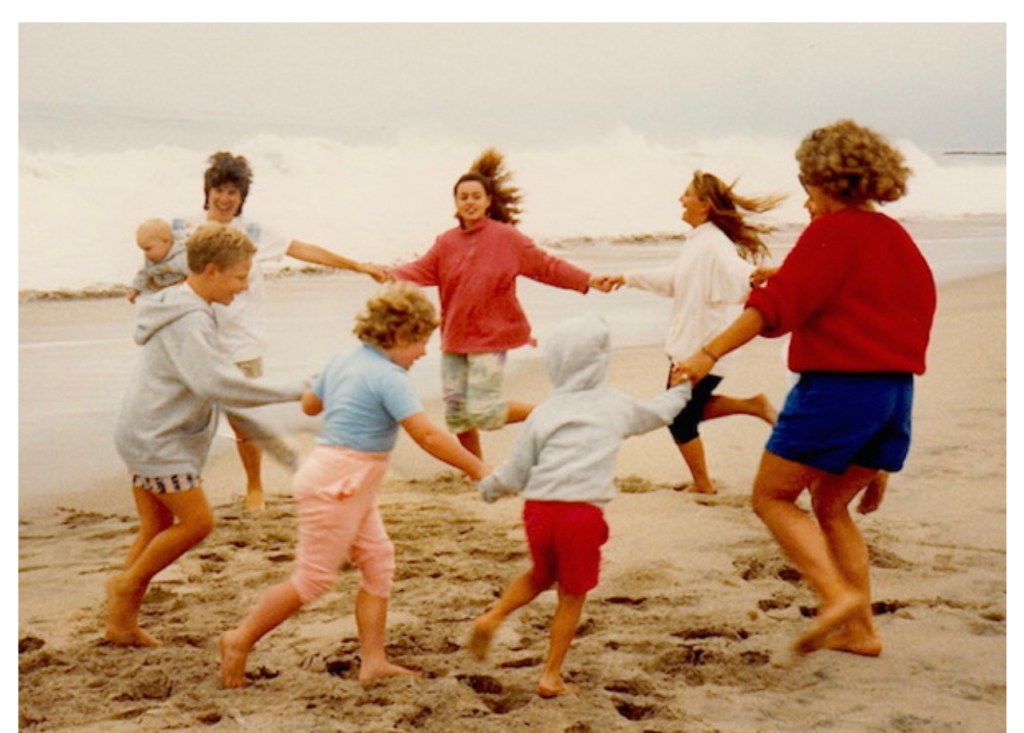
Once we set ourselves up, we go down to the water, usually in smaller family groups. A family matriarch, one by one, blesses us and washes our faces. Bending down to capture a handful of water from a new wave, she washes the face of each of us, saying in Ladino, “todo mal ki se vaiga” (“everything bad should go”). She elaborates: “Everything that is bothering you, worrying you, anything that is harming you, any sickness, illness, any fright or discomfort, all this, should be swept away to the very depths of the ocean.” She then bends down to scoop a fresh handful of water from a new wave. Washing our face and the back of our neck again, this time saying “todo bien ki se venga” (“everything good should come”). Again, she elaborates, “Everything now will be good, your pain will go away, any illness will leave your body, healing will come to you. Every worry is now gone. New ideas and good thoughts will fill your mind. Your heart will be content.”

To each, now, she gives a specialized blessings for the New Year. To children she might offer that they will do well in school, be happy, have good friends, make their parents proud or have a good year in sports, theater, Hebrew school; whatever is appropriate to that child. To the young adults, she might offer that they find a good jobs or career and that they find the right person to share their lives with. Newlyweds are blessed to be happy, build a Jewish home and life together, have children, build a life of meaning and keep our traditions. After the individual blessings, the matriarch gives each of us a finger full of sugar, which she puts in our mouths for a “sweet” year. (Traditionally the sugar is from the Rosh Hashanah table. After we use sugar for our Hamotzi prayer on this holiday, the remaining sugar goes into a baggie and comes with us to the beach.)

There are variations. Sometimes we invoke the names of the Patriarchs, “Con el hombre del Dio di Avram, Izhak, Yaacov, Rey David i Shelomo,” as well as the Matriarchs, “Rivka, Sarah, Rachel, i Leah.”

On occasion we add a new tradition, like dancing along the shore. New traditions are always welcome!

Blessings complete, we return to our beach chairs, sit for a nice ‘vijita’ (visit) and enjoy coffee, juice, bagels, borekas (Sephardic cheese and rice or potato pastries), biscochos (tea cookies), spinach quashado (soufflé), assorted cheeses with olive oil (usually feta and ricotta), homemade breads (rosca), fruits and dessert pastries. We stay and visit, feeling renewed, and certainly feeling a great deal of love from and for our family. It’s a New Year. The Day of Atonement is coming soon. We are ready to face it with a humble heart, renewed spirit and a refreshed outlook.

Revised and based on an article originally published here: https://www.myjewishlearning.com/jewish-and/a-family-ritual-for-blessing-the-new-year/

Burekas!

I posted about Burekas earlier……now let’s bake some!

An absolute favorite in any Sephardic household…and to any guest at a Sephardic table…is the bureka!

A flavorful, savory, tasty filled pastry that can simply melt in your mouth! Each community has their unique varieties; each family, their favorites! Our “Rhodesli” family, (from the Island of Rhodes, currently Greece, but in the times of our family, a Turkish or Ottoman possession) loves this moon shaped pastry, filled with a “conduchu” (filling) of rice and cheeses, as well as those filled with a mouth-watering mixture of sautéed eggplant, onions and tomatoes!

My grandmother was always baking burekas in the kitchen, along with lots of other homemade goodies! I remember my mom and her aunt spending hours preparing and baking these treats, and the amazing aroma that filled the house when I got home! As our sons have grown, Grandma’s burekas have been a favorite for snacks, special meals, breakfast….even in their lunch boxes! I think they are my husband’s favorite Sephardic treat.  They are flavorful, delicious and definitely filled with love!!!

Now that I am learning the art alongside my mom, I can absolutely appreciate the work, skill and patience that goes into making them.

My mom came to bake today and we made burekas of both kinds. The house smells heavenly! I am learning from her the joy of baking and of sharing these very special treats!!! Here we share her recipes and some of her tips on making them. Let us know what you think!

Begin by making the filling.

Kaye (Hasson) Israel’s recipe for Rice/Cheese Burekas

Ingredients:

5 C Water

1 tsp Salt

8 oz Cottage Cheese

2 C Rice

1 C Feta Cheese

1-1/2 C Romano Cheese

(Optional) Parmesan instead of Romano

½ to 1 C Shredded Mozzarella Cheese

3 Lge Eggs

Bring water and salt to boil. Add 2 Cups rice (rinsed and drained), cover, and keep on a simmer flame until all the water is absorbed. (Prox 30 minutes constantly watched.).

Remove from flame; allow to cool!

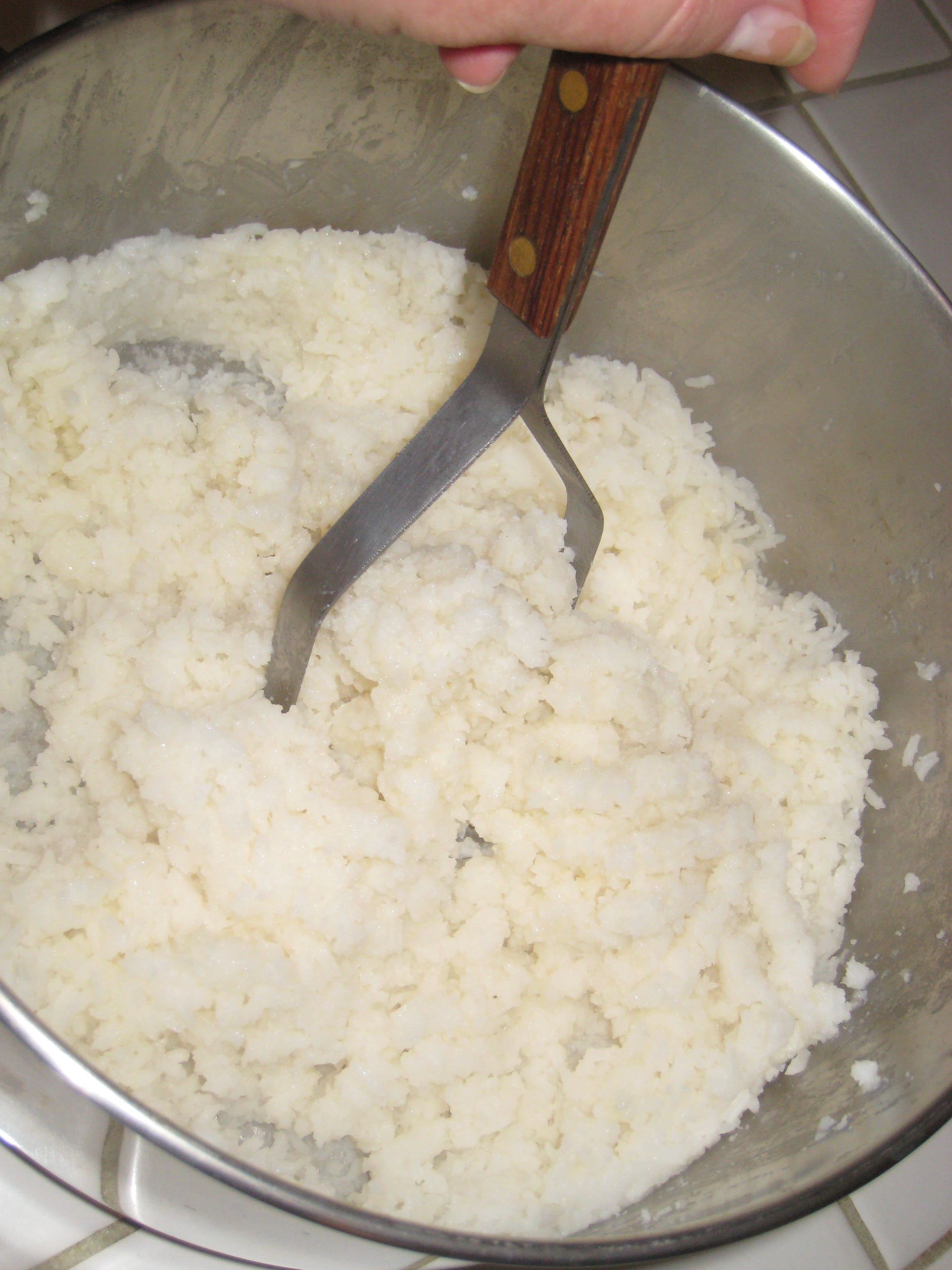
Mash rice w/potato masher; Add cheeses and eggs and continue to mash. Mixture should be damp, not dry.

Kaye (Hasson) Israel’s Recipe for Bureka Dough

Ingredients:

3 C Ice Water

2 1/2 C Oil

1 tsp salt

10 – 12 C Flour. (11 is about right)

1 egg to be used as an ‘egg wash’ before baking

Fill measuring cup with ice cubes, add water to 3 C mark on measuring cup. In large mixing bowl, add mix of water and ice, oil and salt. Let stand for as few minutes for water to get ice cold before beginning to add flour. Continue to mix. As flour begins to take on elastic consistency of dough, remove ice cubes. Knead until dough is not sticky and has the consistency of a pie dough.

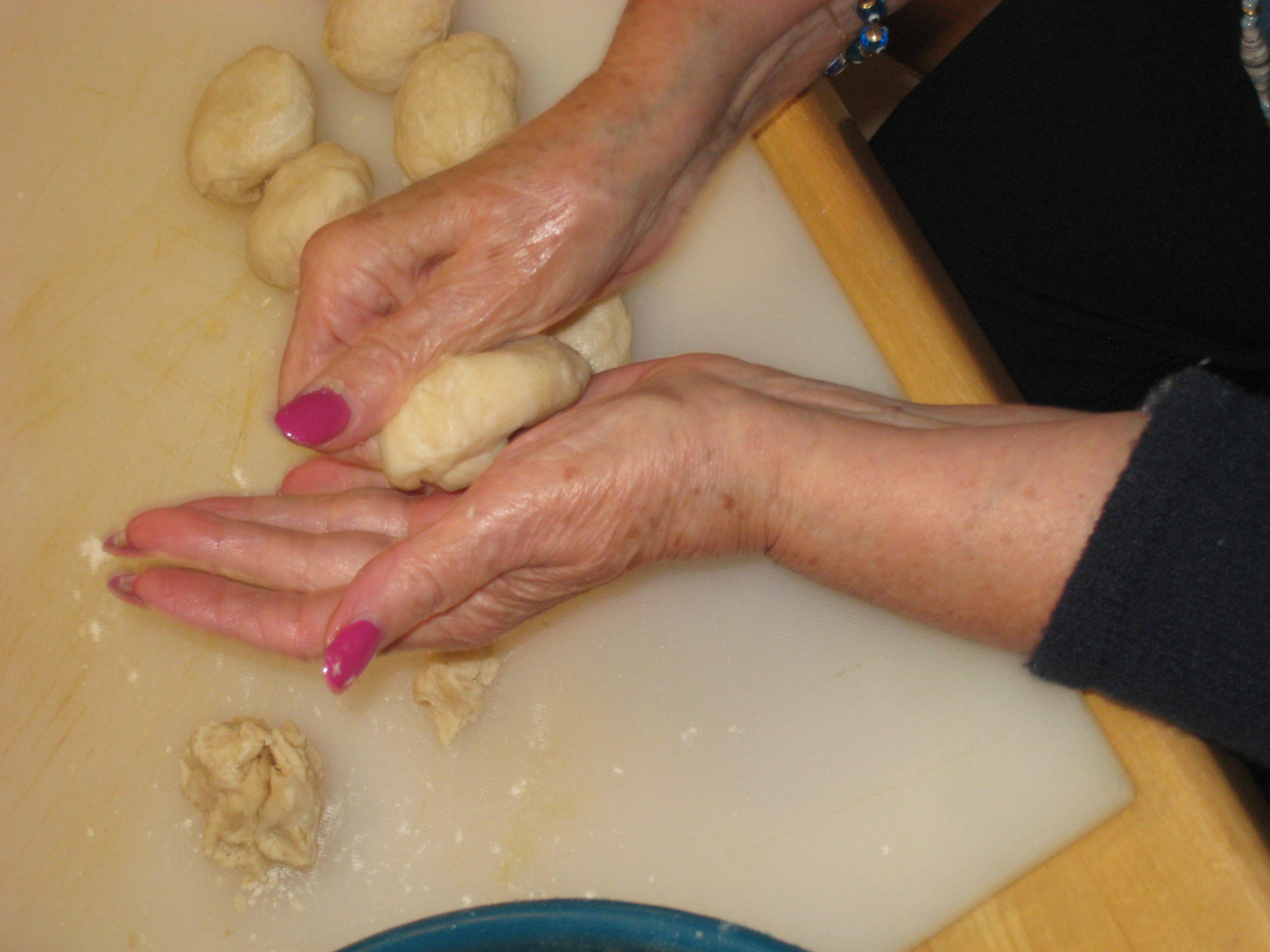
Separate dough into 4 portions. Pinch off “walnut” sized balls and place on a work surface. Work each ball in the palm of your left hand (if you are right handed). Use your right hand to tuck the dough under and into itself, working to make it a smooth ball. As balls are formed, place them on a parchment lined baking sheet.

Once all the balls are prepared and the dough has had a chance to “rest,” begin by placing 6 balls on work surface. Using your fingers, press out the dough; then, with a small rolling pin, make oval shaped, flat forms.


Using a tablespoon or small scoop, scoop filling into the middle of the flatten dough.
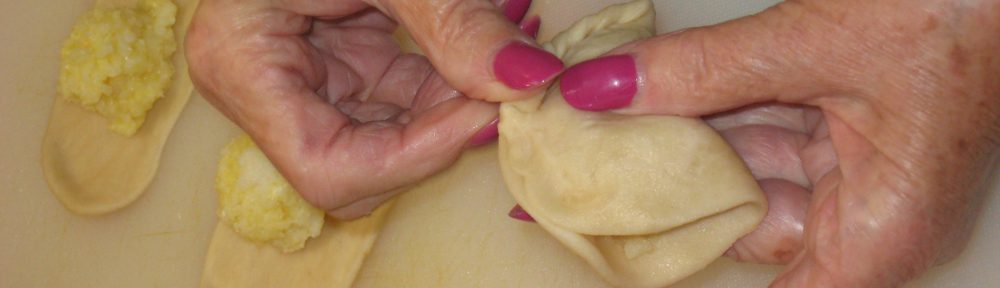
After all 6 have been filled, fold each on in the middle, pinching the edges shut and making a moon shaped, filled pastry.

You can make a beautiful edge by pinching and rolling under the edges (see video clip). Or you can use a fork to crimp the edges with a nice, clean pattern. (Remember, you “taste” first with your eyes.).

Continue with all the dough. This recipe SHOULD make approximately 84 burekas. Place on parchment lined baking sheets. Using a pastry brush, “paint” with a wash made by beating an egg and 2 drops of water. Finish with a sprinkle of grated cheese. Bake in a 400 degree oven for approximately 30 minutes…or until golden brown. They are divine right out of the oven! Can be frozen and easily be warmed again in oven or toaster oven. (Note: Microwave makes them soggy. You can zap for a few seconds, then put them in an oven or toaster oven to warm). Great for a brunch…for a snack. Anytime is the right time for a Bureka!!!

~Bendichas Manos
BendichasManos.com
on Facebook: Bendichas Manos!

Baking Burekas in Atlanta – The Ladies of Or Ve Shalom

Congregation Or Ve Shalom in Atlanta isn’t just the oldest Sephardic synagogue in the southeast; it’s currently home to over 400 families in the greater Atlanta area and home of one of the stellar Sephardic Sisterhoods in the country.

The Sisterhood is known for their baking of Burekas and other Sephardic delicacies and treats throughout the year, leading up to the synagogue’s Bazaar and other opportunities for the community to stock their freezers with these delicious and memory evoking treats! They are also known as the publishers of one of the best known and loved Sephardic Cookbooks, ‘The Sephardic Cooks – Comé Con Gana’, a compendium of dearly loved recipes in the Rhodesli Sephardic tradition. First published in 1971, the book has been re-printed many times and can still be purchased by contacting the synagogue office at 404.633.1737 (the book is $25/copy to addresses in the USA…..check office for details)
fullsizeoutput_52c5

Or Ve Shalom Sisterhood gathers each Tuesday to bake. Ladies who have come for years now bring their daughters and granddaughters to join in the tradition – a new generation learning the recipes and tips from ‘the pros.’ The great cookbook author and food critic Joan Nathan went to Atlanta to watch them and wrote about her experience in a wonderful piece for The New York Times (Read it here). The Atlanta Jewish Times (read it here) wrote about the community maintaining tradition through their baking, as well.

In February of this year at the Atlanta Jewish Film Festival, a short film was shown called ‘Tuesday’s are for Burekas,’ by Justin Newton. Take a look at it here.

Those of us who love them, always knew the Bureka was worthy of such fame. Thanks to the ladies of Or Ve Shalom for making sure the Bureka is getting its due!

~Bendichas Manos
BendichasManos.com
on Facebook: Bendichas Manos!

Baking Biscochos

IMG_0944

After Pesah….Time for baking! Here is my mom’s recipe for making Biscochos! (you asked ….here it is!) Biscochos are often called tea biscuits. We think of them as a “biscotti”, a crunchy treat! Biscochos are a bit sweet and are wonderful with your morning coffee (could be afternoon or evening coffee or tea or even milk, for that matter!!) If you’ve been to our home, my mom’s house, our synagogue, you’ve had my mom’s Biscochos. They are ‘twice baked,’ which gives them that extra crunch. A very special part of our cultural repertoire.

They’re made with love – that, you can definitely taste it!

Here’s the recipe. My mother takes great pleasure in sharing her recipes and techniques and having her ‘students’ excel on their baking journey. Give them a try! And let us know how you’re enjoying them!

Ingredients:

1 Cup eggs

1 C sugar

3/4 C oil

3 tsp baking powder

1 tsp vanilla flavoring

5 – 7 C flour

Topping:

1 egg + 1 drop of water, beaten well

sesame seeds

(alternative to sesame seeds: cinnamon and sugar or “sprinkles”)

These are my mom’s directions:

With electric mixer, beat eggs and oil in a mixing bowl. Add sugar and vanilla and continue to beat until well blended. Add flour and baking powder gradually, knead into a medium dough until no longer sticky.

*The ‘Cup’ method of method of measuring eggs is important. Eggs come in different sizes – Medium, Large, Jumbo. By measuring by the Cup, one is more likely to get a more uniform measure. It makes a significant enough difference. Get as close to 1 Cup as possible.

IMG_8037

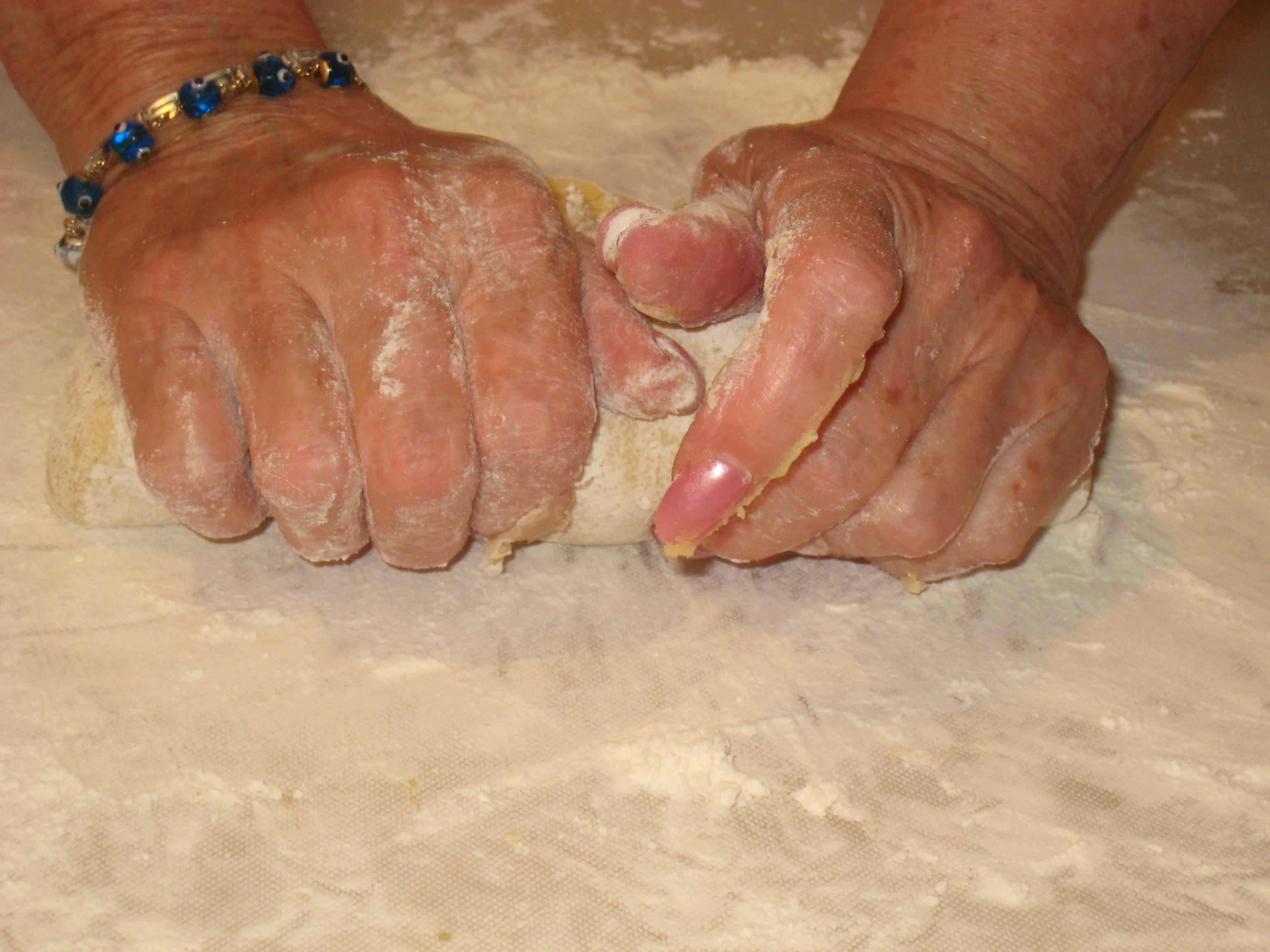
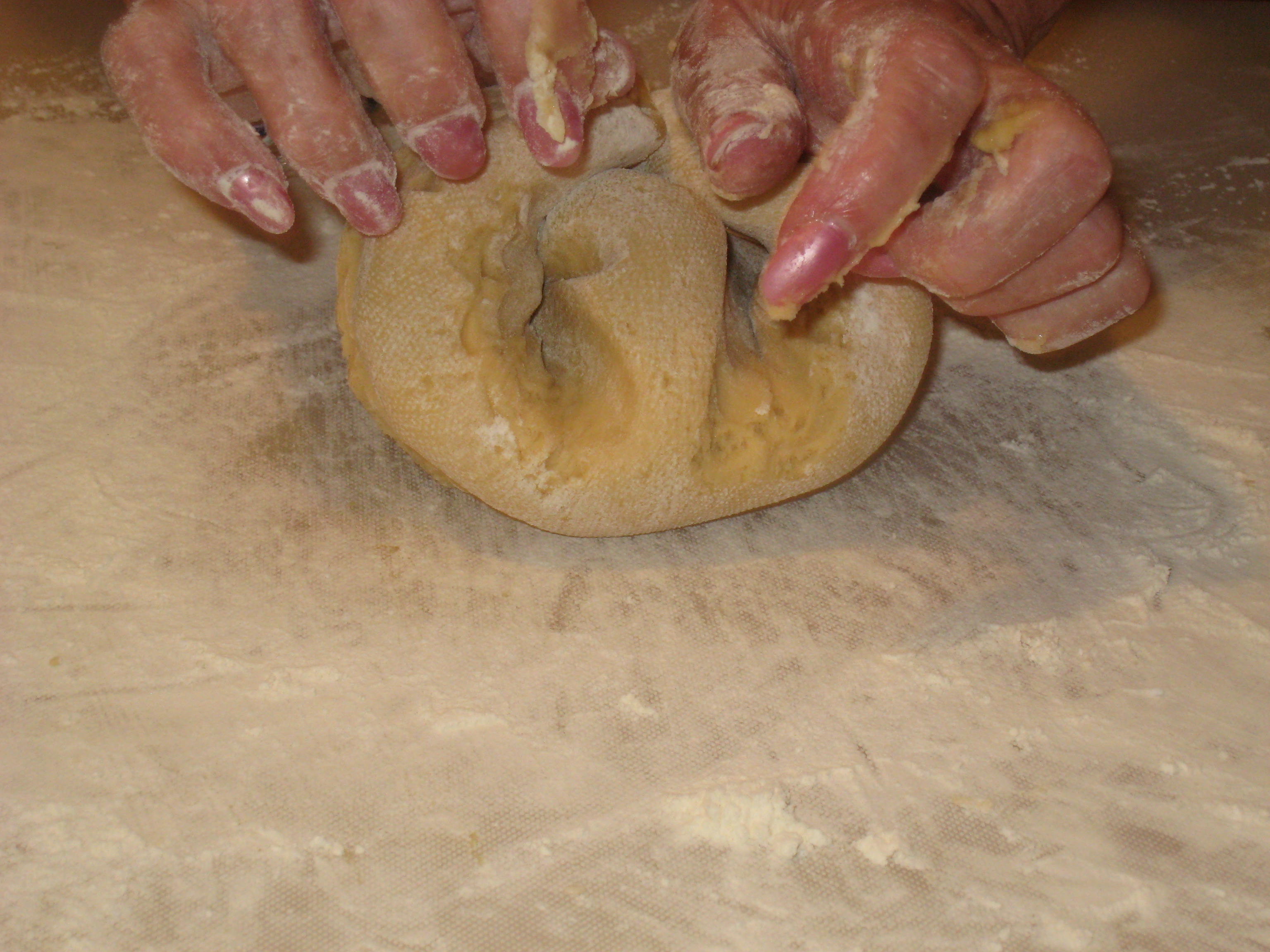
Place onto floured work area and finish kneading dough with additional flour as needed. Dough should not be sticky as long as you can handle it without it sticking to your hands.

IMG_8038

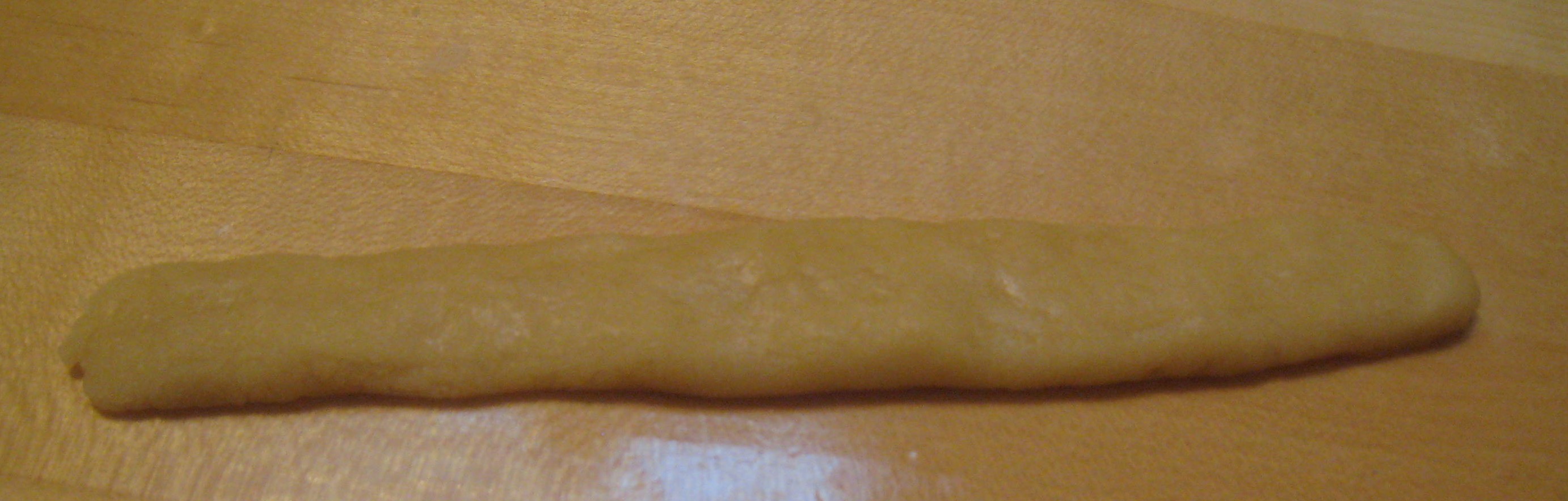
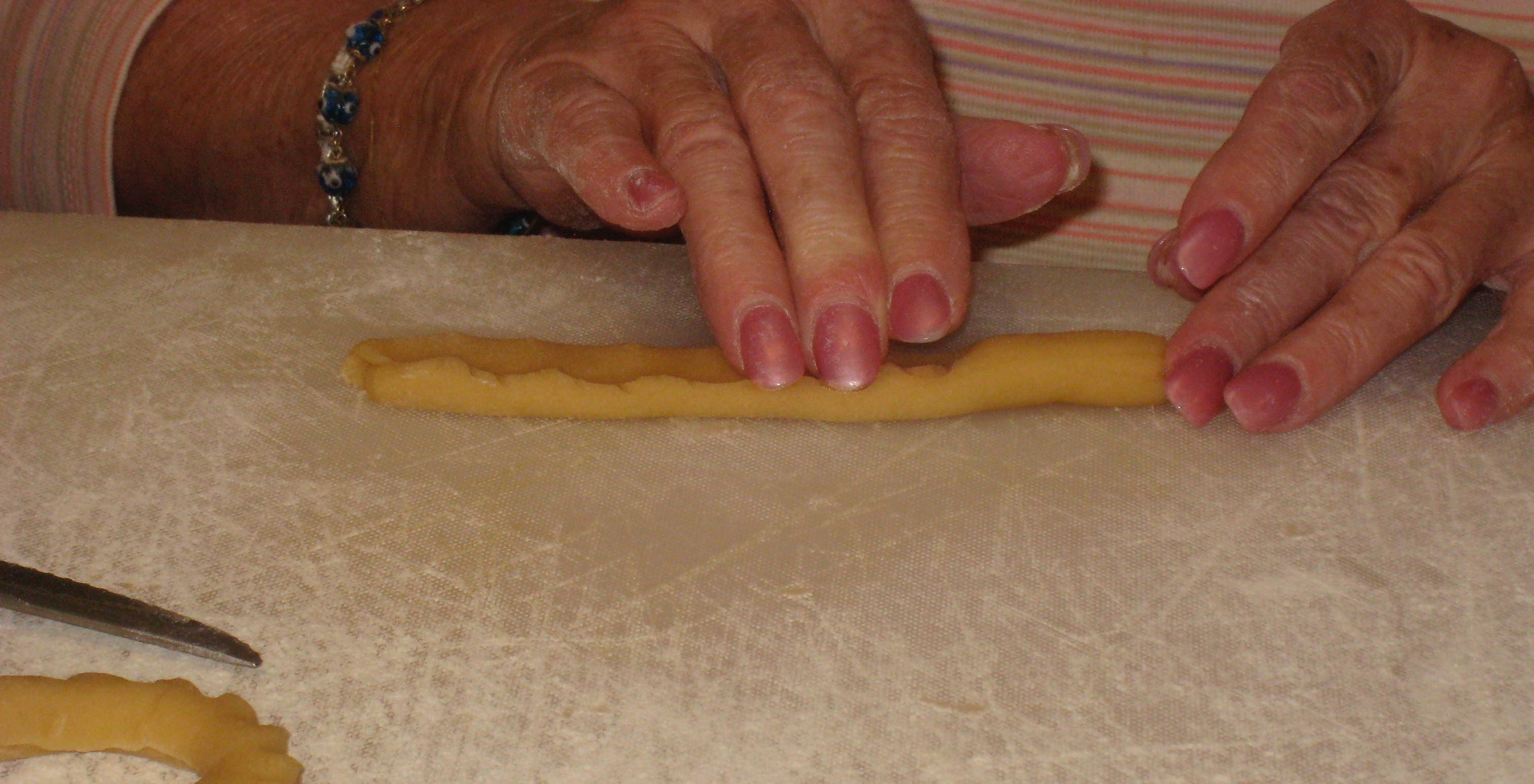
Take walnut-sized pieces and roll down on table with palms of hands into a rope about 5 inches long and only 1/2 inch thick.

IMG_8046

Press down with fingers to create channel;

IMG_8045

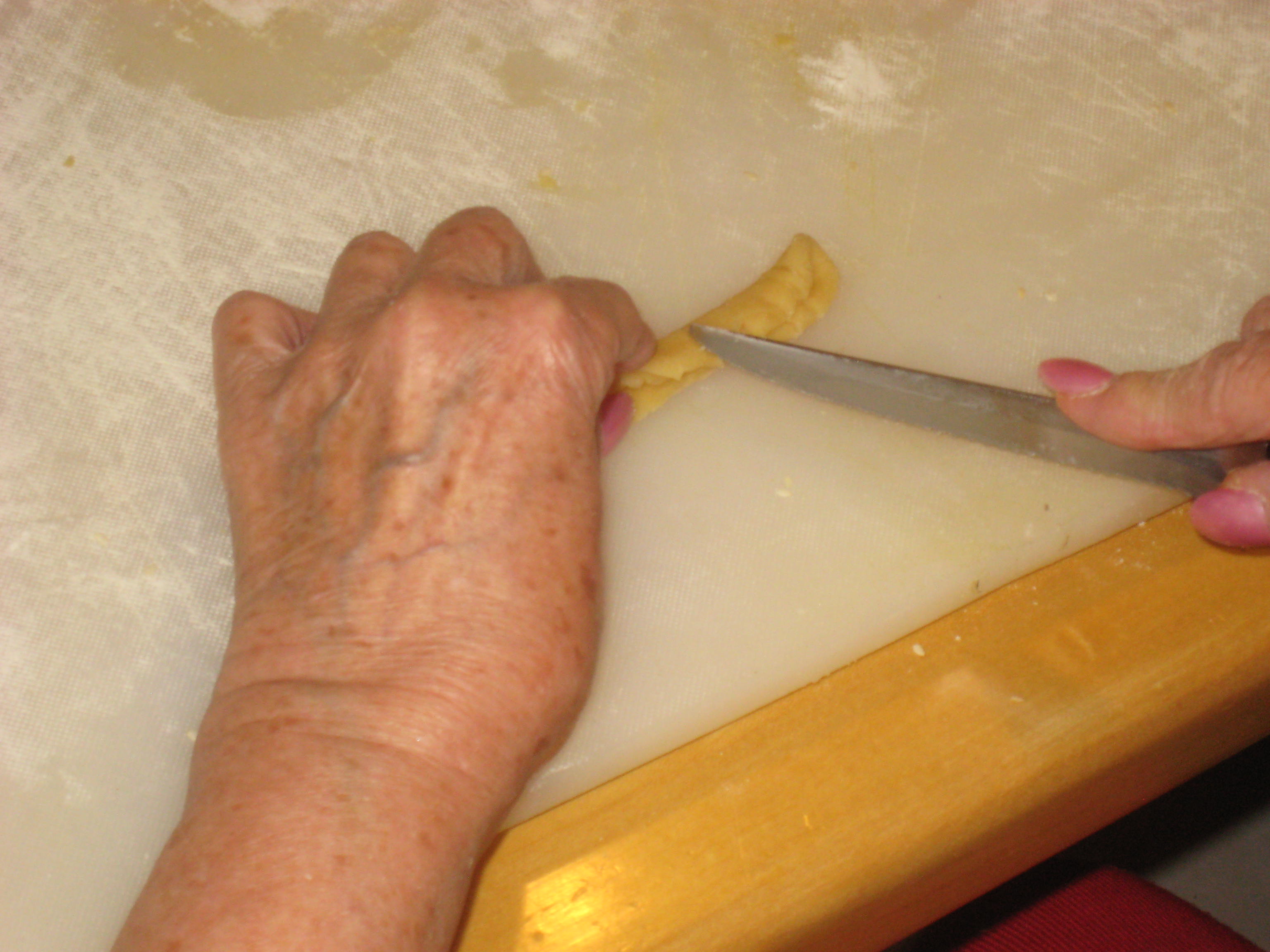
Fold rope over and cut slits into the edge.

IMG_8052

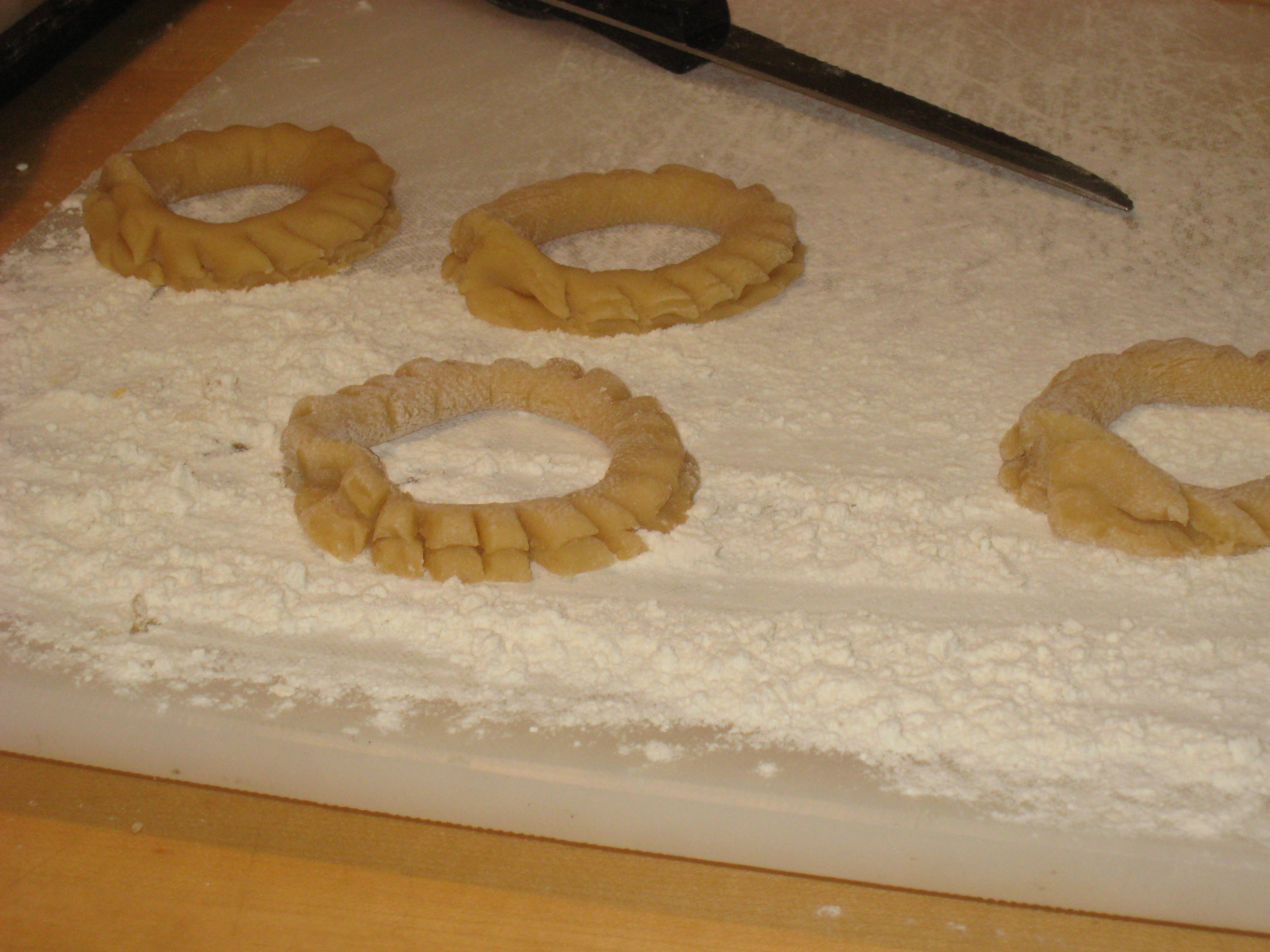
Join into a bracelet shape. Brush egg on top side.
Dip top side into sesame seeds. (or sprinkles)
If using cinnamon/sugar on top, no egg wash needed.

IMG_8042

Place on cookie sheet lined with parchment paper. Bake in preheated 350 degree oven for 12 minutes or until lightly brown. Remove from pan. Allow to cool.

img_09441-e1556668243540.jpg

After they are cooled, return to oven at 200 degrees for one hour. This is where they get that extra crunch – the all important ‘biscucharing’ process.

Now……time to sit down with a cup of coffee and a Biscocho and relax!

~Bendichas Manos
BendichasManos.com
Facebook: Bendichas Manos!

Biscochos….now available commercially!

Now that Pesah has ended, it’s time to begin baking again! Looking forward to having Biscochos in the house to share with friends and to have with a cup of coffee or tea ….ummm! What could be better!

For the uninitiated, a Biscocho is a round ‘tea biscuit’….a twice baked (think biscotti) treat.

For those who don’t bake, don’t have someone to make them for you, don’t live close to one of the wonderful Sisterhoods who make them….you’re finally in luck!!!! Biscochos are now commercially available online! Yep….even on Amazon!

Sarah’s Biscochos, the passion project of Dr. Linda Gettinger-Dinner, are being baked in a commercial kitchen in Sunrise, FL and shipped to arrive at your door within two to three day!

Starting with memories of the wonderful Sephardic delicacies made by her maternal grandparents who came from Isantbul and Izmir, and the unforgettable, twice baked, crispy and crunchy Biscochos made by her mother Sarika, of Blessed Memory, Linda set out to keep the tradition and taste alive!

“As a tribute to our Mother and Grandma —from the Old World, to the New World, to YOUR World— we offer you a taste of love, tradition, and sacred memories deliciously prepared as the best of Sephardic specialties!” And she’s doing it with a twist….offering gluten-free, sugar-free, chocolate chip and fancy sprinkles options to the mix!

Visit her website Sarah’s Biscochos. Or look her up on Amazon. They look delicious!
Kudos, Linda, for bringing our traditions and special treats to the mainstream market! Wishing you muchos y buenos and much success as you grow!!!

~Bendichas Manos

614E6702-F37B-4211-9C7C-ABF51FF08929

Passover 2019 Keftes de Prassa and a little music…..

Passover is around the corner! We are getting busy cooking (and listening to some Passover music and some traditional renditions of the HAGGADAH in the Rhodesli Tradition by Neil Sheff, to get us in the mood! Listen along with us!)

While listening today, I was remembering the Birkat Amazon as I had learned it in Seattle, “Ya Komimos.” Thanks to my Facebook friend Louise Chiprut Berman, I immediately had the words at my fingertips. I could hear most of it in my memory, missing a line or two. Asking on Facebook, Bryan Kirschen was able to post Hazan Isaac Azose singing it exactly as I remembered! AH, such happy memories…..and the wonders of Facebook!
.

Cooking with my Mom. Making Keftes de Prassa….a family favorite. We serve Prassa (leek patties) at Pesah as they are a spring vegetable.  We also serve them at Rosh Hashanah as part of the ‘yehi ratzonis’ – the Rosh Hashanah Seder.

Our family makes them without meat…..a good option for the vegetarians at your Seder. (some have the tradition of adding ground beef to their leek patties.)

This is my mom’s method for Keftes de Prassa.

Ingredients:

1 large onion – chopped

8 medium stalks of leek

3 eggs

2 tblsp matzah meal

1 C mashed potato or 1 C mashed potato flakes

pepper to taste

*optional pinch of red pepper flakes

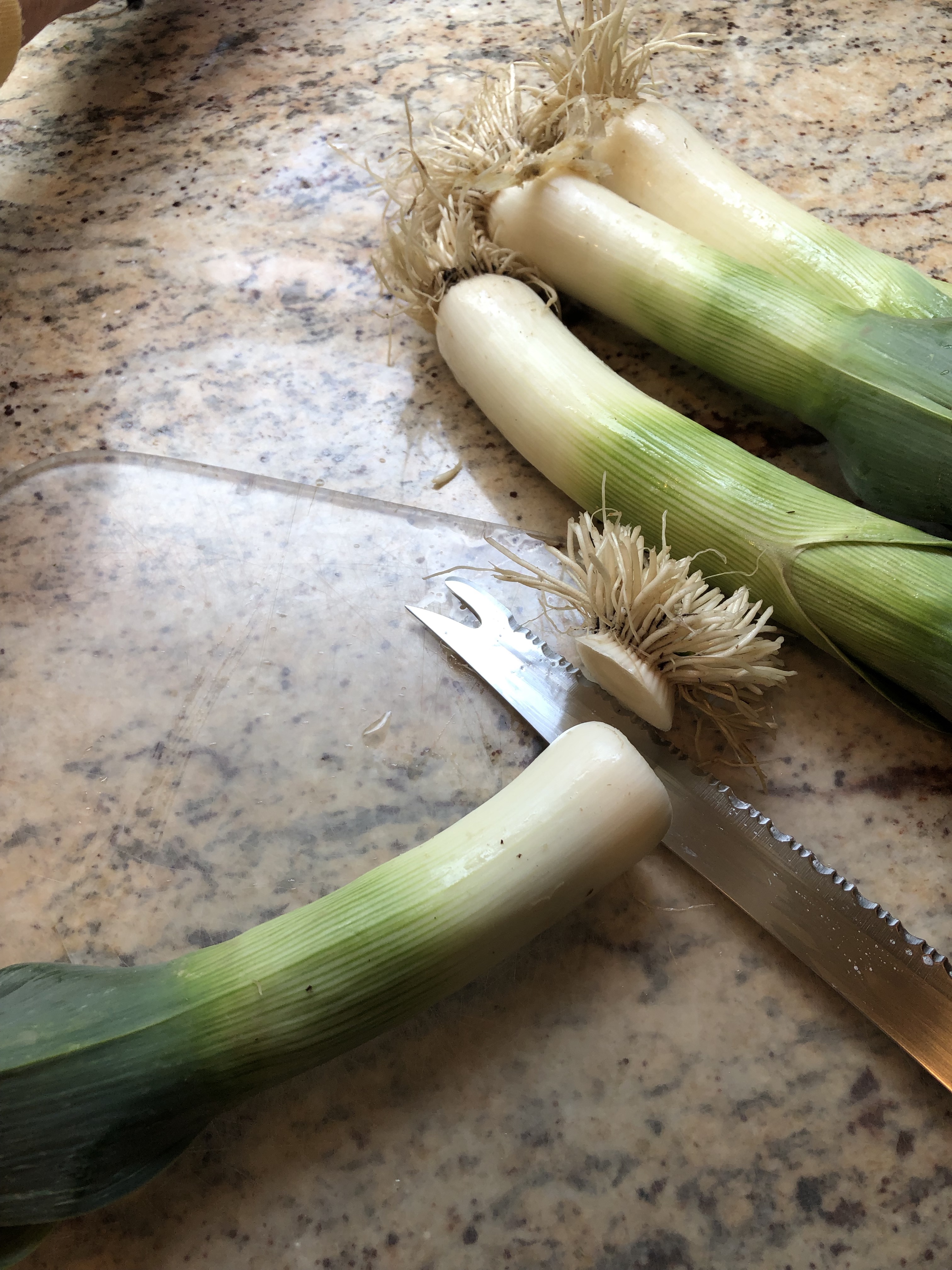
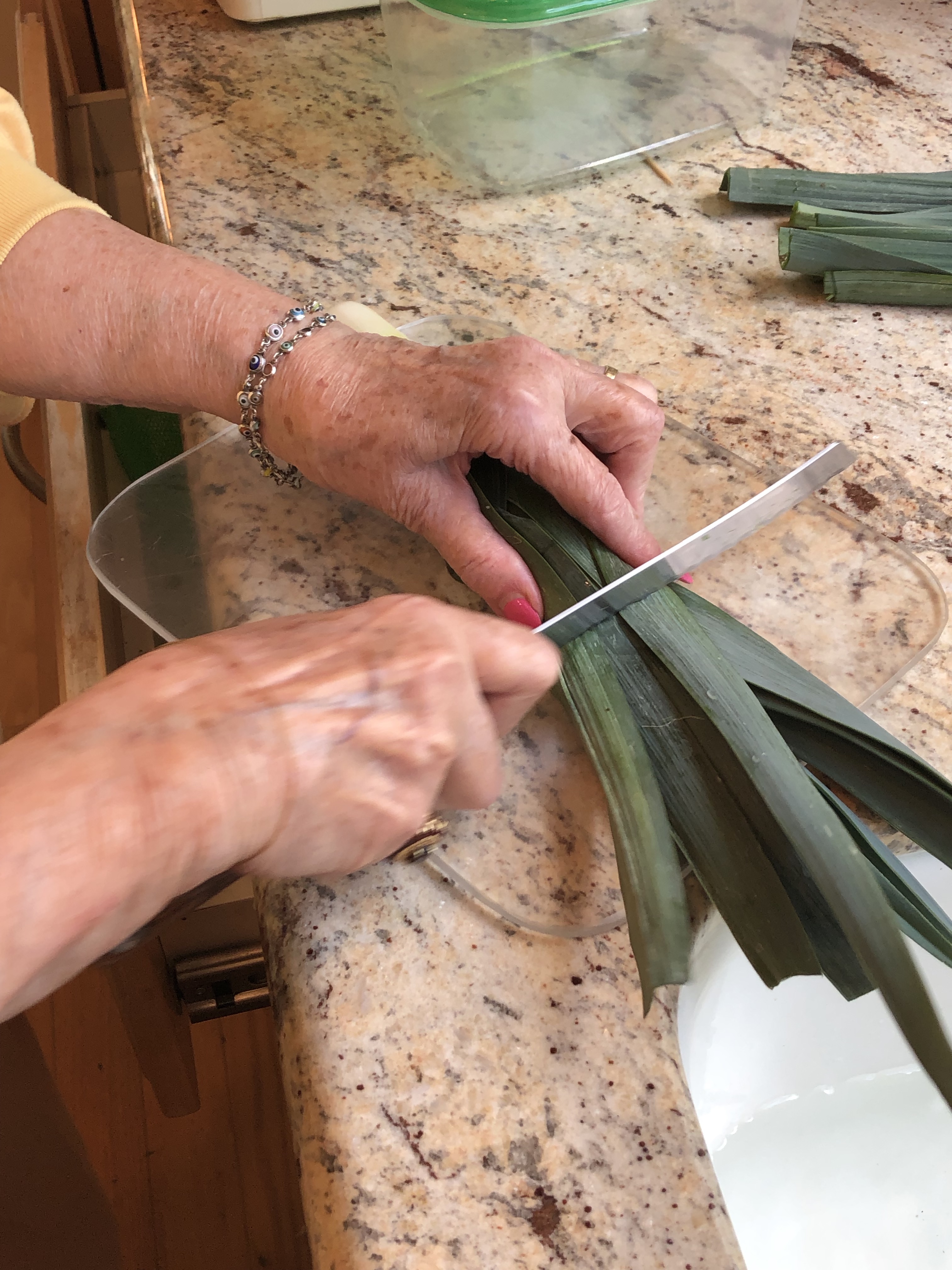
Prepare leeks. Cut 1/4″ from top and bottom.

Cut in half vertically.

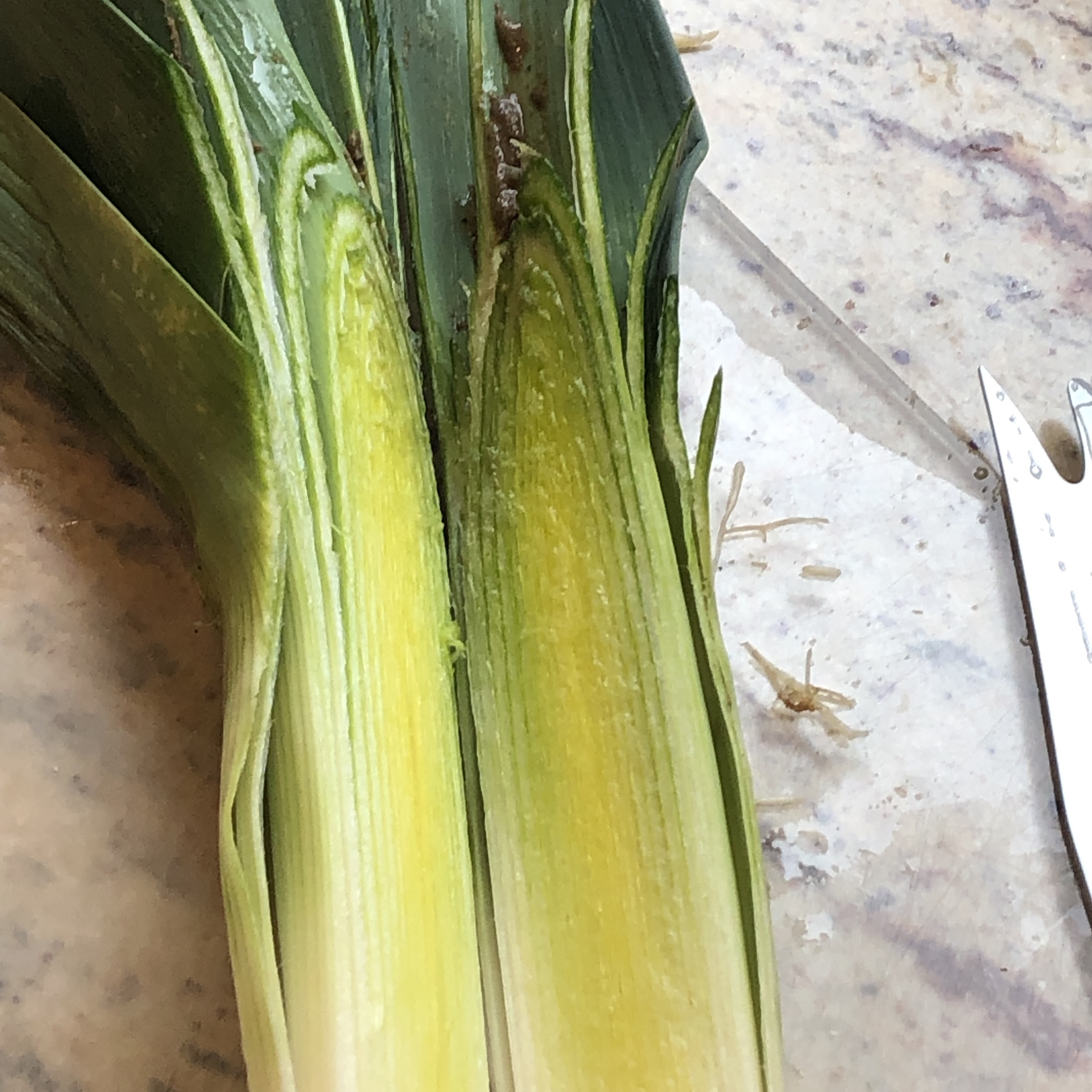
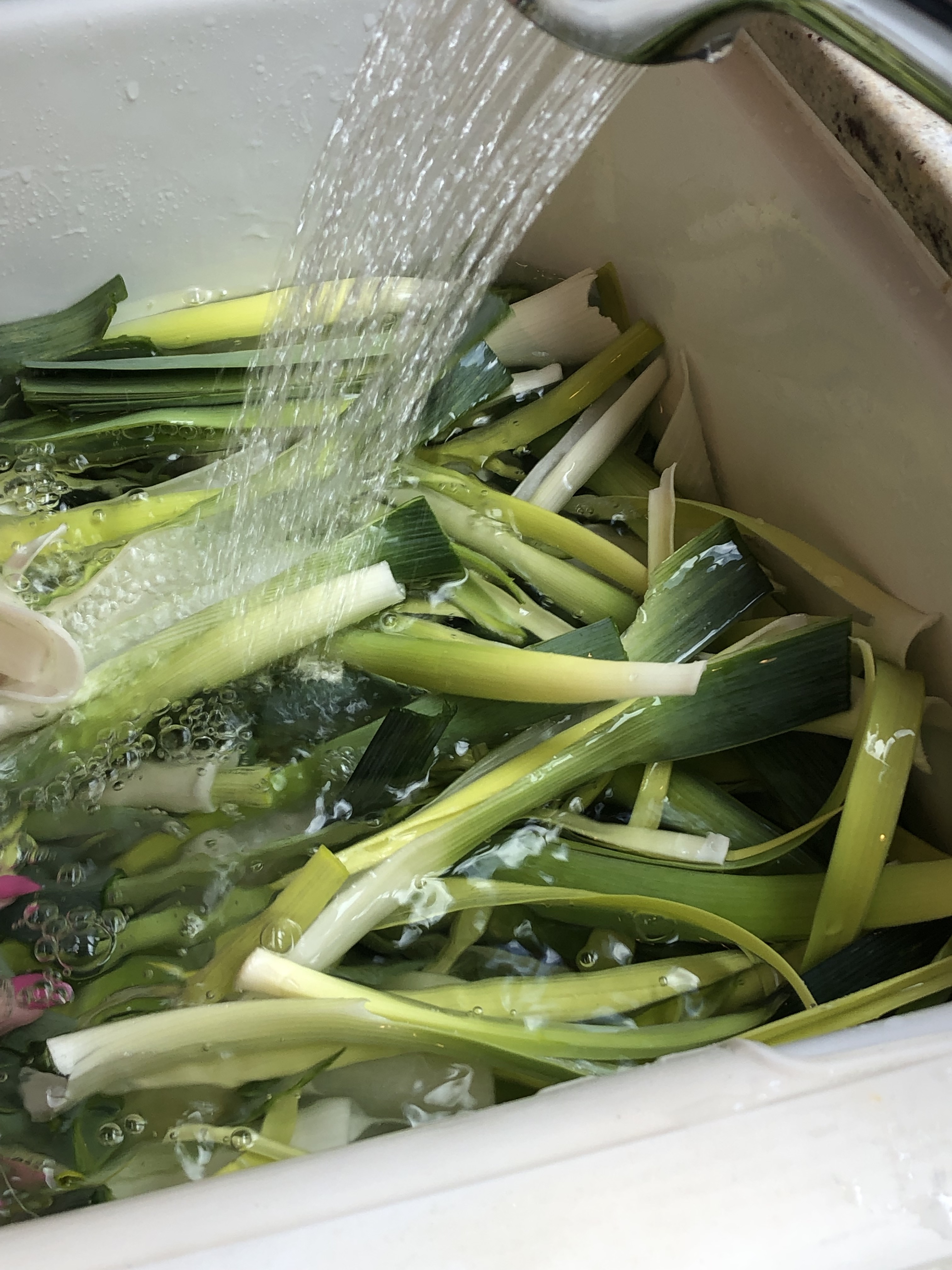
Soak and clean leeks throughly. (leeks, by nature, often have a good amount of fine dirt between leaves. Make sure to clean carefully) Soak, rinse, soak again (2 – 3 times).

3VPGdlxSTB+LiETkGbUcFw

Cut into 1/2″ pieces.

zwLPP27tRcOlFFlXZXxnkg

Boil cut leek and chopped onion in a pot of water ( covering mixture), until vegetables are soft and limp. Boil Potato separately until soft.

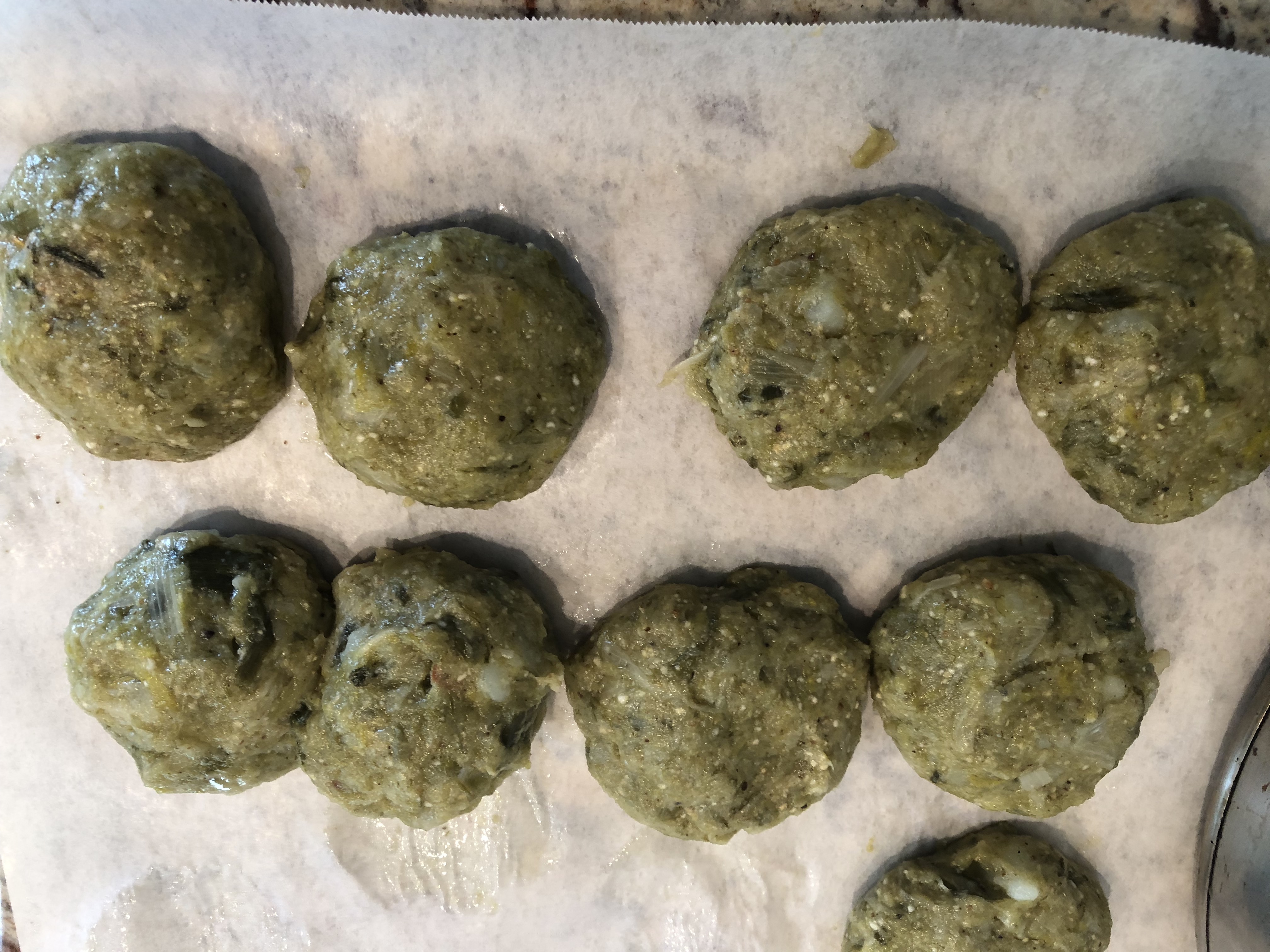
Drain (squeeze out) all liquid. Add additional ingredients. Blend into an even leek-onion-potato mixture. Shape into patties.

Fry : 2/3 C oil

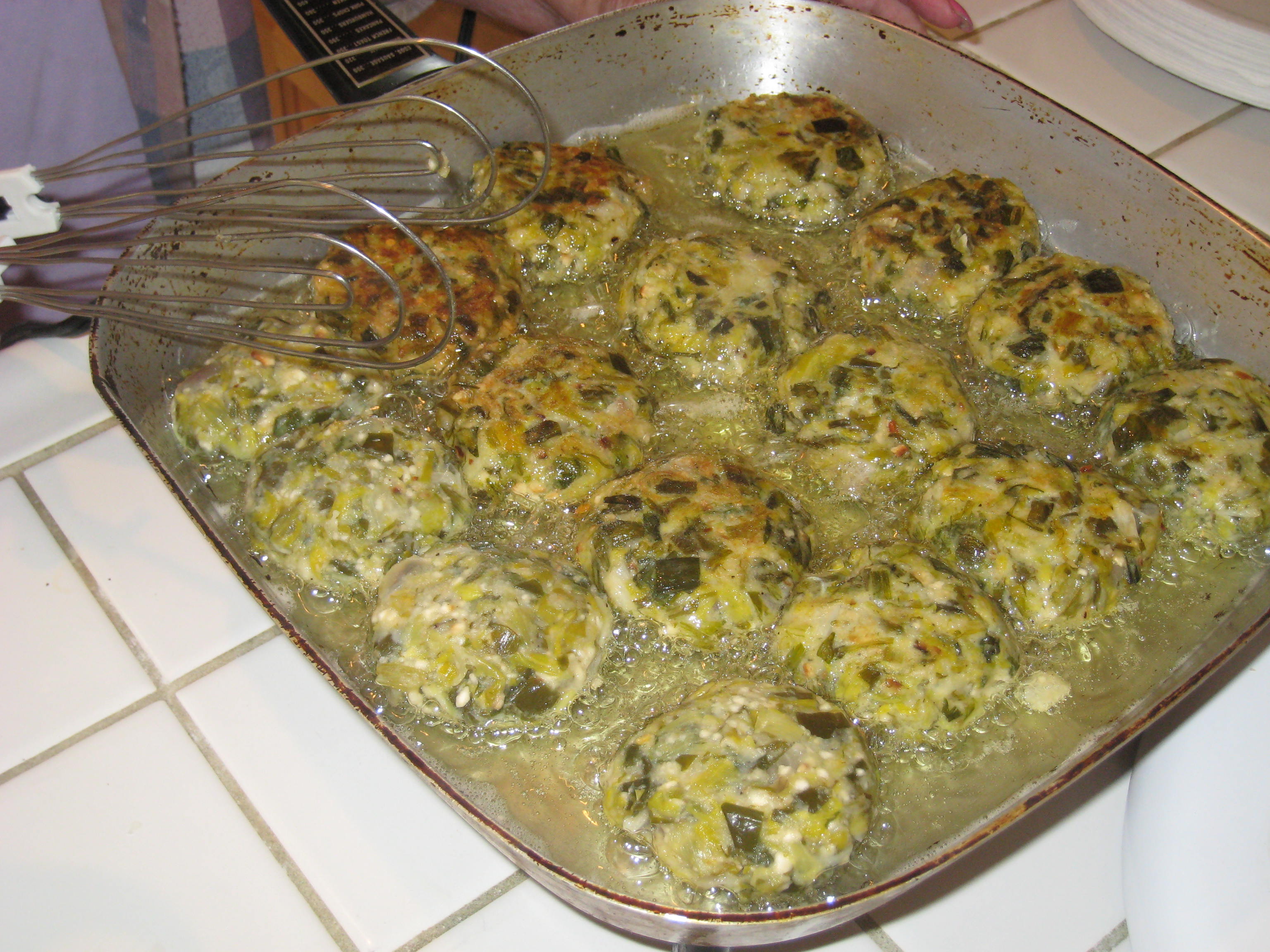
Fry on medium heat until both sides are slightly browned.

IMG_8403

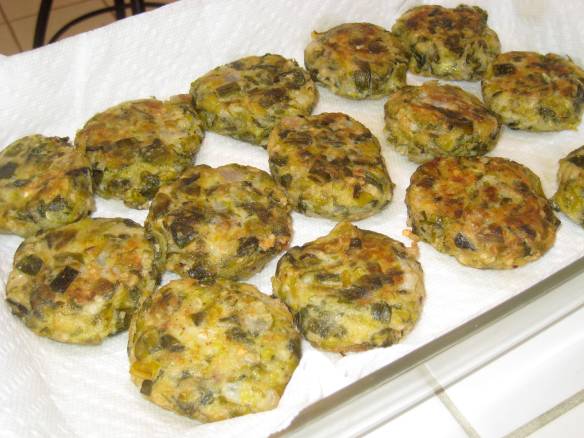
Drain on a paper towel. Divine freshly made…..can be frozen, sealed tight.

IMG_8404

Defrost and place on a cookie sheet and warm in the oven at 300 degrees for about 10 minutes, or until warmed throughly.

Enjoy!!!!!!

Love hearing what you’re making and doing for the holidays. Stay in touch with us here and on Facebook at ‘Bendichas Manos!’

~ Kaye & Marcia

Marochinos (almond macaroons)

A favorite for Pesah….delightful as a pareve dessert during the year!

Ingredients:

2 C blanched almonds

1 C sugar

2 eggs…whites only

Grind blanched almonds to near a fine consistency.


Mix in a bowl with sugar.

Add egg whites to almonds and sugar.  Mix until biscuit-dough consistency. Using a tablespoon or metal scoop, drop 1″ apart on cookie sheet lined with parchment paper.  Bake for 10 minutes in a pre-heated 350 degree oven.

Marichinos out of Oven Seph Shabbat Jan 2018

Allow to cool completely before handling. Will harden as they cool.