Pesah Megina ( meat quajado)

You asked – here it is! Re-posting recipe for Passover Megina
Enjoy!!

One of the staples of our seder meal is a Megina, sometmes refered to as “mina”, or a “meat quajado”. My mom’s is made with crumbled matzah mixed in giving it a quajado like consistency once cooked, and able to be cut into and served in squares. The “mina” version is often made with layers of soaked and softened matzahs and constructed more like a meat lasagna. I am sharing the recipe as my mom makes it for our family and as she has taught it in community cooking classes. This is one of those dishes you can customize to your liking, adding different spices for a differnt flair ( think cumin or ‘ras el hanut’ or even cilantro instead of parsley, to name a few). This version is made with ground beef, although ground turkey could be substituted. Let us know what you think!

My Mom’s (Kaye Israel) Recipe for Passover “Megina” (meat casserole) {sometimes called Quajado de Carne or Mina}

2 C chopped onions
2 lbs ground meat
2 tblsp oil
1/2 tsp pepper (to taste)
1 tblsp salt
1/4 c parsley, chopped
10 eggs
1 C farfel (soaked in warm water, and squeezed dry) or 4 sheets matzah (soaked in warm water, squeezed dry and crumbled)
touch of red pepper flakes (optional)

Brown meat with onions in oil; transfer to bowl and allow to cool. Add salt, pepper, parsley and farfel (or matzah). Add 2 beaten eggs at a time until 8 eggs are mixed in.

Grease 9 x 13 inch pan (pyrex type) and heat in oven for 2 – 3 minutes. Pour mixture into pan. Spread remaining 2 beaten eggs to top of mix. Bake at 400 degrees for 30 minutes or until golden brown. Allow to cool. Cut into squares and serve. Delish!!!!

As with all things Passover…..enjoy the opportunity to be with family and friends. Document your family recipes and traditions, cook together, enjoy the time. With each dish we serve and each traditional song we sing, we recall lovingly those family members who are no longer with us, whose recipes and memories are present at our table, and whose names we mention at various time throughout the evening (and throughout our many family gatherings).

As we retell the Passover story, so too, we retell our family stories. I love the fact that our sons, aged 19 and 23, “know” and talk about family members, several who passed away years before the boys were born…..but whose life lessons and stories are still very much a part of our family gatherings. Memories live on!

We would love to share some of your family stories with “Bendichas Manos” readers…..please feel free to send them on to us! Most important, share them at your seders. This keeps our histories and our stories alive!

~”Bendichas Manos”
“Purim, Purim, Purim lanu, Pesah, Pesah a la mano!”

Purim is here, Pesah is right around the corner!!!   So some Purim “allegre” for now…and Pesah recipes coming!

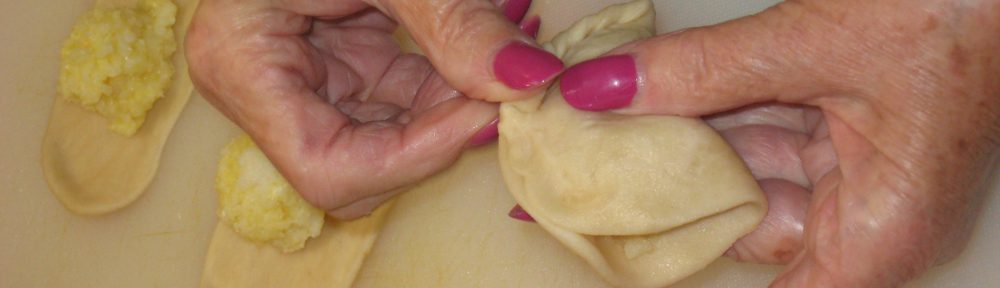
I remember when my boys were young, my mother would make “Folares”, or “Haman in Jail” as the boys called them, for Purim.  The Folare was made of Bureka dough wrapped around a hard boiled egg.  The strips of dough form a “cage” or “jail” around the egg. The egg represented the evil Haman from the Purim story, who is ultimately punished for his plot to harm the Jews. Continue reading

Burmuelos di Hanukkah

We are busy getting ready to celebrate Thanksgiving here in the States AND Hanukkah! We’ll light the first candle on Wednesday night and have the family together for a Thanksgiving feast on Thursday. With blessings and gratitude we continue to celebrate all week. And our unique and special Hanukkah favorite: burmuelos – delightful, light, fried dough pillows bathed in a light, sweet syrup.

Hanukkah celebrates the re-dedication of the Temple in Jerusalem after the Jewsih victory over the Greeks in 165 BCE.

A favorite story is the Miracle of the Oil. The Jews went to reclaim and restore the Temple in Jerusalem after it had been defiled and left in ruins by the Greeks. There was only enough oil left to rekindle the candelabra that was to burn throughout the night each and every night. It would be several days before more oil be be procured and prepared. By virtue of a Miracle, the oil burned for 8 days and nights, until more oil was available.

To commemorate the Miracle, we prepare foods cooked in oil for the holiday of Hanukkah. Favorites are latkes (potato pancakes), sufganiyot (filled donuts), and in our family, burmuelos (fried dough).

Growing up, I had never had latkes. Our Hannukah treat was always burmuelos – light, fried dough pillows bathed in a light, sweet syrup that is absolutely devine!

This year we will gather for Thanksgiving and sharing the second night of Hanukkah ….. Turkey with all the trimmings AND my mom will make fresh burmuelos!!!

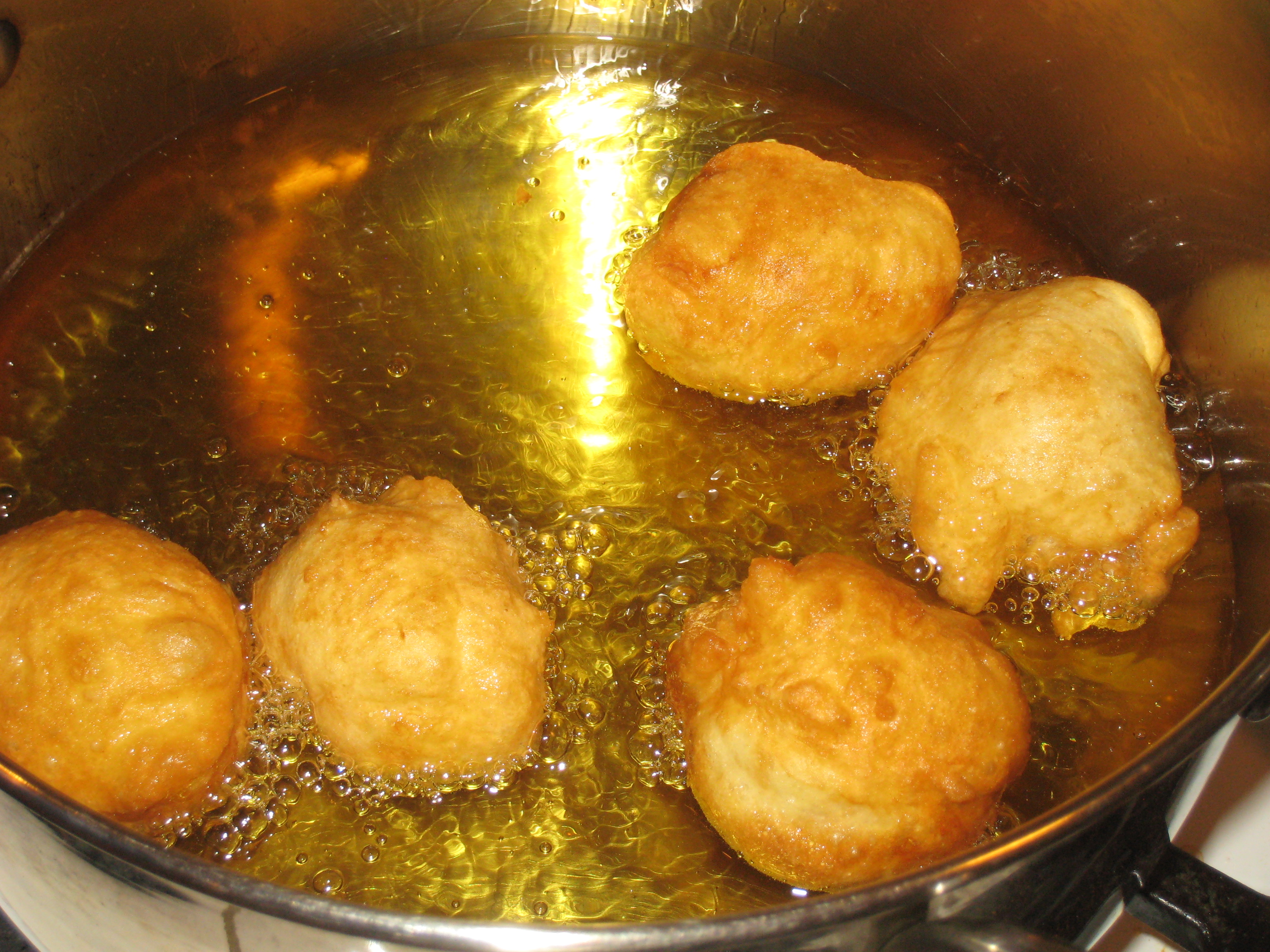
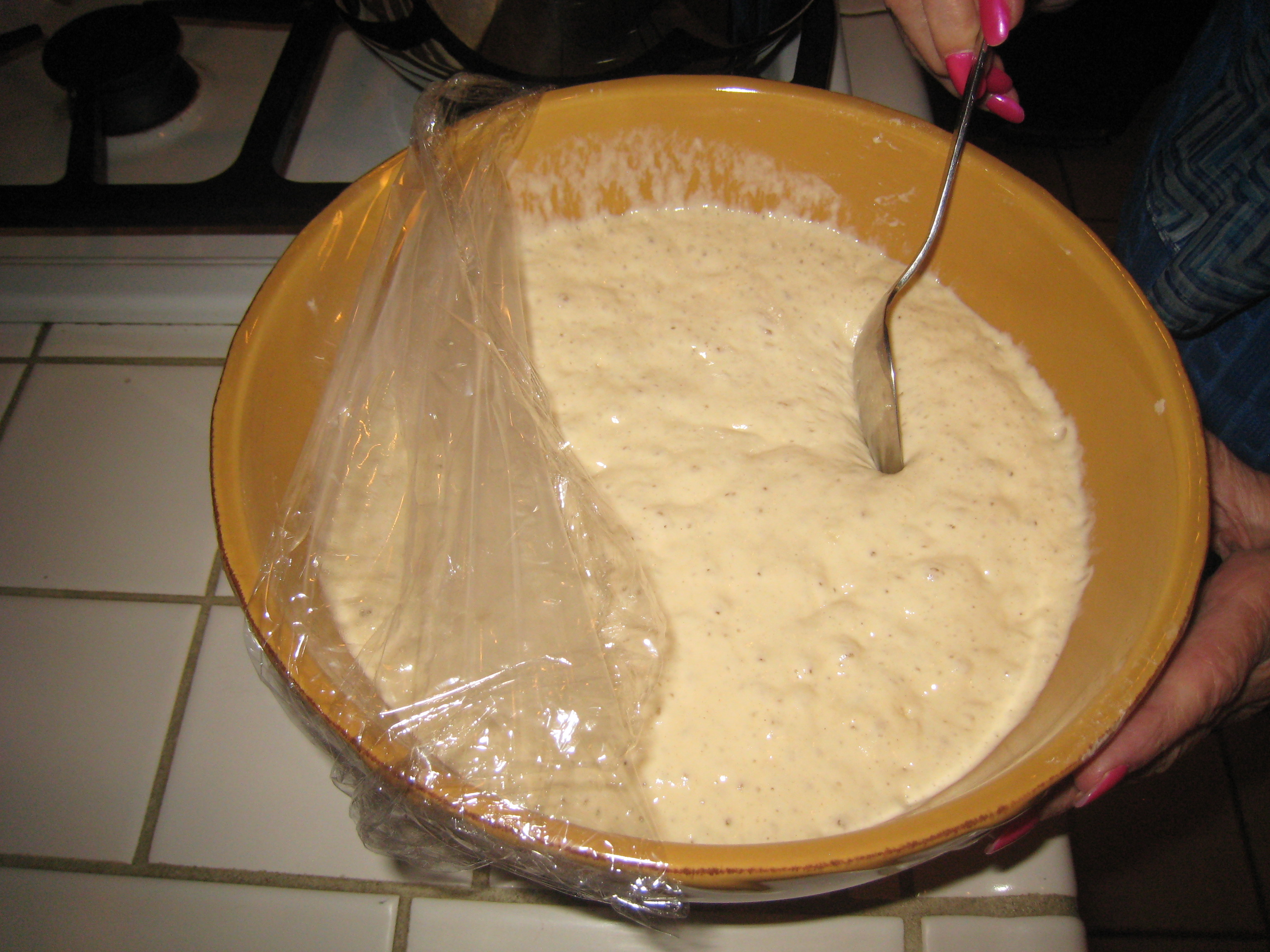
Made from a yeast dough, it takes some time for the dough to rise and be ready to fry. My mom will make the dough ahead of time and after dinner, drop the dough by spoonfuls into hot oil, watch them puff and turn a golden brown as she prepares the honey syrup. Once the burmuelos are ready, she will bathe them in syrup and we’ll eat them, warm and fresh! Divine, indeed!

Below is the recipe. Give them a try…..and enjoy!

My Mom uses the recipe from the cookbook,

    The Sephardic Cooks – Come Con Gana

compiled by the Sisterhood of Congregation Or Ve Shalom in Atlanta, GA.

1 tsp yeast
1/2 C and 1 1/2 C warm water
pinch of salt
3 C flour
1 egg
oil (for frying)

Soften yeast in 1/2 cup warm water. In mixing bowl add dry ingredients. Add yeast mixture, egg and remaining warm water. MIx well. Allow to rise in covered bowl in warm place for 2 hours.

Fill a quart pot with 3 inches of cooking oil. Allow to get very hot.

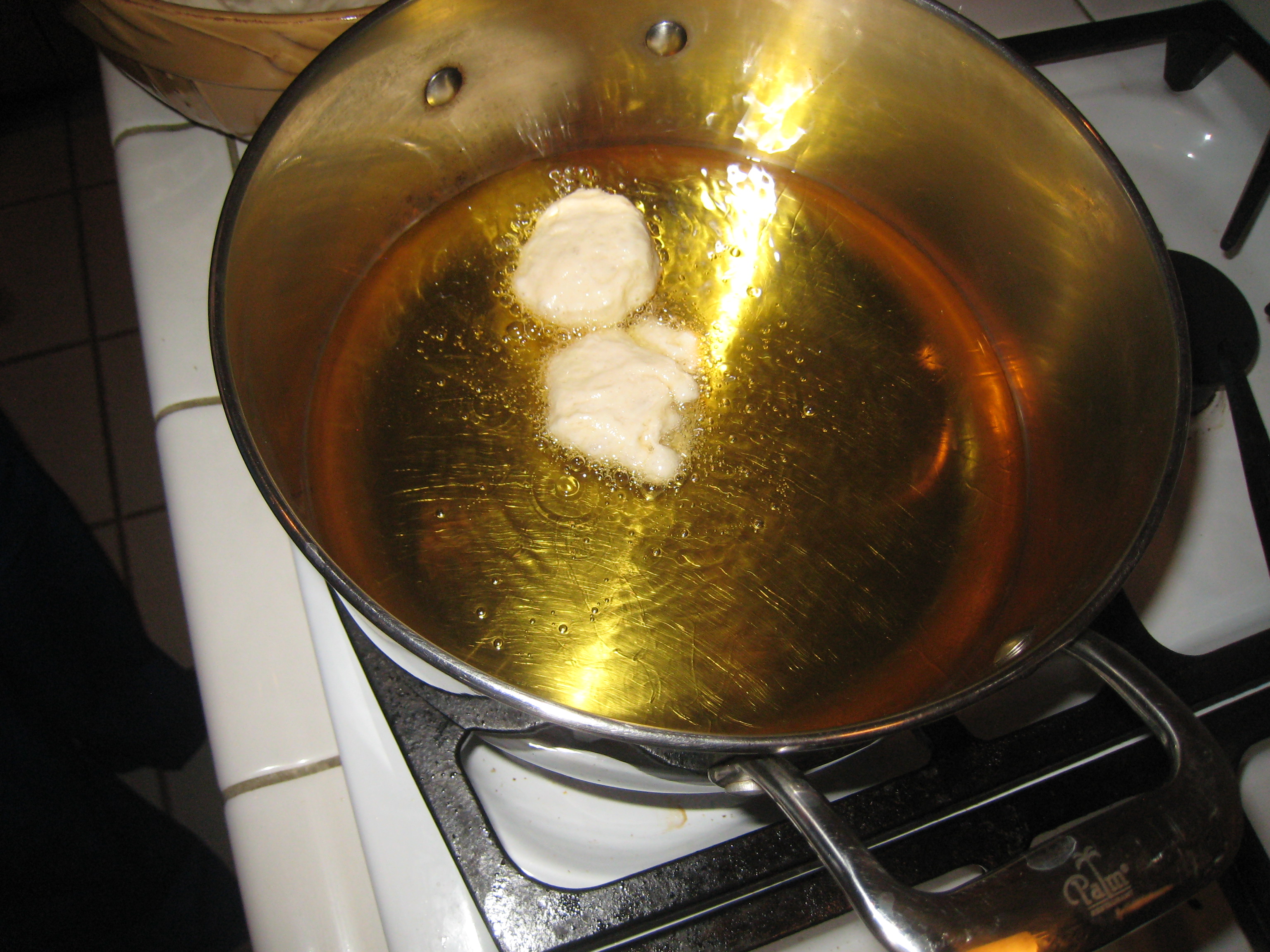
Drop a teaspoon of soft dough into the hot oil.

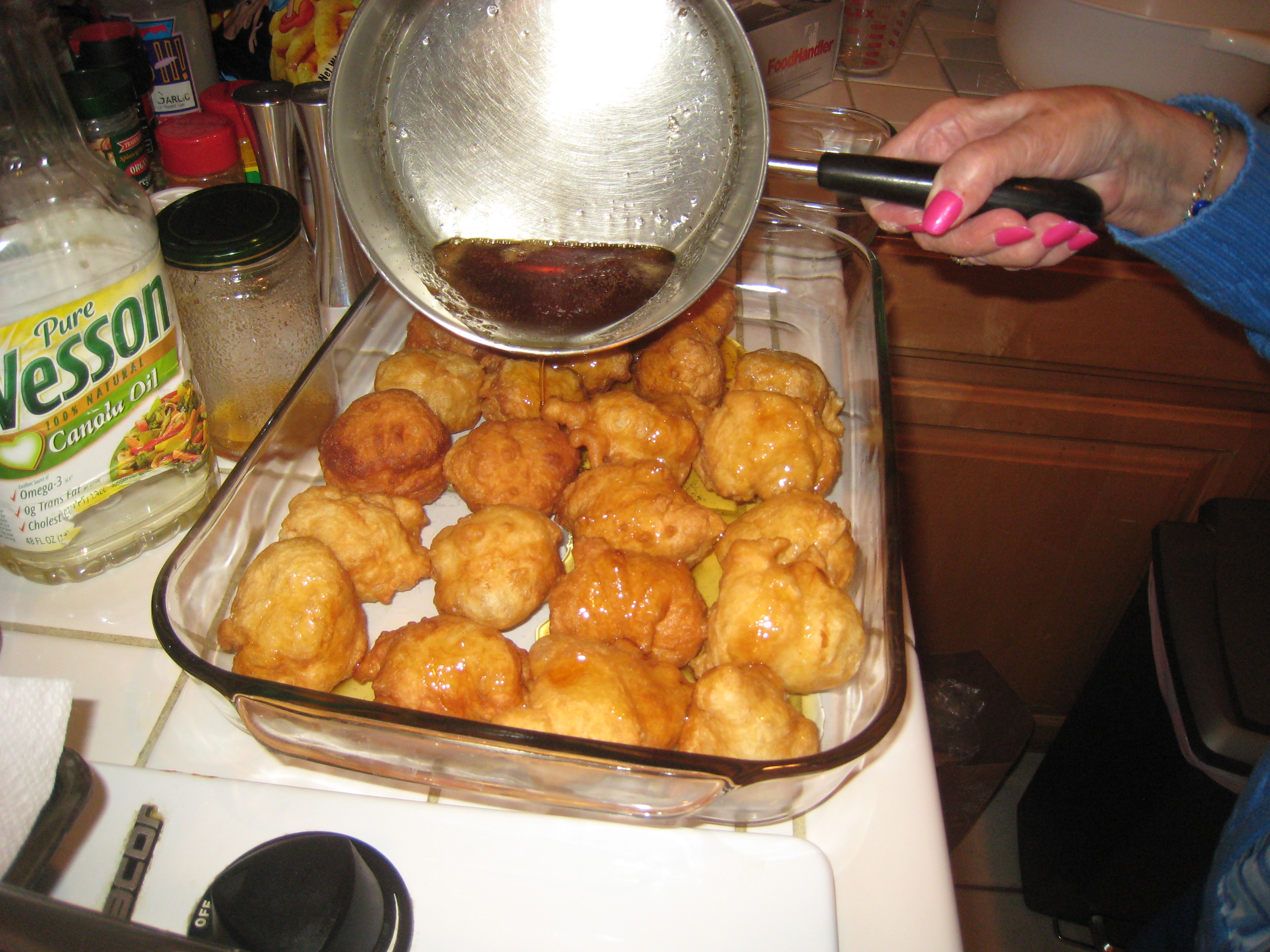
Remove with slotted spoon when golden brown. Bathe in syrup.

Syrup

1 C sugar
3 Tblsps honey
1/2 C water

Boil together until sticky. Pour over burmuelos.

A wonderful message about the Miracle of Hanukkah shared by Craig Taubman this morning:

“The miracle of Hanukka is not that the oil burned for 8 days. The true miracle? That someone was inspired to light the light in the first place!”

Let us be inspired!!

Bendichas Manos!!!!

Pepitada – Melon Seed ‘Milk” – for breaking the Yom Kippur Fast

Today I went to my mom’s house as she made Pepitada. We take it with us to my cousin’s home after synagogue on Yom Kippur to break the fast.

Pepitada is a drink made from the seeds of melons, usually the cantaloupe, casaba or honeydew families. It is the first thing served after the fast. Several members of the family look forward to it each year…..others tell us it is an ‘acquired’ taste.

This is the way my mom makes it.

The seeds of 4-6 melons ( = about 1 cup of dried seeds)
2 quarts of cold water
1/4 C sugar
1 tsp vanilla (some use a drop of essence of rose water)

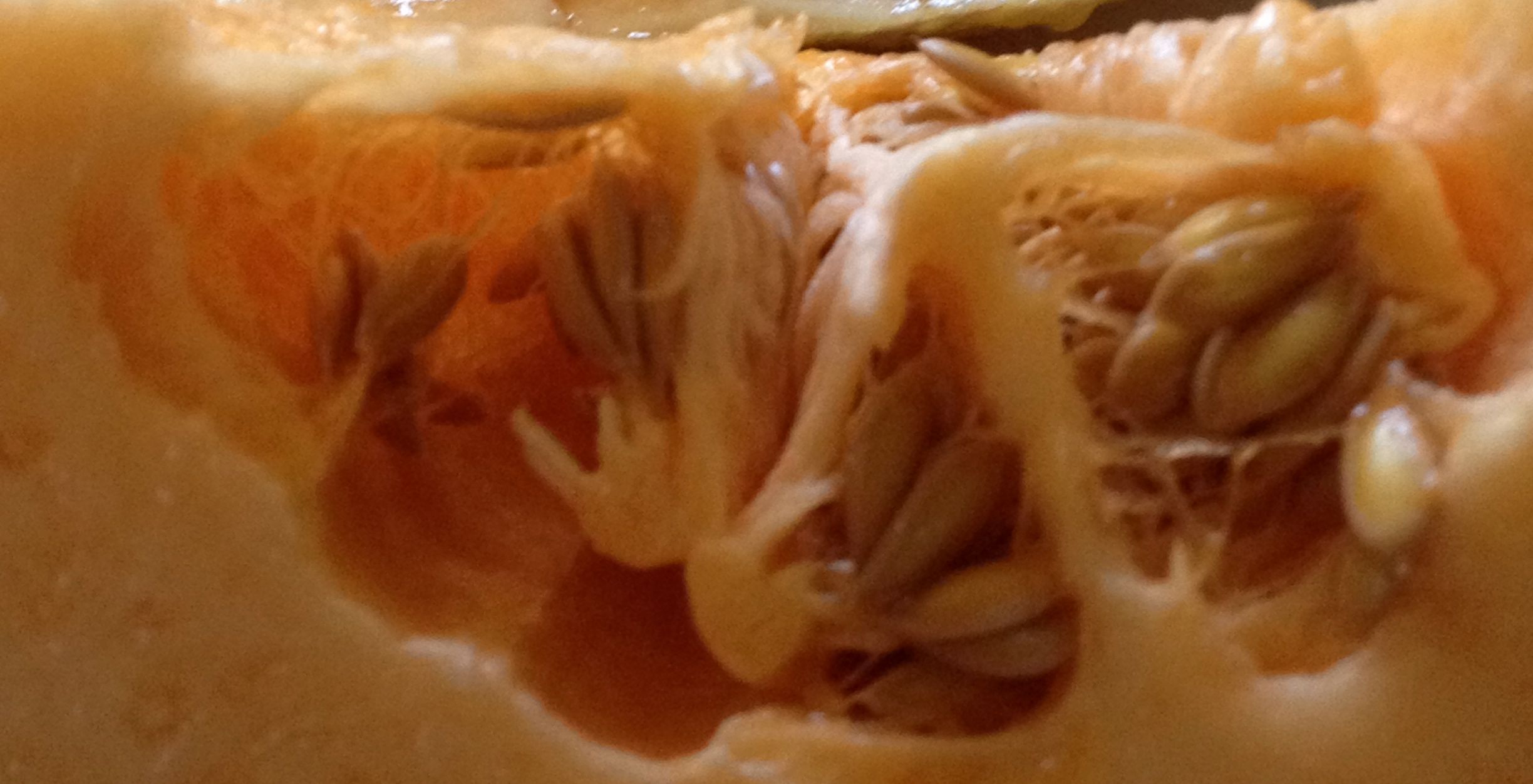
Melon with Seeds

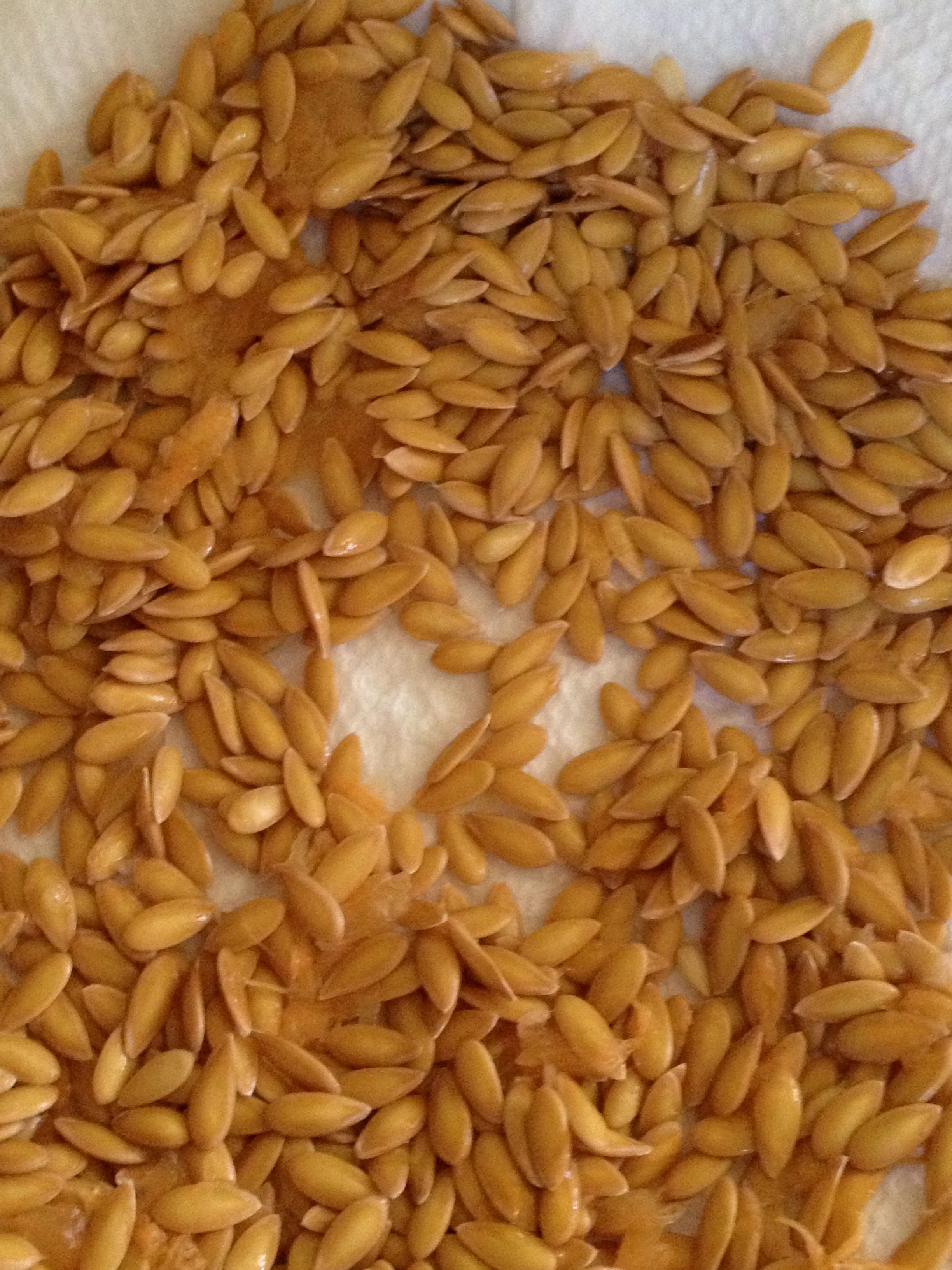
Melon seeds are saved for several weeks prior to the holiday. Wash the seeds in a colander thoroughly, making sure to remove all of the flesh of the melon. Leave the seeds to air dry on a paper plate overnight ( or until completely dry).

IMG_1567

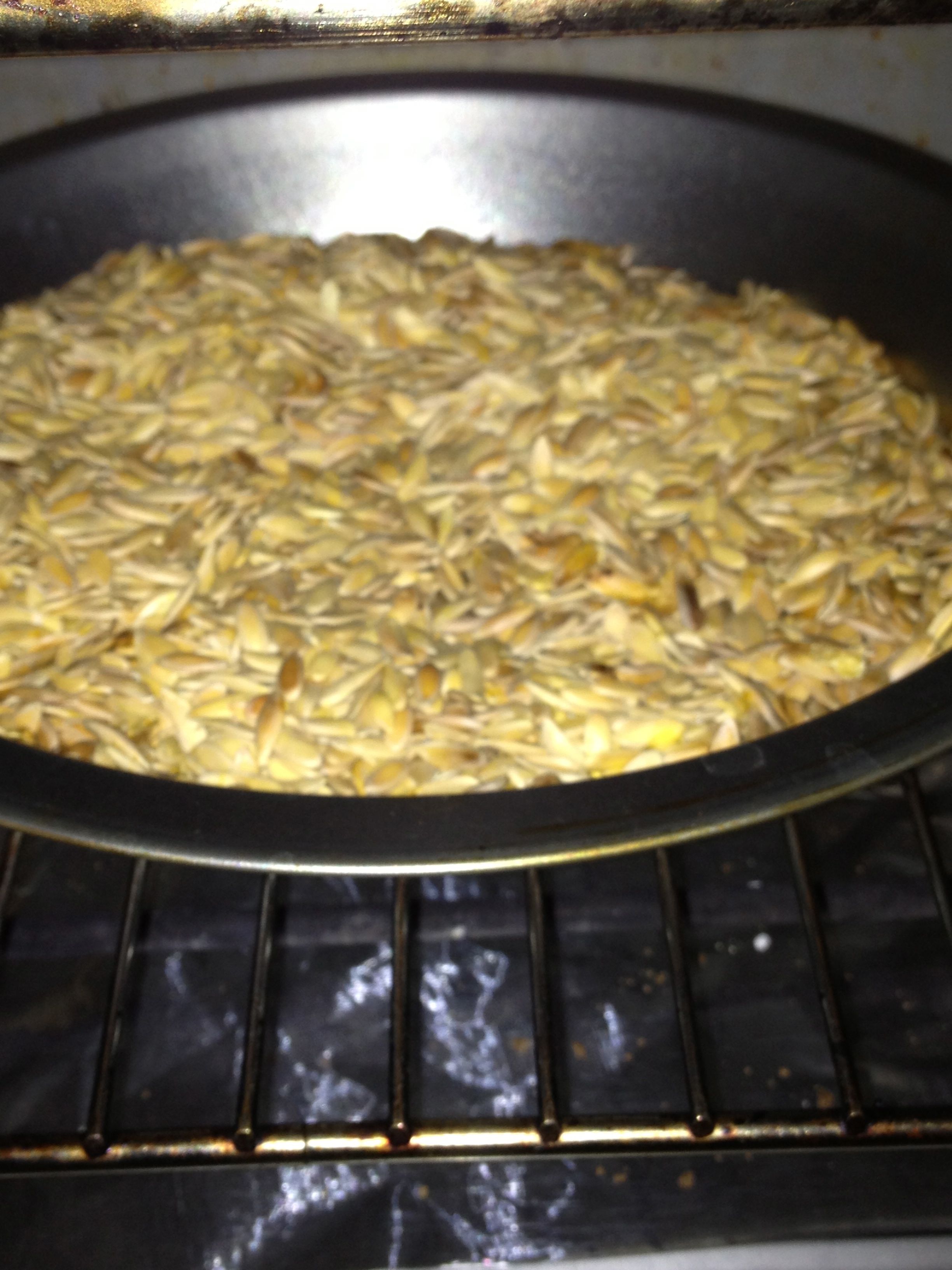
Toast the seeds in a toaster oven for 5 minutes, watching closely so as not to burn. Stir at least once during this process.

IMG_1702

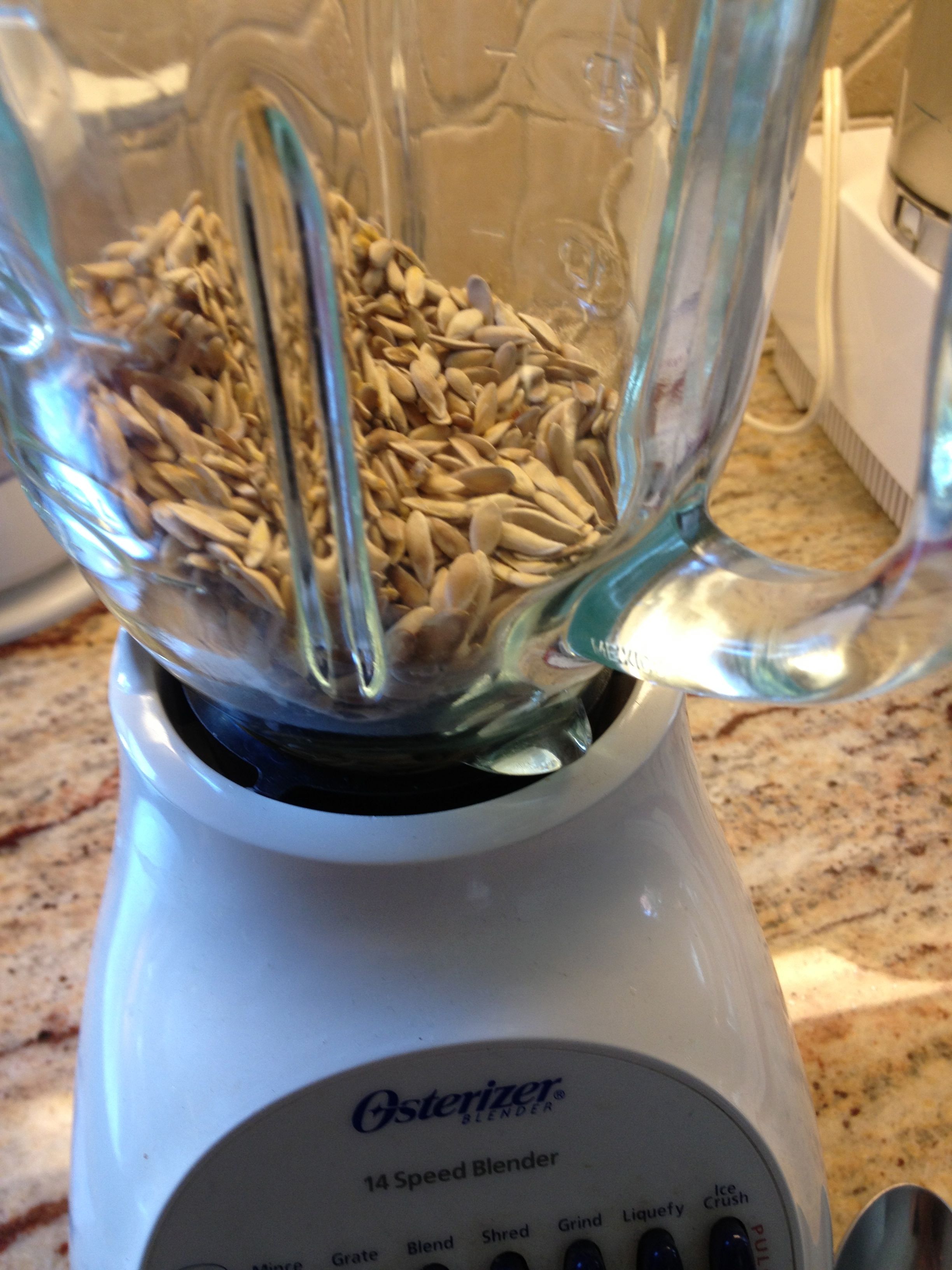
Place seeds in a food processor or blender, grinding until seeds are a fine meal.

IMG_1704

IMG_1706

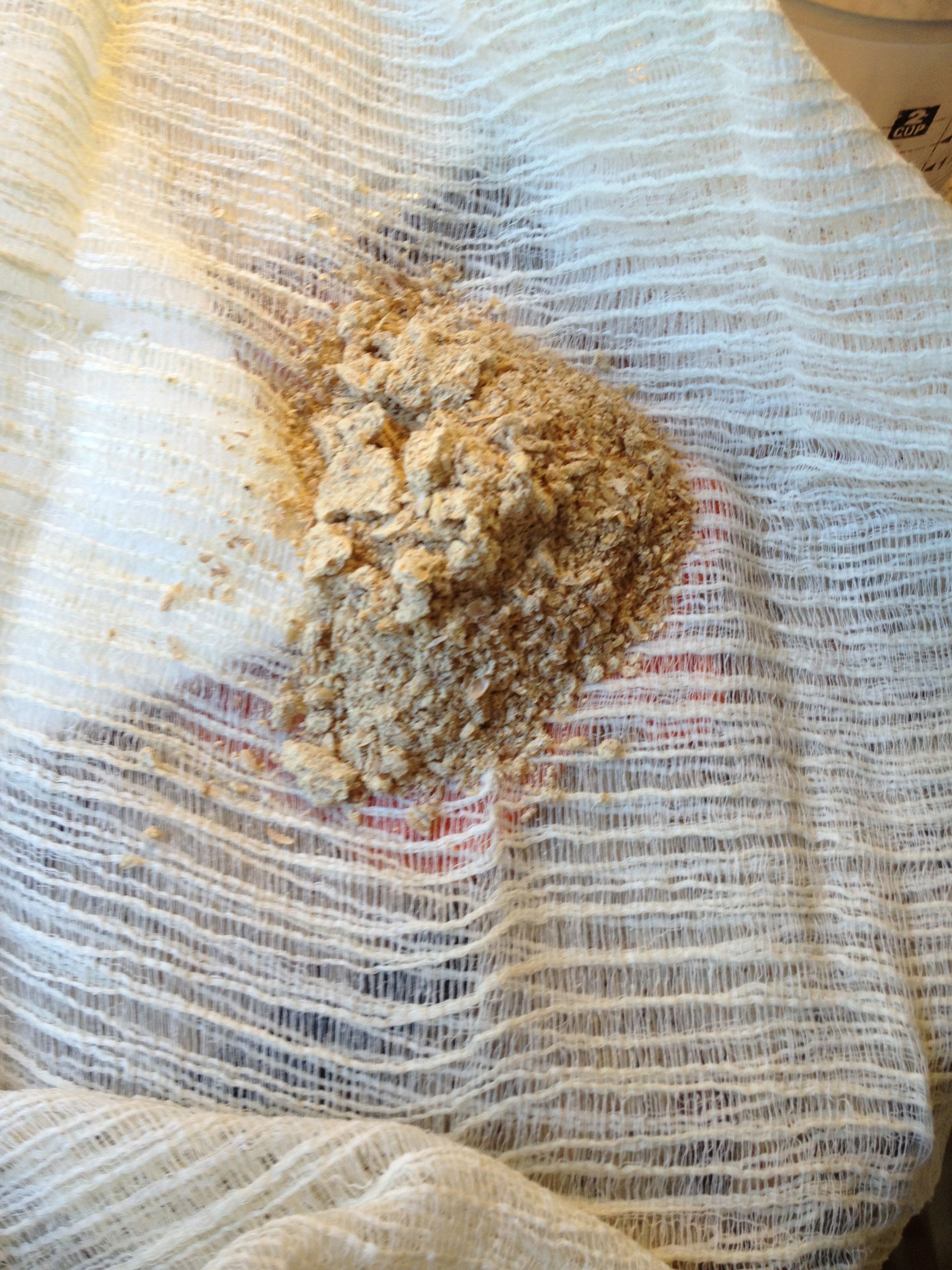
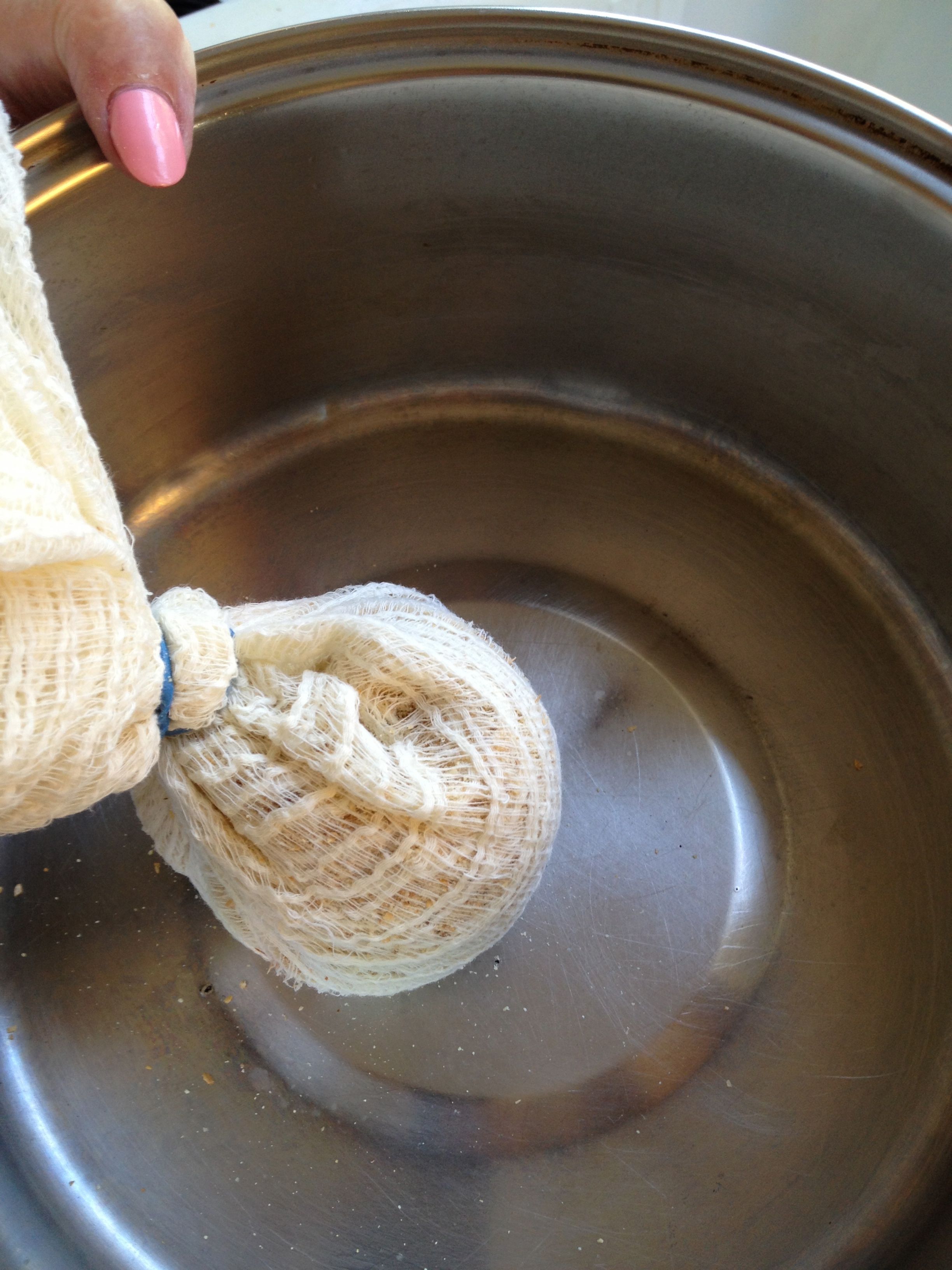
Place the meal in a cheesecloth, gather in a ball and secure with a rubber band.

IMG_1707

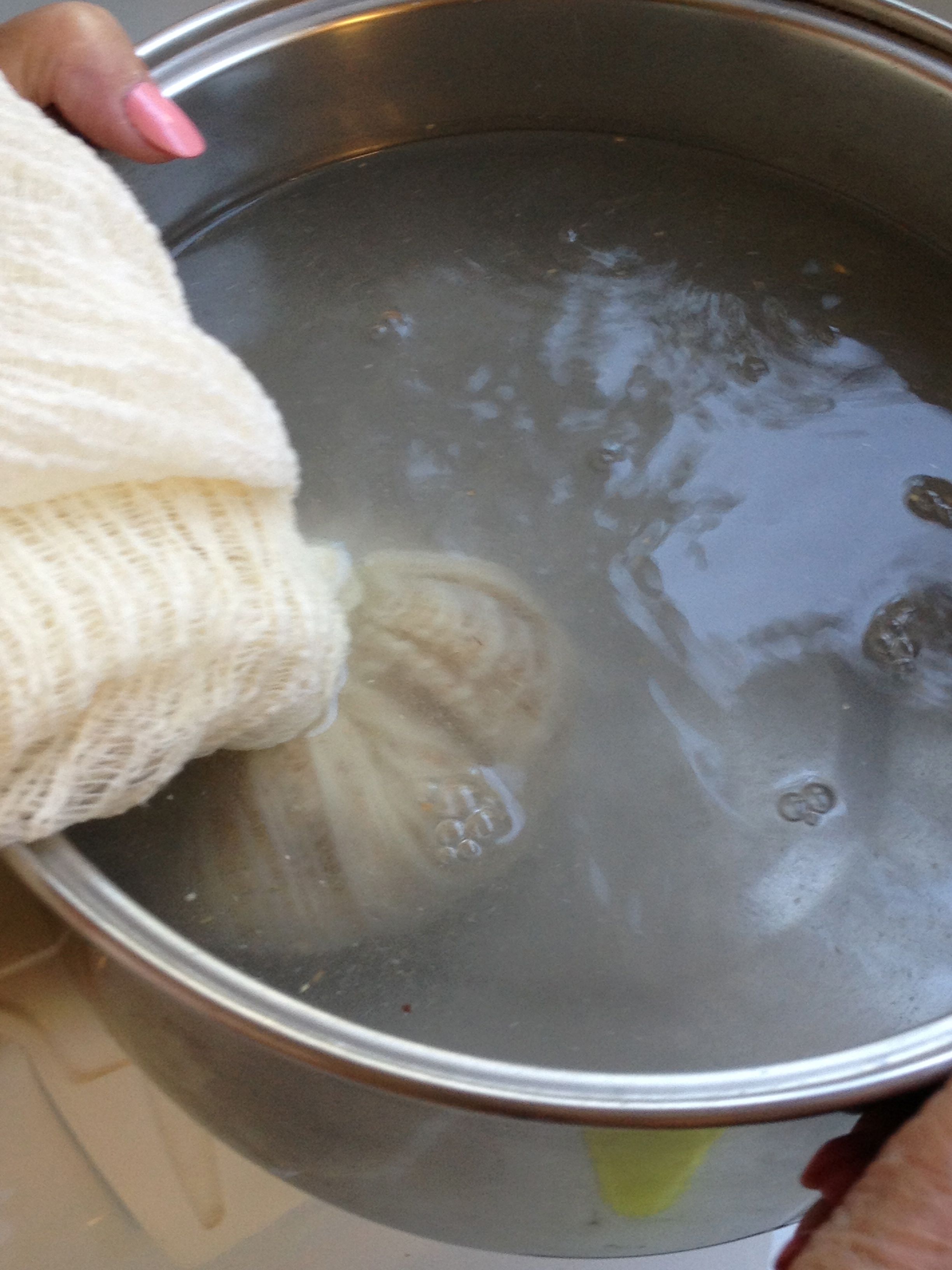
Place the ball in a large pan or bowl and fill with approximately 2 quarts of cold water.

IMG_1708

IMG_1710

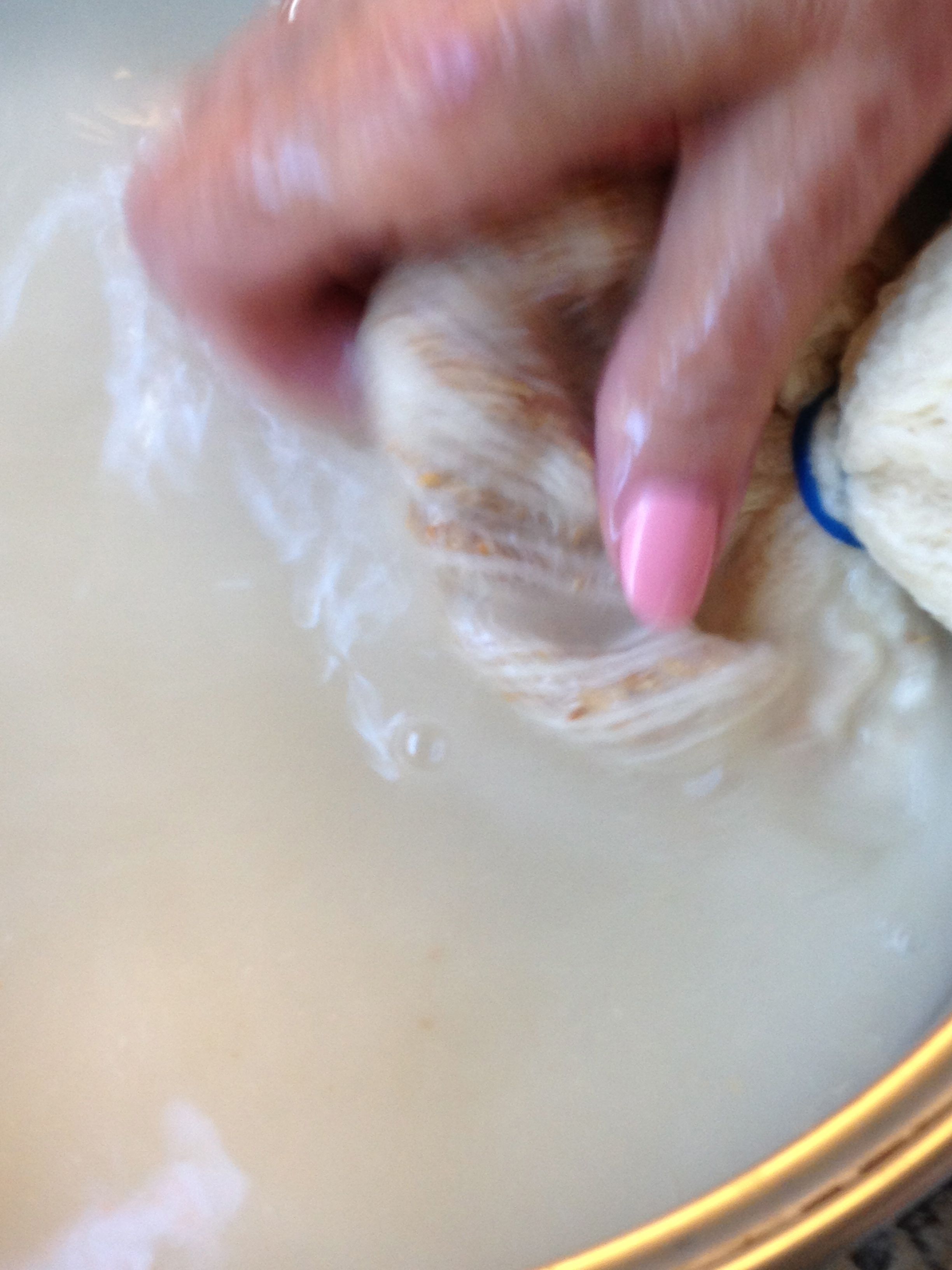
Allow to stand for about 10 – 15 minutes. Begin squeezing the water through the cloth.

IMG_1712

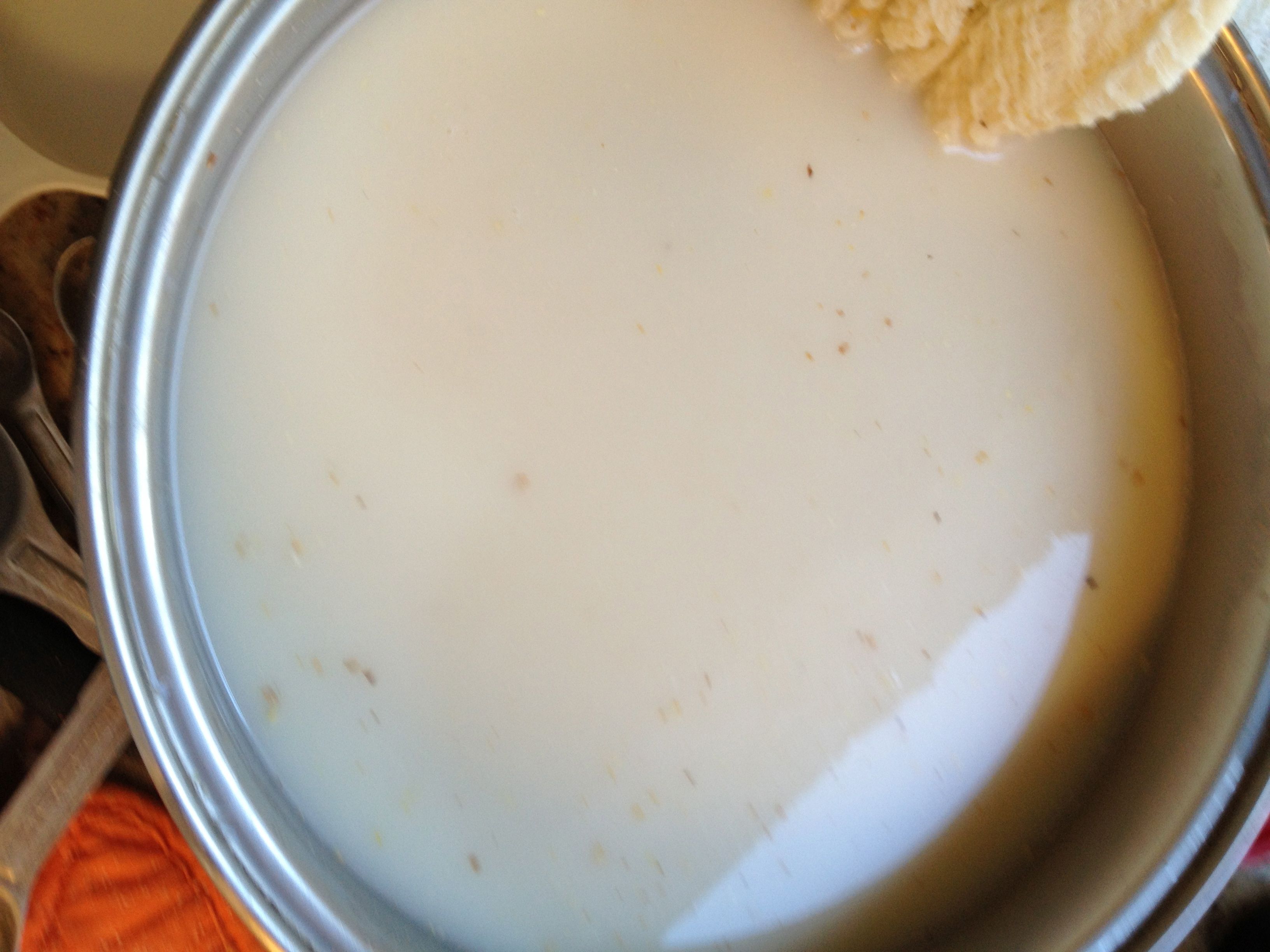
The liquid will begin to take on a milky consistency. You can allow it to steep overnight, or continue to squeeze the water through the cloth for 15 – 20 minutes. The longer it steeps, the thicker/richer the ‘milk’ becomes.

IMG_1713

Add to the ‘milk’ the sugar and vanilla and mix thoroughly. Adjust according to taste. Refrigerate.

IMG_1715

(*we often mix a portion of our Pepitada with whole milk for a more neutral taste – to the chagrin of the traditionalists!!)

Pepitada coats the stomach, revives the spirit and begins the rehydrating process. It recalls an earlier time and evokes the memories of those loved ones who were with us in years past.

Along with boyos, burekas, ricotta, feta, olive oil, roscas, quasatho, reshas, sometimes fried fish, and finished off with a warm bowl of chicken rice soup – and biscochos, homemade cakes and sweets….. a blessed meal to end our Yamim Noar’im, ‘Days of Awe’.

To all who celebrate the holiday of Yom Kippur, our day of atonement – wishes for an easy and meaningful fast. Tizku Leshanim Rabot! May we all merit many years.

~Bendichas Manos

Rosh Hashana 5774

Sephardic Foods

The High Holidays are upon us! As we prepare to greet each other with wishes of ‘Anyada Buena’ (A good year) and ‘Tizku Leshanim Rabot’ ( may you be written for many, many years)….we prepare, too, for family gatherings and the special foods that we love to share. My mom has begun baking boyos, burekas, reshas, biscochos as well as some special sweet treats for a sweet year. I am posting past posts of some of these recipes.

In addition, I am including a post about a traditional Rosh Hashana Seder. Some families call these the ‘Ratzones’, from the phrase ‘Yehi Ratzone’, (may it be your will…) referring to the opening words of the blessings, referencing the traditional foods that are eaten. It is a lovely, traditional Sephardic custom that has gained popularity in recent years even among non-Sephardim. I hope you will explore it. Perhaps add it to your family repertoire. Tweak it – add new elements – make it your own!

I invite you to add your holiday memories as comments.

In addition, join the conversation on Facebook at ‘Bendichas Manos’

Wishing you all an ‘Anyada Buena!’ A good year. Tizku Leshanim Rabot – may we all be written in the Book of Life and granted many, many years.

~Bendichas Manos!!!

Baking Burekas

Boyos

Burekas di Beringena, Reshas, Biscochos di Huevo

A Rosh Hashana Seder

‘Masapan’ ( Marzipan)

Carol Goodman Kaufman, in a recent article for The Forward, writes, “Tu B’Shvat, on the 15th of the month of Shvat (the “T” and “U” equate to the numbers 9 and 6, respectively), was originally designated for the purpose of calculating the age of trees both for harvesting and tithing purposes. The Torah prohibits fruit from being eaten during the first three years of a tree’s growth, but on Tu B’Shvat we eat the first fruits of the fourth year, as well as samples of the seven species mentioned in the Torah (wheat, barley, grapes, figs, pomegranates, olives and dates.)
Even though almonds aren’t included among the seven species, their trees blossom at around the same time in the month of Shvat (roughly February), so the holiday has evolved over time to include the nuts in its menu of delights.”
Read more: http://forward.com/food/330279/almonds-and-marzipan-for-tu-bshvat/#ixzz3y2ghzHtj

The article includes a recipe for marzipan.  


I am reprinting here our Rhodesli recipe for Masapan, in honor of Tu B’shvat. Thank you, Carol, for the inspiration!


“Masapan”……marzipan….that delicious sweet that our mothers lovingly make for engagements, weddings, a brit milan or a Bar (and today even a Bat) Mitzvah.  Basically a homemade almond confection made with ground almonds and sugar, Marzipan traces it’s origin to …..well….that depends.  Some say the Persian empire, introduced to Europe by the Turks;  others claim the origin to be Spain.  In any case, it got to us, was a delicacy on our beloved Island of Rhodes, and our grandmothers brought it here with them when they came to these shores.  

 
While some in Eastern Europe talk of marzipan being colored and fashioned into miniature fruit-like shapes, our variation is kept in it’s white, pure state, made into a simple design  –    A very special variety is shaped into a ‘pastelico’ like  cup and filled with rosewater or orange blossom scented ‘shroupe’, capped and artfully edged….a treat for the senses!
 
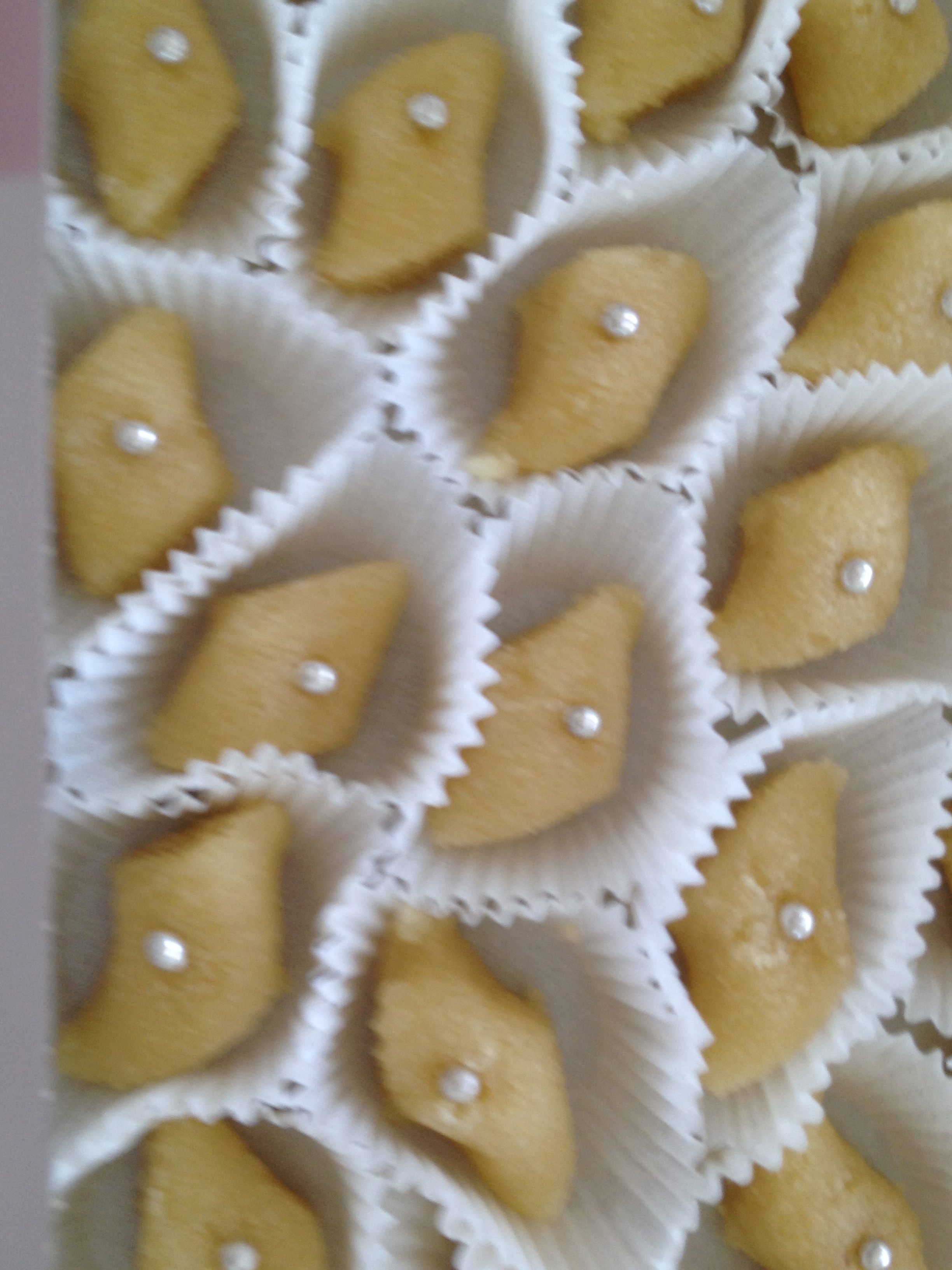
My mother, Kaye Hasson Israel, uses a recipe shared with her by Rebecca Levy. I watched her make it last week. Here is the recipe and photos.    This recipe makes about 125 pieces of masapan.Image
6 C almonds
3 C sugar
4 C water
 
Start with raw almonds.    To blanche, bring a pot of water to a boil. ( enough water to cover the almonds).  When water boils, add almonds and leave them in for 4 to 5 minutes (until skin is loose).
Rinse in a colander with cold water.  Remove the skins from the almonds and place almonds into a bowl of cold water ( to prevent discoloration).
Take a clean towel and dry almonds thoroughly.
Put almonds into food processor with blade.
Grind to a fine texture.
Image
Image
In the meantime,  mix sugar and water and heat over medium/high flame.  Make sure sugar dissolves.  Bring to a boil.  This is to make a sticky syrup.  Stir and watch carefully so it does not discolor or burn.
IMG_0956
Test for correct stickiness by removing spoon from pot, allow it to cool a bit, placing a drop on your fingers and noting a ‘thread’ of sugar when pressing then pulling apart finger and thumb.

IMG_1137

At this point, lower the heat and add ground almonds.  Thoroughly  blend and constantly stir mixture.   Cook and stir masapan until it reaches a dough-like consistency. ( it will cleanly leave the sides and bottom of the pan).   Remove from heat and allow to thoroughly cool
Image
Image
Once cooled, knead on your rolling surface to create a smooth dough.  Pinch off small portions and roll into a long strip.  (Perhaps cut into 10 – 12 portions before rolling).
Image
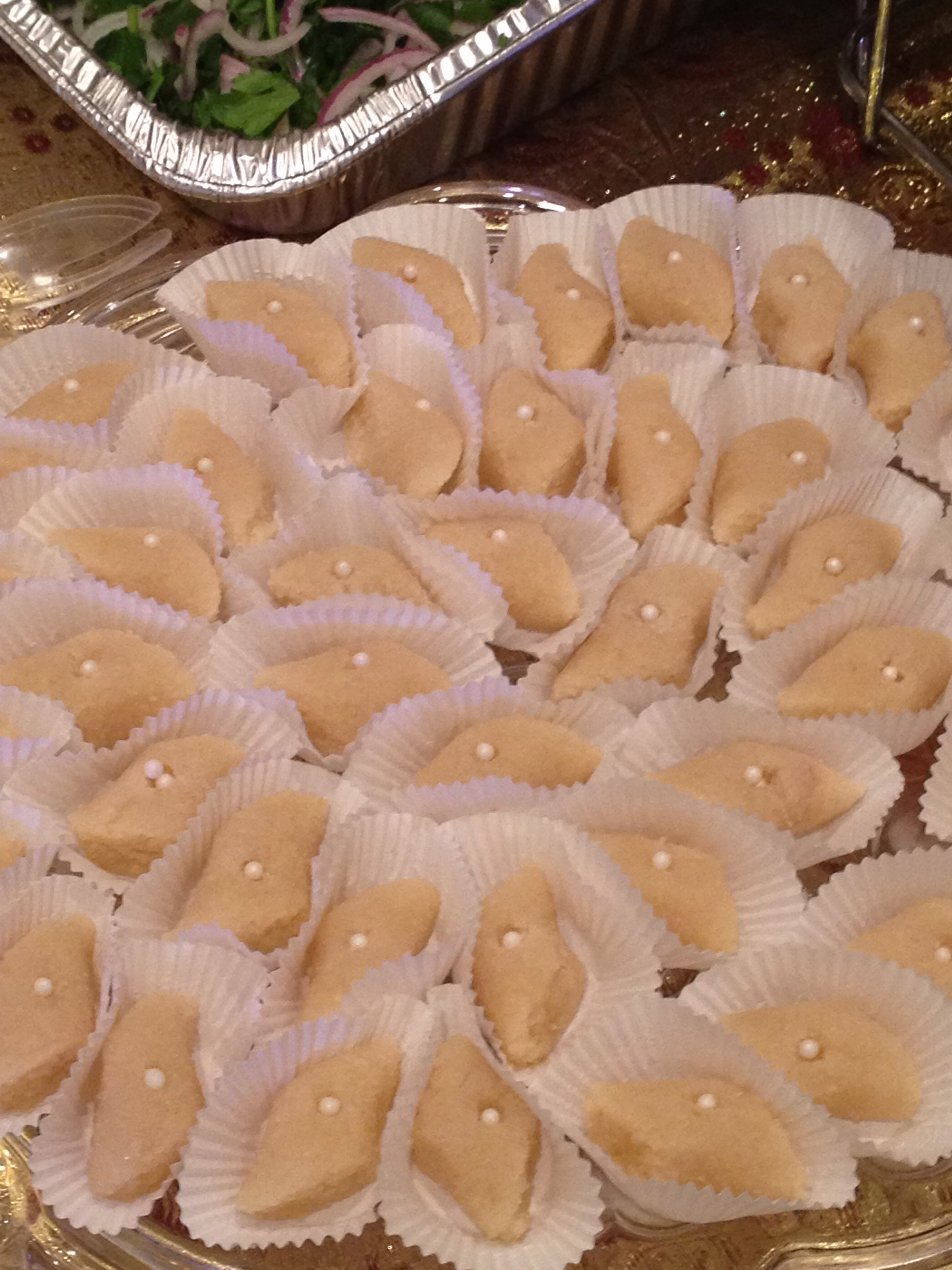
Keep a bowl of water handy.  Dampen your rolling surface and hands, as it will make it easier to roll out.  Cut at an angle into diamond shaped pieces.
Image
Image
Our tradition has been to top with a decorative silver ball ( dragees ). These are for decoration and not to be consumed.
Image

For engagements, our tradition has been to make a “mano” (hand) fashioned out of masapan, with silver dragees across the ring finger.  This is fashioned on a tray, surrounded by cut pieces of masapan, jordan almonds and often, a gold leafed piece of ‘aruda’ ( the rue plant).

Masapan Mano

Like all our delicacies, masapan takes a bit of practice.  And the results are divine!  Enjoy for your special celebrations…and for a special Passover treat!
Bendichas manos!

“A Guidebook for Sephardic Immigrants”

Dr. Devin Naar is a professor of history at the University of Washington in Seattle. He heads the new Sephardic Studies Initiative at UW as part of the university’s Stroum Jewish Studies Program. The following article talks about a booklet published in 1916, intended for Sephardim contemplating leaving their homes in the Mediterranean and seeking their futures in the New World. Take a read. I think you’ll enjoy it!

“>http://jewdub.org/on-the-street/faculty-articles/a-guide-for-sephardic-immigrants/

Ah…….Rhodes!!!!!

I have been devouring the new book I just received, Stella’s Sephardic Table, Jewish family recipes from the Mediterranean Island of Rhodes. This is a beautiful coffee table book compiled by Stella Cohen, an artist, cookbook author and proud Sephardic Jew, born and raised in Salisbury, Southern Rhodesia ( today known as Harare, Zimbabwe). The book is filled with treasured Rhodesli recipes, wonderful photographs, a history of Rhodes, special holiday recipes, traditions, folk remedies, beliefs and blessings and so much more! A treasure trove for anyone who traces their family background to the glorious Juderia of Rhodes as well as those who love traditional Sephardic cuisine.

Reading the recipes, the stories, the Ladino sayings……Stella’s tale of visiting her grandchildren who, after kisses and hugs ask, “Nonna, where are the reshikas?”…things we, as Rhodeslis, can relate to! Imagine! Stella grew up in Africa, a world away from me….and her family table, recollection of family holidays and stories passed down from grandparents of the glorious Island of Rhodes….almost identical! What a joy to see these recipes, stories and reflections in print! It validates our experiences, gives voice to our traditions and helps keep our traditions alive and thriving, for our children and generations to come!

This is a ‘must have’ addition for your library! You can order it today by visiting Amazon. (order several copies…you’ll want to share them with your family and friends!! A wonderful gift!!!)

&&&&

Our son David, sent us an article that was printed in the Israeli newspaper Ha’aretz entitled, “Racing to save the Ladino legacy of Sephardi Jews”. The article told of an effort by a U.S. academic, Dr. Devin Naar, an assistant professor of Jewish Studies at the University of Washington in Seattle who is attempting to collect, preserve and digitize the rich Ladino heritage of Sephardic Jews. David has had the opportunity to study with Professor Naar at UW.

The Professor notes that while Yiddish books have been collected and digitized for sometime, Ladino literature has had no such effort, and no organized depository. He is working to do just that as part of the Sephardic Studies initiative of the University of Washington’s Stroum Jewish Studies program. Our friends at eSefarad.com have reprinted his article, as well. Take a look. If you have books, leaflets or any Ladino writing you might wish to share, message us. We will be happy to pass your information along to Dr. Naar. Perhaps YOU can help to keep the beautiful Ladino language alive !

&&&&&&

We wish to share a bold and valuable commentary from Rabbi Daniel Bouskila speaking to the classic Sephardic worldview of modernity, inclusion and tolerance. If you have not yet had a chance to read it, please do by clicking here. And for a weekly spark of inspiration and learning, sign up to receive his weekly Torah Thoughts from the Sephardic Educational Center by clicking here.

# #

Finally, July 23 is a dark day in the Rhodesli world, recalling the day when the deportation of the Jews from Rhodes took place. There were about 1600 souls taken from Rhodes and the nearby Island of Kos and shipped, in the worst of conditions to the hell that was Auschwitz. Many died en route. About 1200 were gassed almost immediately upon arrival. Countless others died from starvation, exposure, torture and unspeakable inhumanity at the hands of the Nazis. Only 151 survived.

On July 23, take a moment to recall those of Rhodes whose lives were cut short by the brutality of the horrific Nazi regime.
Consider adding a book on the subject to your family or community library so the martyred souls of Rhodes will forever be remembered.
Consider one of the following:
The Juderia: A Holocaust Survivor’s Tribute to the Jewish Community of Rhodes by Laura Varon
Rhodes and the Holocaust: The Story of the Jewish Community from the Mediterranean Island of Rhodes by Isaac Benatar
&&&&&&&&&&

Ah, Rhodes!!!

~Bendichas Manos

Rhodes and the Holocaust

Tonight we commemorate Yom HaShoah, the day we recall the unspeakable horror of the calculated and diabolical program by Hitler and his regime to destroy, through the most inhumane means, European Jewry.

When we hear of the Holocaust we hear primarily about the deaths of Eastern Europe’s Jews in areas such as Germany, Poland, Hungary and Austria. However, the Sephardic world, particularly the communities of the Mediterranean basin, Turkey and Greece, were decimated, as well.

I want to mention here the community of Rhodes, one of the Dodecanese Islands off the coast of Turkey.

Rhodes, which had had a Jewish presence for at least 2,000 years, became home to a great influx of Jews in the years after 1492 when they were expelled from Spain by order of the Inquisition and welcomed into the lands of the Sultan, Sulieman the Magnificent, throughout the Ottoman Empire. Living cloistered behind the walls of the fortress city, their neighborhood, known as “La Juderia”, became a thriving community complete with schools, synagogues, businesses and even a Rabbinical school.

The early 1900’s saw the beginnings of an emigration from Rhodes by several young Jews to the “New World” in pursuit of new opportunities. By the year 1918, the Jewish community there numbered about 4,000 souls. Italy took possession of the Island in 1911. The mid-1930’s saw the Fascists take control of Rhodes. In 1943 the Italians surrendered to the Allies and in August of that year, the Germans occupied the Island. The end of Rhodesli Jewry was in sight.

In August of 1944, there were still 1,767 Jews living in “La Juderia”. After their deportation and brutality at the hands of the Nazis, only 151 survived.

Three events in February and March of this year brought the plight of Jewish community of Rhodes to the forefront. It is those events I want to share with you now.

In February 2012, we had the opportunity to visit Cape Town, South Africa. While there we visited the Sephardic synagogue in the beautiful Sea Point neighborhood. The synagogue follows the traditions of the Jews of the Island of Rhodes, most of her members and their families having originally come from the Island. Many had emigrated from Rhodes to the Congo, to Rhodesia, then Cape Town. The synagogue sports an incredibly interesting and informative pictorial mural in her foyer telling the story of the community. When in South Africa, do make an effort to visit.

As we talked with our hosts Mrs. Lucie Soriano and Rabbi Ruben Suiza, they told us to be sure and visit the Holocaust exhibit located in the South African Jewish Museum.

The Cape Town Holocaust Center has, as part of its permanent exhibit, an area solely devoted to the Jewish Community of Rhodes. I urge you to visit the site and to visit the Exhibit when you are in South Africa. The Sephardic community of Cape Town worked long and hard to ensure this story was told and will be there for generations to come.

A few weeks later, on March 1, 2012, the Los Angeles Jewish Journal featured an article about Sara Hanan Gilmore, a Los Angeles resident born on the Island of Rhodes who survived the horrors of Auschwitz. Her story is one that should be read.

Finally, the Sephardic Educational Center highlighted a newly released book by Isaac Benatar entitled “Rhodes and the Holocaust”. With thanks to Rae Cohen for giving me a copy, I just finished reading the 112 page book. It is compelling, tragic, horrific and hopeful. Benatar’s book and another by Laura Varon, “The Juderia: A Holocaust Survivor’s Tribute to the Jewish Community of Rhodes,” are well worth reading. Add them to your library and share them with your children, family and friends.

As always, I invite you to visit the website of the Rhodes Jewish Museum to know more about Rhodes then and now. Thanks to Aron Hasson for keeping the Museum and the website active and vital for us and for all the world to view and visit.

The Holocaust, stands as a testament to man’s inhumanity to man. It is a tale of the most barbaric depravity. We, as Jews, vow “Never Again”. Never again will we allow ourselves to be slaughtered. Never again will we allow ourselves to be people without a home, without power, without a haven and without a voice. May we always stand by Israel and keep her safe and strong.

As we recall tonight the souls of those who were savagely murdered, tortured and abused beyond belief, may our hearts and memory remind us always…..never again will the world stand silent as ANY MAN suffers the blows of hatred, cruelty and genocide. WE will not stand idly by.

May all their memories be recalled with love and may their memories be forever a blessing.

Passover – Pesah 2012

With Pesah just around the corner, we have received requests for favorite holiday recipes. We are reposting with pleasure some of the more requested ones. Take a look; click on the various links, enjoy this special holiday time. Let us know how your cooking adventures turned out and please feel free to share family stories with us. We’ll look forward to posting many of them. More to come!

Happy Cooking!

~”Bendichas Manos”
Passover Megina – Meat Quajado (originally posted April 16, 2011)

One of the staples of our seder meal is a Megina, sometmes refered to as “mina”, or a “meat quajado”. My mom’s is made with crumbled matzah mixed in giving it a quajado like consistency once cooked, and able to be cut into and served in squares. The “mina” version is often made with layers of soaked and softened matzahs and constructed more like a meat lasagna. I am sharing the recipe as my mom makes it for our family and as she has taught it in community cooking classes. This is one of those dishes you can customize to your liking, adding different spices for a differnt flair ( think cumin or ‘ras el hanut’ or even cilantro instead of parsley, to name a few). This version is made with ground beef, although ground turkey could be substituted. Let us know what you think!

My Mom’s (Kaye Israel) Recipe for Passover “Megina” (meat casserole) {sometimes called Quajado de Carne or Mina}

2 C chopped onions
2 lbs ground meat
2 tblsp oil
1/2 tsp pepper (to taste)
1 tblsp salt
1/4 c parsley, chopped
10 eggs
1 C farfel (soaked in warm water, and squeezed dry) or 4 sheets matzah (soaked in warm water, squeezed dry and crumbled)
touch of red pepper flakes (optional)

Brown meat with onions in oil; transfer to bowl and allow to cool. Add salt, pepper, parsley and farfel (or matzah). Add 2 beaten eggs at a time until 8 eggs are mixed in.

Grease 9 x 13 inch pan (pyrex type) and heat in oven for 2 – 3 minutes. Pour mixture into pan. Spread remaining 2 beaten eggs to top of mix. Bake at 400 degrees for 30 minutes or until golden brown. Allow to cool. Cut into squares and serve. Delish!!!!

I am including this link, complete with some pictures, of one of our favorites, my mom’s Keftes di prassa.

What Seder would be complete without Haroset. Here is my cousin Sarita’s recipe.

We have some delicious dessert recipes in our community. Check out our recipes for some of my mom’s best: ashuplados, mustachudos (a nut confection) , masa di vino (wine cookies), and marochinos ( almond macaroons ).

I have also added the link to the beautiful Moroccan custom of “Bibhilu

Finally, a link to Yehoram Gaon’s recording of one of our favorite Ladino Pesah songs, Un Cavritico .

As with all things Passover…..enjoy the opportunity to be with family and friends. Document your family recipes and traditions, cook together, enjoy the time. With each dish we serve and each traditional song we sing, we recall lovingly those family members who are no longer with us, whose recipes and memories are present at our table, and whose names we mention at various time throughout the evening (and throughout our many family gatherings).

As we retell the Passover story, so too, we retell our family stories. I love the fact that our sons, now in their 20’s, “know” and talk about family members, several who passed away years before the boys were born…..but whose life lessons and stories are still very much a part of our family gatherings. Memories live on!

We would love to share some of your family stories with “Bendichas Manos” readers…..please feel free to send them on to us! Most important, share them at your seders. This keeps our histories and our stories alive!