A wonderful clip from the 1994 film ‘From Toledo to Jerusalem’. Ladino with Hebrew subtitles. I love this movie!! (and I adore Yehoram Gaon). I recall seeing it originally with English subtitle…..however, am delighted to see this clip online!! Enjoy the story, the sights and the music!!! Happy to be sharing it with you!!!
Author Archives: bendichasmanos
Burmuelos di Hanukkah
Hanukkah celebrates the re-dedication of the Temple in Jerusalem after the Jewsih victory over the Greeks in 165 BCE.
A favorite story is the Miracle of the Oil. The Jews went to reclaim and restore the Temple in Jerusalem after it had been defiled and left in ruins by the Greeks. There was only enough oil left to rekindle the candelabra that was to burn throughout the night each and every night. It would be several days before more oil be be procured and prepared. My virtue of a Miracle, the oil burned for 8 days and nights, until more oil was available.
To commemorate the Miracle, we prepare foods cooked in oil for the holiday of Hanukkah. Favorites are latkes (potato pancakes), sufganiyot (filled donuts), and in our family, burmuelos (fried dough).
Growing up, I had never had latkes. Our Hannukah treat was always burmuelos – light, fried dough pillows bathed in a light, sweet syrup that is absolutely devine!
Tonight I had all my family home, under one roof…..a treat and a blessing, indeed! We had a home cooked meal: chicken keftes, rice, latkes ( a bow to my childrens “ashkefard’ heritage!!), fasulia, and salad. For dessert…..my mom made fresh burmuelos!!!
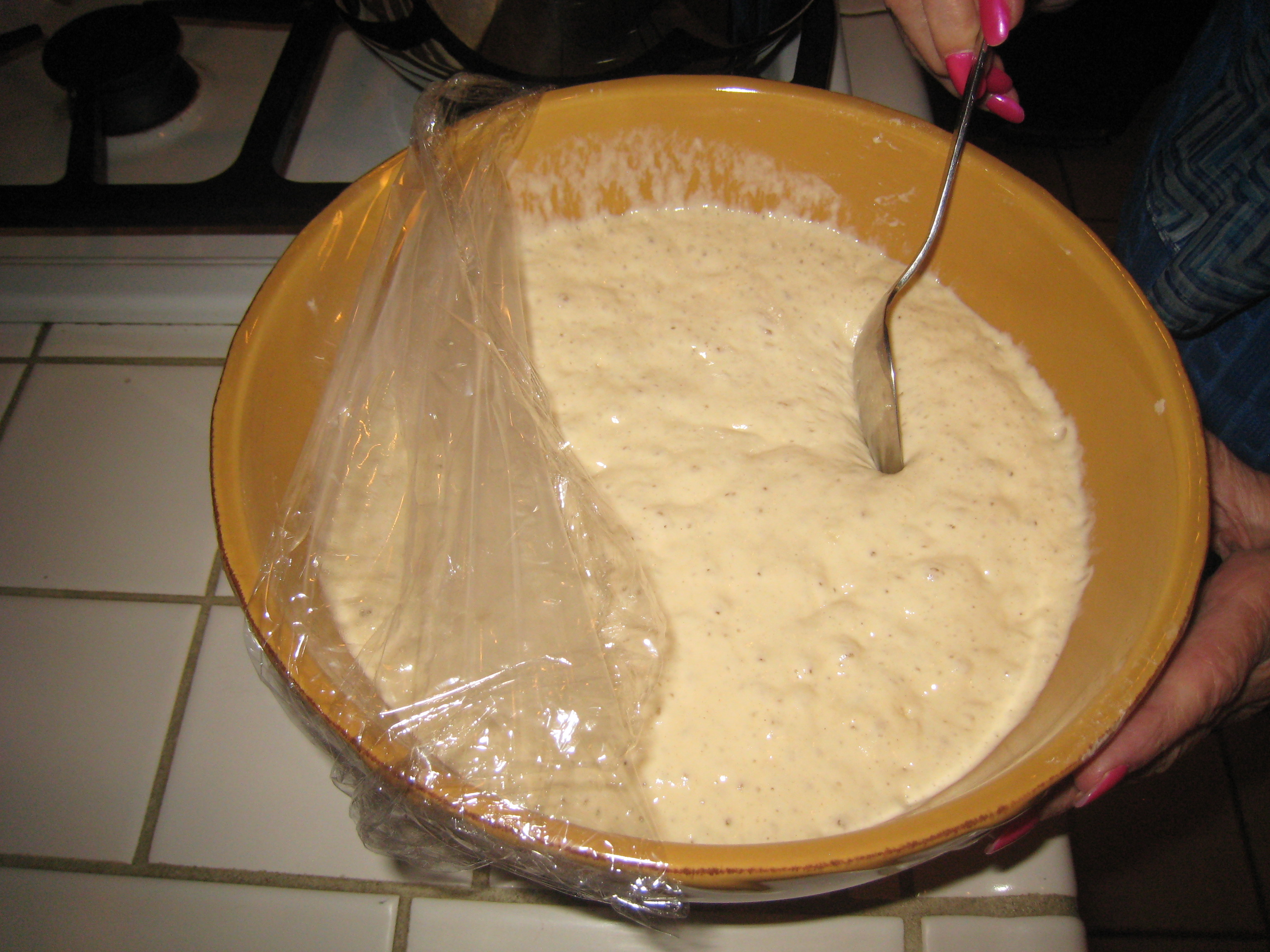
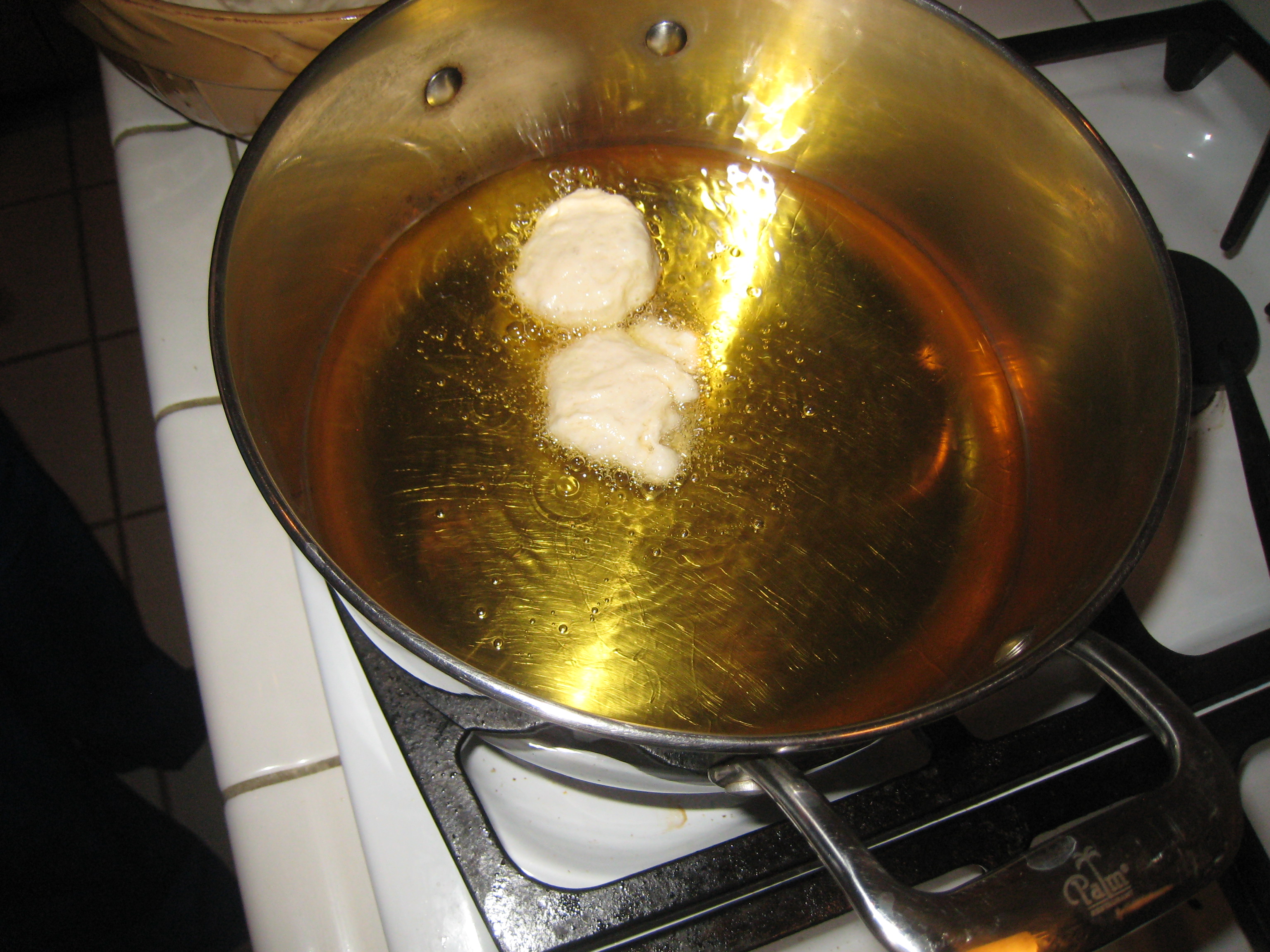
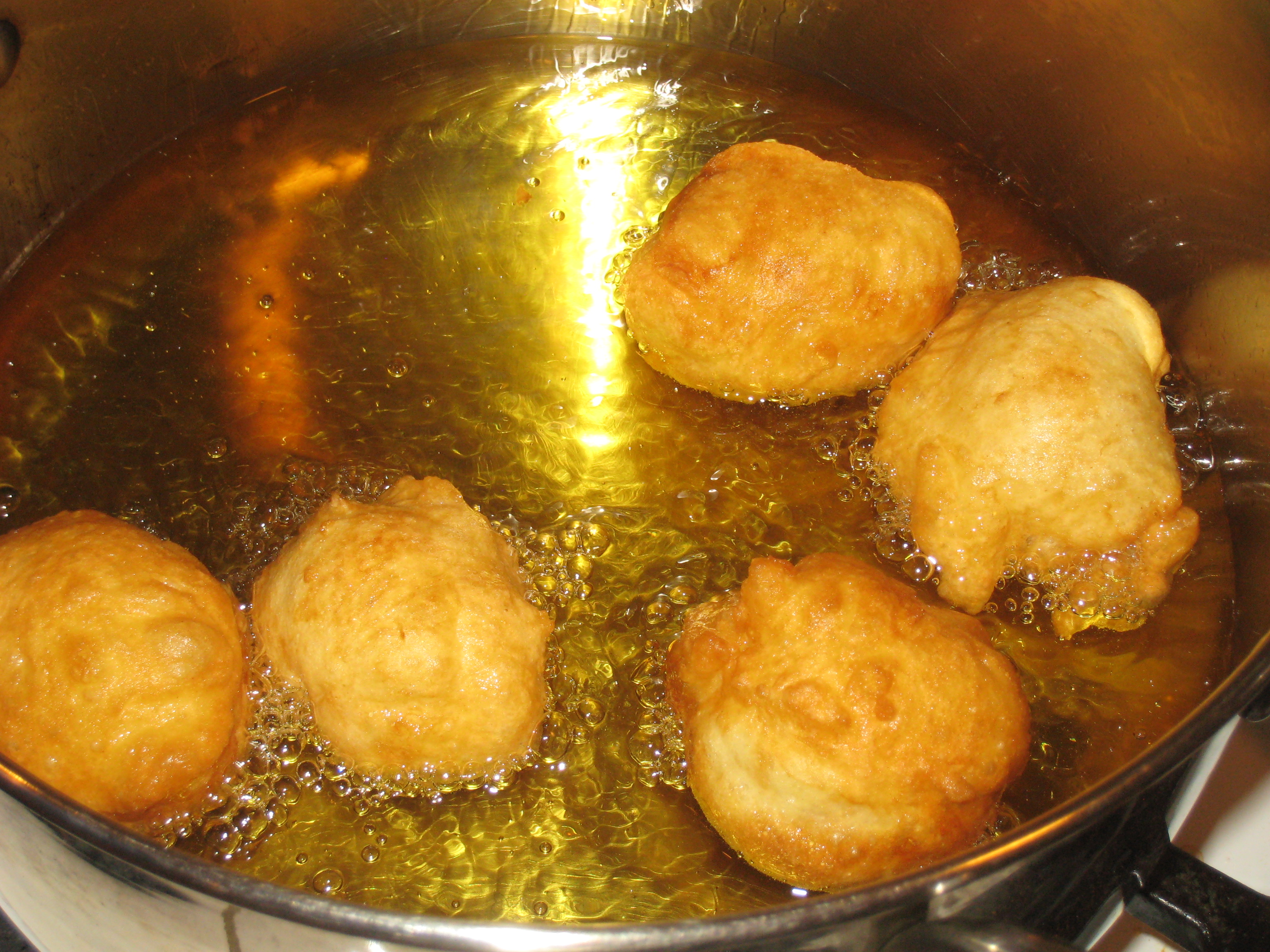
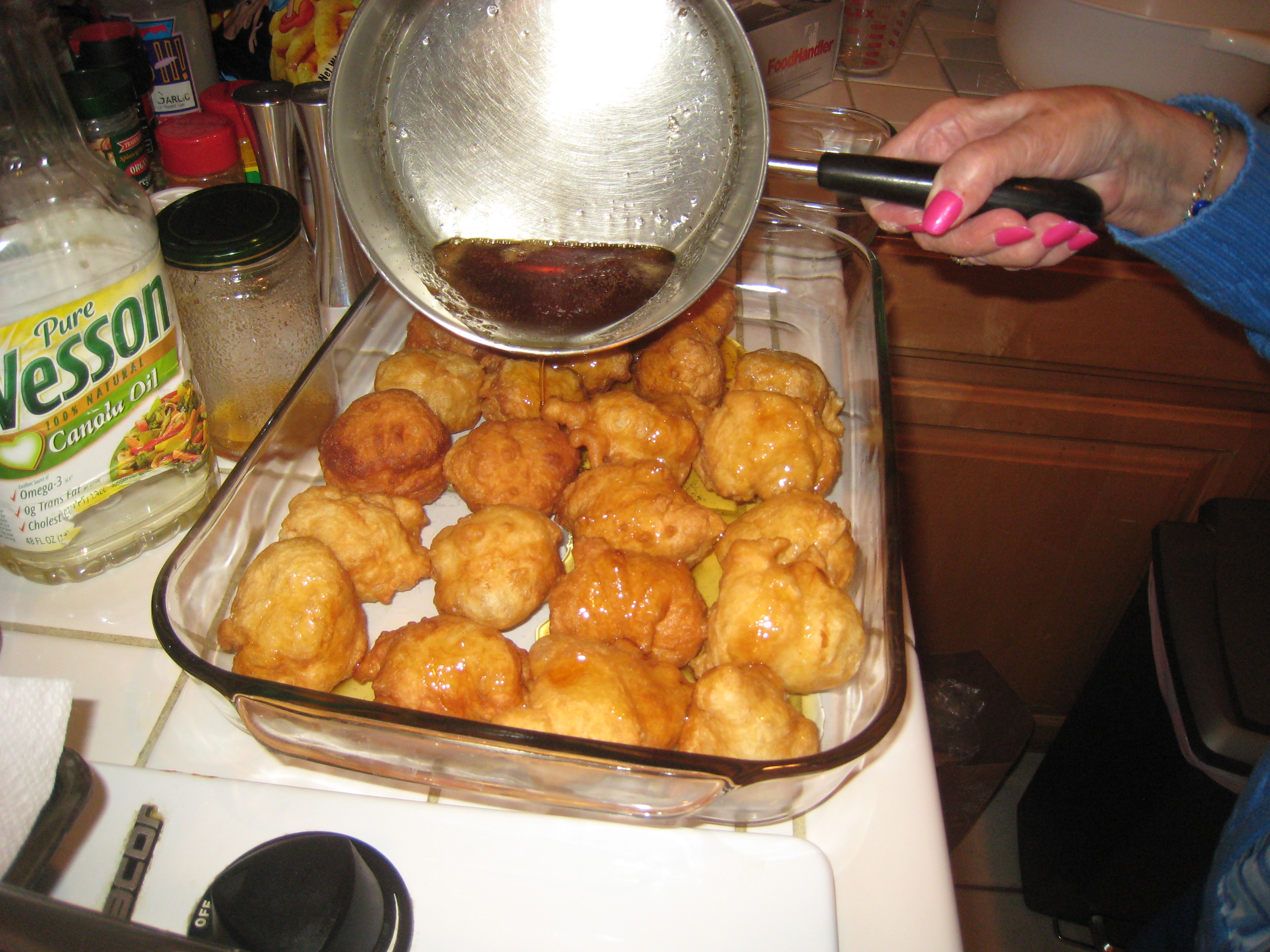
Made from a yeast dough, it takes some time for the dough to rise and be ready to fry. My mom made the dough ahead of time and after dinner, dropped the dough by spoonfuls into hot oil, watched them puff and turn a golden brown as she prepared the honey syrup. Once the burmuelos were ready, she bathed them in syrup and we ate them, warm and fresh! Divine, indeed!
Below is the recipe. Give them a try…..and enjoy!
My Mom uses the recipe from the cookbook,
- The Sephardic Cooks – Come Con Gana
,compiled by the Sisterhood of Congregation Or Ve Shalom in Atlanta, GA.
1 tsp yeast
1/2 C and 1 1/2 C warm water
pinch of salt
3 C flour
1 egg
oil (for frying)
Soften yeast in 1/2 cup warm water. In mixing bowl add dry ingredients. Add yeast mixture, egg and remaining warm water. MIx well. Allow to rise in covered bowl in warm place for 2 hours.
Fill a quart pot with 3 inches of cooking oil. Allow to get very hot.
Drop a teaspoon of soft dough into the hot oil.
Remove with slotted spoon when golden brown. Bathe in syrup.
Syrup
1 C sugar
3 Tblsps honey
1/2 C water
Boil together until sticky. Pour over burmuelos.
Bendichas Manos!!!!
A Rosh Hashana Seder
The holidays are almost here and the cooking has begun! Time for family, reflection and looking towards the year ahead.
One of the rich and unique traditions of our Sephardic families is a Rosh Hashanah Seder. It is a short service we conduct around our tables with the Rosh Hashanah evening meal, with some families doing it on both nights. Including the traditional blessings done at the holiday meal table (Kiddush, Washing of the Hands, HaMotzi), blessings are also said over symbolic foods, expressing our hopes and wishes for the year ahead. Most of the foods used are those whose names in Hebrew sound similar to one of the wishes expressed, so there is some fun associated with this!
Although primarily a Sephardic tradition, many others have begun adding the Seder to their Rosh Hashanah celebrations. My father remembers the “ratzones” from his childhood in Seattle…we began sharing the tradition with our children and friends within the past decade. Rabbi Yitz Greenberg suggests that each family add some blessings of our own, adding to our family traditions, adding puns we create around foods we include, which we have done from time to time. One of our Rebbetzins, Penina Schochet, suggested that we select a new fruit each year, having our young children be part of the process, and say a “shehecheyanu” over the addition of the new fruit, as a way to further grace our Rosh Hashanah table and include our children in selecting and trying something new.
Some families refer to this “service” as the “Yehi Ratzones”, referring to the words used “May it be Your will …” as referencing the symbolism that is to be recited. Often one hears the words “simanim”, referring to the ‘symbolic’ foods used. I will note some of the foods we eat and the translation of the blessings we say, primarily based on the materials prepared and provided by Sephardic Temple Tifereth Israel (STTI) in Westwood, California, as well as materials prepared by the Maimon Family in Seattle, Washington.
Finally, my good friend, Linda Sendowski (The Boreka Diary) has some wonderful recipes for Rosh Hashana foods, specifically these symbolic foods, on her blog, which I share with you.
Check it out…and consider including some of these ideas and blessings at your Rosh Hashanah table this year.
For our Seder, we prepare a plate on the table that holds some of each symbolic food, and a prepared page for all our guests, including the blessings we will recite for the evening so all can participate. We include the Hebrew and English, and some years, the Ladino. Adapt as is comfortable for your household. We start with the Kiddush, the Shehecheyanu, Birkat Yeladim (Blessing of the Children), Washing the Hands, and the Hamotzi.
Following that, we recite a few blessings with intended good for the New Year, over some symbolic foods. The foods we use are usually plentiful during this season. Their Hebrew names, shades or colors remind us of our hopes and dreams for the year ahead. It is noted that “foods provide us an occasion to wish away our fears and verbalize our deepest hopes, as well as a chance to pun on their names in a number of local tongues”. (Source: Noam Zion in his paper Seder Rosh Hashanah).
1. Apples dipped in sugar or honey; apple cooked in sugar or honey; or candied apples:
Yehi Ratzon May it be your will, Lord our God and God of our Fathers, to renew upon us a good and sweet year, from the beginning of the year until the end of the year.
Baruch Ata Adonai Elohenu Melech Haolam Bore Peri Haetz.
2. Leeks (karti):
Yehi Ratzon May it be your will, Lord our God and God of our Fathers, that our enemies be cut off, as well as those who desire to do us harm.
(this is based on the wordplay between the Hebrew word for leek, “karti”, which is similar to the word “korat”, meaning “to cut off”)
3. Beets or Spinach (“silka” is usually identified as beets; Keter Shem Tov says it refers to spinach):
Yehi Ratzon May it be your will, Lord our God and God of our Fathers, that our enemies disappear, as well as those who desire to do us harm.
4. Dates:
Yehi Ratzon May it be your will, Lord our God and God of our Fathers, that our enemies be consumed as well as those who desire to harm us.
(this is based on the wordplay between the Hebrew for dates, “tamar”, which is similar to a word meaning to “end” or “consume”)
5. Pumpkin or gourd (zucchini or squash; “kalavasa” is often used):
Yehi Ratzon May it be your will, Lord our God and God of our Fathers, that you should tear up any evil decrees against us and let our merits be read before you.
(this is based in the wordplay between the Aramaic word for pumpkin or gourd, “kara”, and the Hebrew word meaning to “tear”)
6. Fish (pishkado):
Yehi Ratzon May it be your will, Lord our God and God of our Fathers, that our merits may multiply as the fish in the sea. Others have commented that as fish is a symbol of abundance and fertility, we ask God to Bless us with both.
7. “Ruviah”, often identified as Fenugreek, although sometimes referred to as black eyed peas or string beans. It is told that in Bagdad, it was referred to as “luviah”. Since it was similar to the Hebrew word “lev”, meaning heart, the word “ut-labevenu” (meaning “and purify us”) was added. (Linda Sendowski has a great recipe for Black Eyed Peas!)
Yehi Ratzon May it be your will, Lord our God and God of our Fathers, that our merits increase and that you purify us.
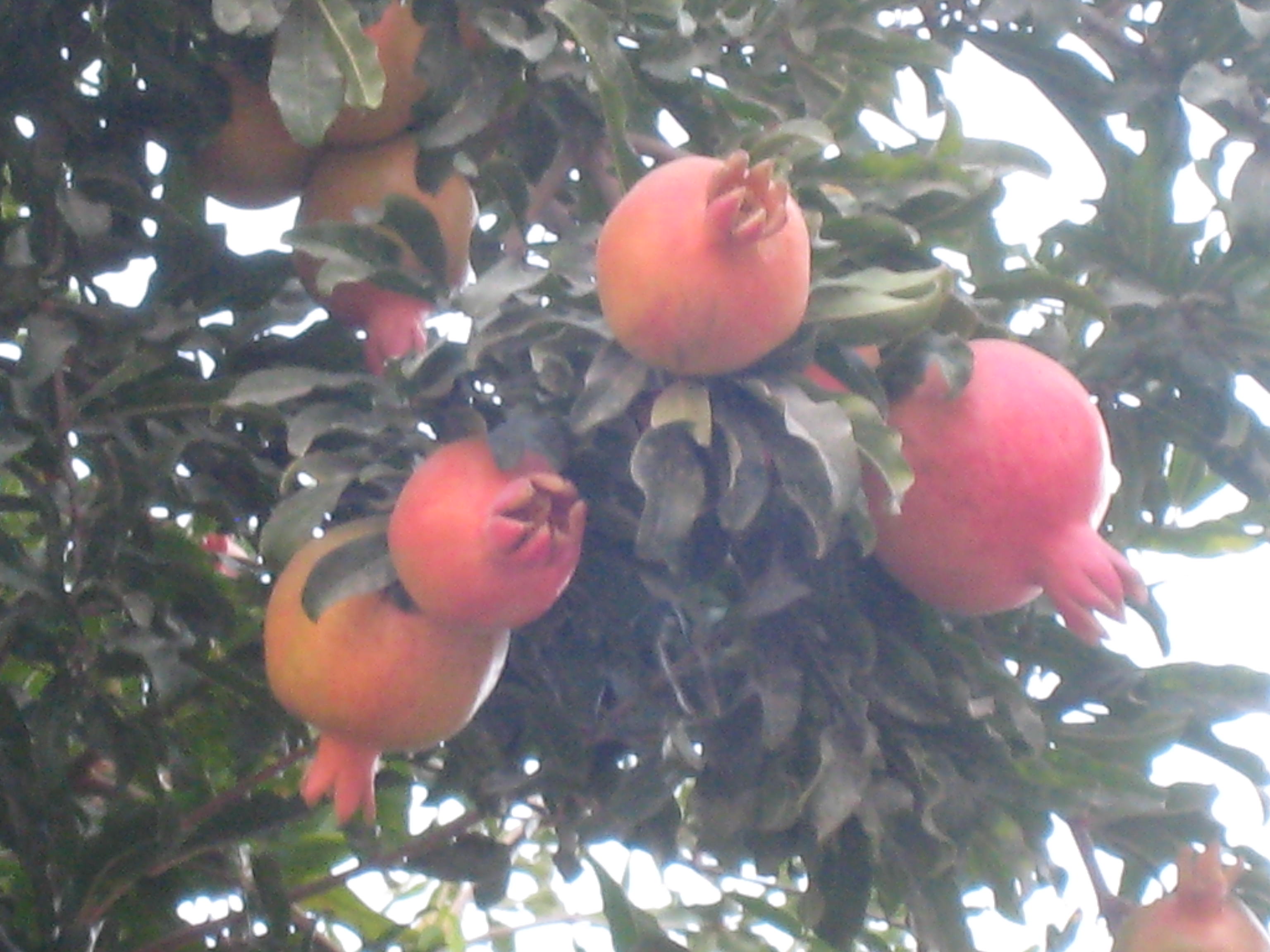
8. Pomegranates ( Used the seeds in your cooking, in a salad, or see Debby Segura’s recipe for making a Granita)
Yehi Ratzon May it be your will, Lord our God and God of our Fathers, that our merits increase as the seeds of the pomegranate.
9. Head of Fish (something from the head….in our family, my Aunt Belina Hasson used to make tongue (I cannot get myself to even buy a tongue, let alone figure out how to cook it….so, since this is based on puns, we use a “head” of lettuce):
Yehi Ratzon May it be your will, Lord our God and God of our Fathers, that we may be in the forefront as the head, and not the background, as the tail.
The festival meal then follows.
In keeping with Yitz Greenberg’s suggestions, one could add:
Peaches: May it be a “peachy” year
Dates: May our single friends have many “dates” this year
Mushrooms: May our abundance “mushroom” in the years ahead….
Have fun with this and make it meaningful to your family!
My friend, Debby Segura, combines all the symbolic foods into a beautiful and tenderly delicious salad which she serves as an early course. Her recipe for a “New Year Simanim Salad” is posted here. I have served it many times….it is enjoyed by all, and the symbolism makes it ever more special! ( Debby Segura)
Finally, I am attaching a link to a YouTube series of “The Selichot of Ezra Bessaroth”, in Seattle, Washington. It is a ten-part series of the Selichot service in the tradition of the Jews of Rhodes, led by Hazzan Isaac Azose, with many in the Congregation participating. The melodies are familiar to those of us who grew up in Rhodesli Sephardic Synagogues. There is something comforting and reaffirming in melodies, memories and flavors of our youth. I hope you will take a few minutes to listen and enjoy.
(Selichot in the tradition of the Jews of Rhodes)
Please share with us any of your own family traditions….we would love to post them. Sharing keeps traditions alive and evolving for each new generation!
From my parents, Jack and Kaye Israel, my husband Robert, and our sons, Jason and David….Tizku Leshanim Rabot…May we all merit many years; Anyada Buena….a good, and meaningful New Year to you all!
~Marcia Israel Weingarten
Bendichas Manos
Passover Concludes and A Recipe for “Ahashu”
Passover 2011 is behind us! We marked the conclusion of the holiday in the tradition of the Jewish community of Rhodes with a picnic at Lake Balboa, as planned by Sue (di Edward) Mizrahi. “Tradition tells us”, said Sue, “that our families in Rhodes would conclude Pesah with a picnic at Zimbouli (Rhodini) Park. On their return to the Juderia, they would pick sprays of greenery and spring blossoms to decorate every room in the house. Bunches of willows would be displayed to indicate that Pesah had ended and that the home could be restocked with leavened foods. Time for borekas again!!!” So, together with a group of family and friends, we enjoyed the beautiful spring evening in the San Fernando Valley and and concluded our celebration of Pesah!
Now, what to do with the matzah that might be still be in our kitchens? After eight days, it is hard to contemplate another meal with the flat bread. My mom mentioned Ahashu, a caramelized confection that brings memories of a time gone by. And then Howard Franco mentioned it in a note today. SO….it’s time to post the recipe my mom uses for Ahashu, a treat, indeed…..and a great use of that left over matzah!!
Ahashu
1 c. water
3 c. farfel or 4 chopped matzah
1/2. tsp. ginger
1 c. sugar
1 c. chopped nuts, toasted
1/2 c. honey
Toast farfel or matzah lightly in oven. Cook sugar, honey and water until sticky. Add matzah and let cook over medium heat 5 minutes while stirring. Add ginger and nuts. Spread in flat Pyrex dish; spoon into pastry cups. Enjoy!
From NY…..a Rhodesli Seder
Thanks to Howie Franco for posting this clip of their family Pesah Seder in New York. Howie leads the Seder with his cousin Richard Franco (thanks to Sally Mann and Rae Cohen for sharing the clips!)
I love the telling of the story…..”este es el pan di afision…..” My father, Jack Israel, started reading this in Ladino during our Seders some thirty years ago. He remembered the sound of HIS father, David Liezer Israel (z’l) {hijo di Yaaco Pasha} reading it during the Seders while my dad was growing up in Seattle. Since then, several of my cousins, our children and I have begun learning the traditional Ladino rendition. L’dor v’dor…from generation to generation…..we keep our traditions alive!!
I’ve copied the words from the ‘Agada de Pesah’ (according to the customs and traditions of the Seattle Sephardic Community), edited by Isaac Azose, August 2004. Watch the clip from the Franco Seder and read along:
“Esta es el pan de la afri-ision ke komieron muestros padres en tierra de Ayifto. Todo el ken tiene ambre venga i koma; todo el ken tiene de menester venga i paskue. Este anyo aki, a el anyo el vinien en tierra de Yisrael. Este anyo aki, siervos, a el anyo el vinien en tierra de Yisrael ijos foros.”
“This is the bread of affliction that our ancestors ate in the land of Egypt. Let all who are hungry come and eat of it; all in need come and celebrate. This year we observe it here; next year may we be in the land of Israel. This year we are slaves in exile; next year may we be free men in the land of Israel.”
Thank you to the Franco family! Record and share your family memories….with your families and with us. Together, we can keep our memories and our traditions alive!
“Bendichas Manos!”
Some final Pesah recipes, links and “The Blessing of Bibhilu”
A final post before Pesah. First, some links for desserts for your Seders or for during the week. Our previous posts for “marochinos” (almond macaroons), “mustachudos” (nut confections), “masa di vino” (wine cookies) and “ashuplados” (merguines), are always winners!! This year, as well, I want to share with you some great finds from some of the favorite blogs I follow.
I’m looking forward to trying this “Passover Raspberry or Strawberry Tart” by Jamie Doueck, posted on ‘The Jewish Hostess’. Also, “Matzah Toffee with Almonds”, posted on ‘Serious Eats‘ looks delicious and divine!! As always, my friends, Linda Capeloto Sendowski, is always cooking up something fun and special at ‘the Boreka Diary’ Finally, from ‘the Jew and the carrot’, a compendium of great Passover recipes from some of the best the web has to offer. Take a look and see what’s going on in the world of Passover food bloggers!!
One more tradition for Passover to mention again. My cousin Avi Abikzer, whose family is from Morocco, introduced the tradition of lifting the Seder plate above the heads of each family and reciting a blessing called ‘Bibhilu‘…. “Bibhilu yatzanu mi’mitzrayim” (in haste we came out of Egypt). {in this clip, Avi and Leah’s son, Evan, passes the plate over the heads of the guests as his father recites the Bibhilu blessing}
At synagogue yesterday, a friend asked if we have this custom, and I responded that it was introduced to us and we adopted it. She told me that they do it at her Seder table as her husband’s family came from Turkey, and it was their custom there.
A few years back Rabbi Daniel Bouskila wrote a story which appeared in the Los Angeles Jewish Journal titled “The Blessing of Bibhilu“. Perhaps it is a tradition you might choose to bring to your table.
Wishing you a joyful and meaningful Pesah, and good times with family and friends!
~”Bendichas Manos!”
Passover Megina (meat quajado)
One of the staples of our seder meal is a Megina, sometmes refered to as “mina”, or a “meat quajado”. My mom’s is made with crumbled matzah mixed in giving it a quajado like consistency once cooked, and able to be cut into and served in squares. The “mina” version is often made with layers of soaked and softened matzahs and constructed more like a meat lasagna. I am sharing the recipe as my mom makes it for our family and as she has taught it in community cooking classes. This is one of those dishes you can customize to your liking, adding different spices for a differnt flair ( think cumin or ‘ras el hanut’ or even cilantro instead of parsley, to name a few). This version is made with ground beef, although ground turkey could be substituted. Let us know what you think!
My Mom’s (Kaye Israel) Recipe for Passover “Megina” (meat casserole) {sometimes called Quajado de Carne or Mina}
2 C chopped onions
2 lbs ground meat
2 tblsp oil
1/2 tsp pepper (to taste)
1 tblsp salt
1/4 c parsley, chopped
10 eggs
1 C farfel (soaked in warm water, and squeezed dry) or 4 sheets matzah (soaked in warm water, squeezed dry and crumbled)
touch of red pepper flakes (optional)
Brown meat with onions in oil; transfer to bowl and allow to cool. Add salt, pepper, parsley and farfel (or matzah). Add 2 beaten eggs at a time until 8 eggs are mixed in.
Grease 9 x 13 inch pan (pyrex type) and heat in oven for 2 – 3 minutes. Pour mixture into pan. Spread remaining 2 beaten eggs to top of mix. Bake at 400 degrees for 30 minutes or until golden brown. Allow to cool. Cut into squares and serve. Delish!!!!
As with all things Passover…..enjoy the opportunity to be with family and friends. Document your family recipes and traditions, cook together, enjoy the time. With each dish we serve and each traditional song we sing, we recall lovingly those family members who are no longer with us, whose recipes and memories are present at our table, and whose names we mention at various time throughout the evening (and throughout our many family gatherings).
As we retell the Passover story, so too, we retell our family stories. I love the fact that our sons, aged 19 and 23, “know” and talk about family members, several who passed away years before the boys were born…..but whose life lessons and stories are still very much a part of our family gatherings. Memories live on!
We would love to share some of your family stories with “Bendichas Manos” readers…..please feel free to send them on to us! Most important, share them at your seders. This keeps our histories and our stories alive!
~”Bendichas Manos”
Our Family’s Haroset
My cousin Sarita (Hasson Fields) is a great cook! She has learned our traditional family recipes and often adds a new and novel twist to update a dish and make it her own. She just finished making Haroset for our family Seder……a gathering of about 35+ at our cousin Leon’s home this year.
I always enjoy cooking with Sarita. On occasion, we’ve cooked with my mom and pass the time telling family stories of days gone by, reflecting, remembering and laughing. At times, she and I have cooked and try adapting recipes…..sometimes more successfully than others! Always a good time together. I wish we lived closer…especially when she was cooking today, so I could have filmed and photographed her making the Haroset.
Here is her recipe for Rhodesli Haroset, as made by her mom, Belina Beton Hasson (z’l) {*similar to the recipe in the Atlanta Sephardic Sisterhood Cookbook)…..for 35 people (with leftovers, for the many who like to take some home, and spread it on matzah for a treat!!) You can cut it in half ( or quarter), depending on the size of your crowd.
50 – 60 oz pitted dates
10 large red apples peeled and chopped
5 – 6 C finely chopped nuts (pecans and walnuts)
1 1/2 C sweet red wine
1/2 C white vinegar
Place apples and dates in a pot and cover with water. Cook until soft. Drain and let cool a bit. Place apple/date mixture in food processor and puree, a batch at a time. Add wine to mixture. Add chopped nuts. Add vinegar.
(Sarita’s note…..mixture should not be watery. If it is, add more nuts; if it seems too hard, add more wine.)
It is definitely delicious. Give it a try…..and let us know what you think! “Bendichas Manos”!
Keftes di Prassa con Carne AND an Egyptian Leek Mina
I posted the recipe for Kefte di Prassa (leek patties) earlier this week. The recipe is as my mom has made them for all the years I can remember. Morrie Y. Angel has asked for a recipe that includes meat. Although we’ve never made them this way, I recall a year that Lenora (di Morris) Mizrahi (z’l) made them with meat and brought them to our Seder. I called her daughter, June Grossman, to see if she could share the recipe. She referred me to her sister-in-law, Sue (di Edward) MIzrahi. Sue took out her cookbook, and found the recipe (“handwritten on a gin rummy score sheet of Morris and Lenora…. incidentally Lenora won that particular nightly game by 36 points”). These are family heirlooms! Here is Lenora Mizrahi’s recipe for Keftes di Prassa con Carne as shared by Sue:
10 medium leeks
2 large potatoes boiled and mashed (approximate 1 cup)
1 lb ground beef
2 eggs beaten
1 tsp salt
pepper (to taste)
1 tbs chopped parsley
oil for frying
Soak and clean leeks well. Cut leeks into 1/4 inch pieces and boil in water until soft. Boil potaoes until soft, about 15 minutes. Drain well. Add leeks and mashed potatoes and mix well with ground beef. Add eggs, chopped parsley, salt and pepper. Form into patties. Fry until golden brown. Remove from frying pan onto absorbent paper towels (on top of brown paper bags).
Can be frozen and then reheated.
*MW: I asked Sue how long she warmed them when removing from the freezer. She responded: “When I would ask Madre how long to cook them she would say…”Ija, you’ll know,” but I don’t…I just guess each time and hope for the best!!!”
A great recipe….and memories of a great lady!!! Thanks, Sue, for sharing the recipe (and stories!).
*******
In addition, I am linking a blog I enjoy called “the carrot and the jew”. There was a posting this week by Elizabeth Alpern where she writes about an ‘Egyptian Leek Mina’, a variation on our Pesah megina. Looks yummy! Check it out and perhaps, try something new this year!
Lots of cooking going on! Enjoy. “Bendichas Manos!”
Ashuplados (meringues),,,,,a Pesah treat!
Ashuplados!
Meringue clouds…..a divine confection of the Gods! A special occasion delicacy passed down by our grandmothers !
Growing up, we knew it was a very special occasion when Grandma made Ashuplados……meringue clouds! Sweet….light as a feather, a light shell on the outside. Texture, sweetness……simply….divine!!!
They look beautiful on a sweet table, and delight young and more mature and sophisticated palettes alike!
These are one of my mom’s signature delicacies. Last year, we prepared this post when my mom made these for my young cousin’s “Banyo di Novia”. (She prepared them again this month for the Brit Milah and Pidyon haBen of the new baby son of the same cousin……mashala!!!) They are a superb Pesah treat, as well. Continue reading