Some final Pesah recipes, links and “The Blessing of Bibhilu”

A final post before Pesah. First, some links for desserts for your Seders or for during the week. Our previous posts for “marochinos” (almond macaroons), “mustachudos” (nut confections), “masa di vino” (wine cookies) and “ashuplados” (merguines), are always winners!! This year, as well, I want to share with you some great finds from some of the favorite blogs I follow.

I’m looking forward to trying this “Passover Raspberry or Strawberry Tart” by Jamie Doueck, posted on ‘The Jewish Hostess’. Also, “Matzah Toffee with Almonds”, posted on ‘Serious Eats‘ looks delicious and divine!! As always, my friends, Linda Capeloto Sendowski, is always cooking up something fun and special at ‘the Boreka Diary’ Finally, from ‘the Jew and the carrot’, a compendium of great Passover recipes from some of the best the web has to offer. Take a look and see what’s going on in the world of Passover food bloggers!!

One more tradition for Passover to mention again. My cousin Avi Abikzer, whose family is from Morocco, introduced the tradition of lifting the Seder plate above the heads of each family and reciting a blessing called ‘Bibhilu‘…. “Bibhilu yatzanu mi’mitzrayim” (in haste we came out of Egypt). {in this clip, Avi and Leah’s son, Evan, passes the plate over the heads of the guests as his father recites the Bibhilu blessing}

At synagogue yesterday, a friend asked if we have this custom, and I responded that it was introduced to us and we adopted it. She told me that they do it at her Seder table as her husband’s family came from Turkey, and it was their custom there.

A few years back Rabbi Daniel Bouskila wrote a story which appeared in the Los Angeles Jewish Journal titled “The Blessing of Bibhilu“. Perhaps it is a tradition you might choose to bring to your table.

Wishing you a joyful and meaningful Pesah, and good times with family and friends!

~”Bendichas Manos!”

Passover Megina (meat quajado)

One of the staples of our seder meal is a Megina, sometmes refered to as “mina”, or a “meat quajado”. My mom’s is made with crumbled matzah mixed in giving it a quajado like consistency once cooked, and able to be cut into and served in squares. The “mina” version is often made with layers of soaked and softened matzahs and constructed more like a meat lasagna. I am sharing the recipe as my mom makes it for our family and as she has taught it in community cooking classes. This is one of those dishes you can customize to your liking, adding different spices for a differnt flair ( think cumin or ‘ras el hanut’ or even cilantro instead of parsley, to name a few). This version is made with ground beef, although ground turkey could be substituted. Let us know what you think!

My Mom’s (Kaye Israel) Recipe for Passover “Megina” (meat casserole) {sometimes called Quajado de Carne or Mina}

2 C chopped onions
2 lbs ground meat
2 tblsp oil
1/2 tsp pepper (to taste)
1 tblsp salt
1/4 c parsley, chopped
10 eggs
1 C farfel (soaked in warm water, and squeezed dry) or 4 sheets matzah (soaked in warm water, squeezed dry and crumbled)
touch of red pepper flakes (optional)

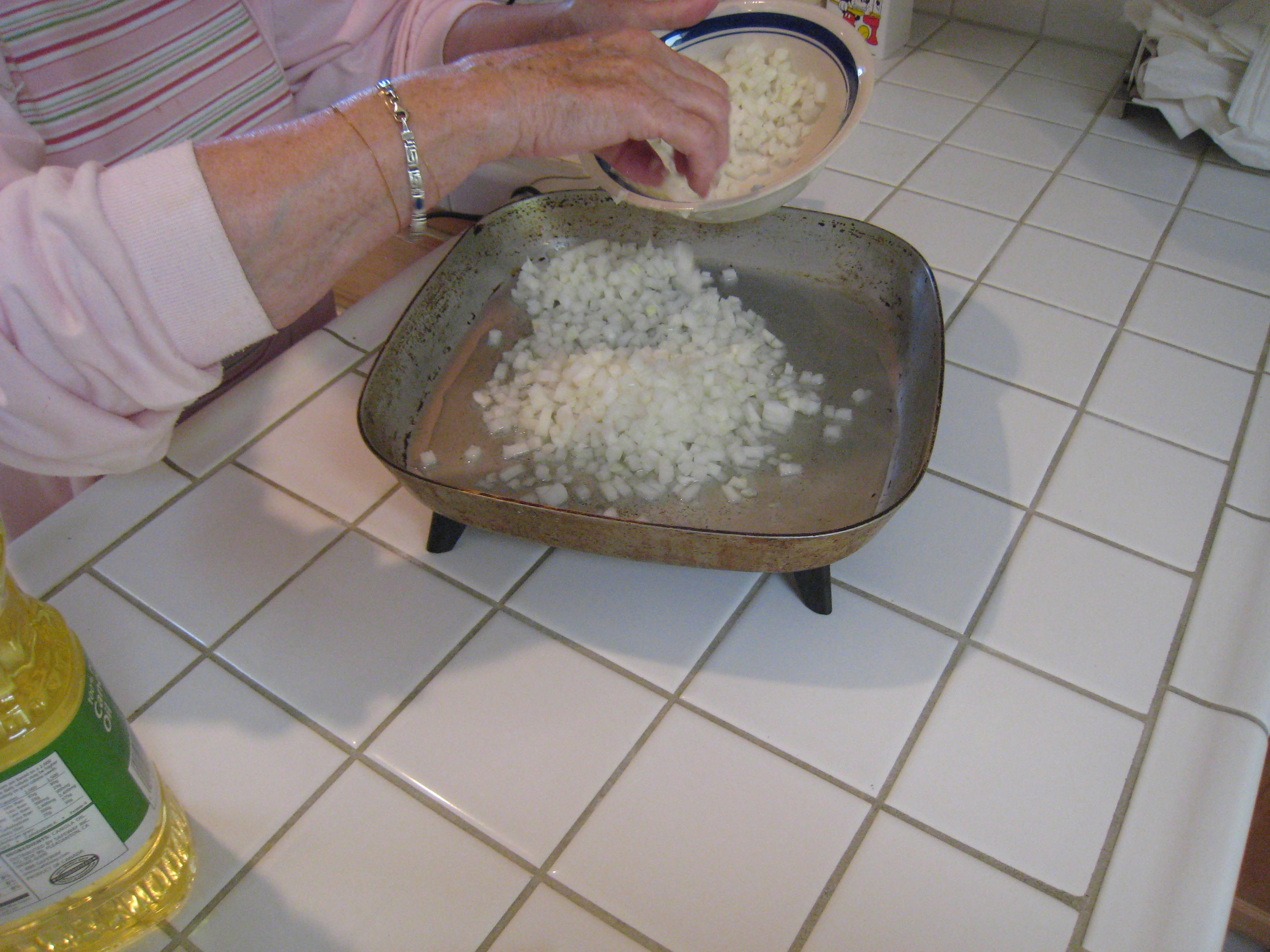
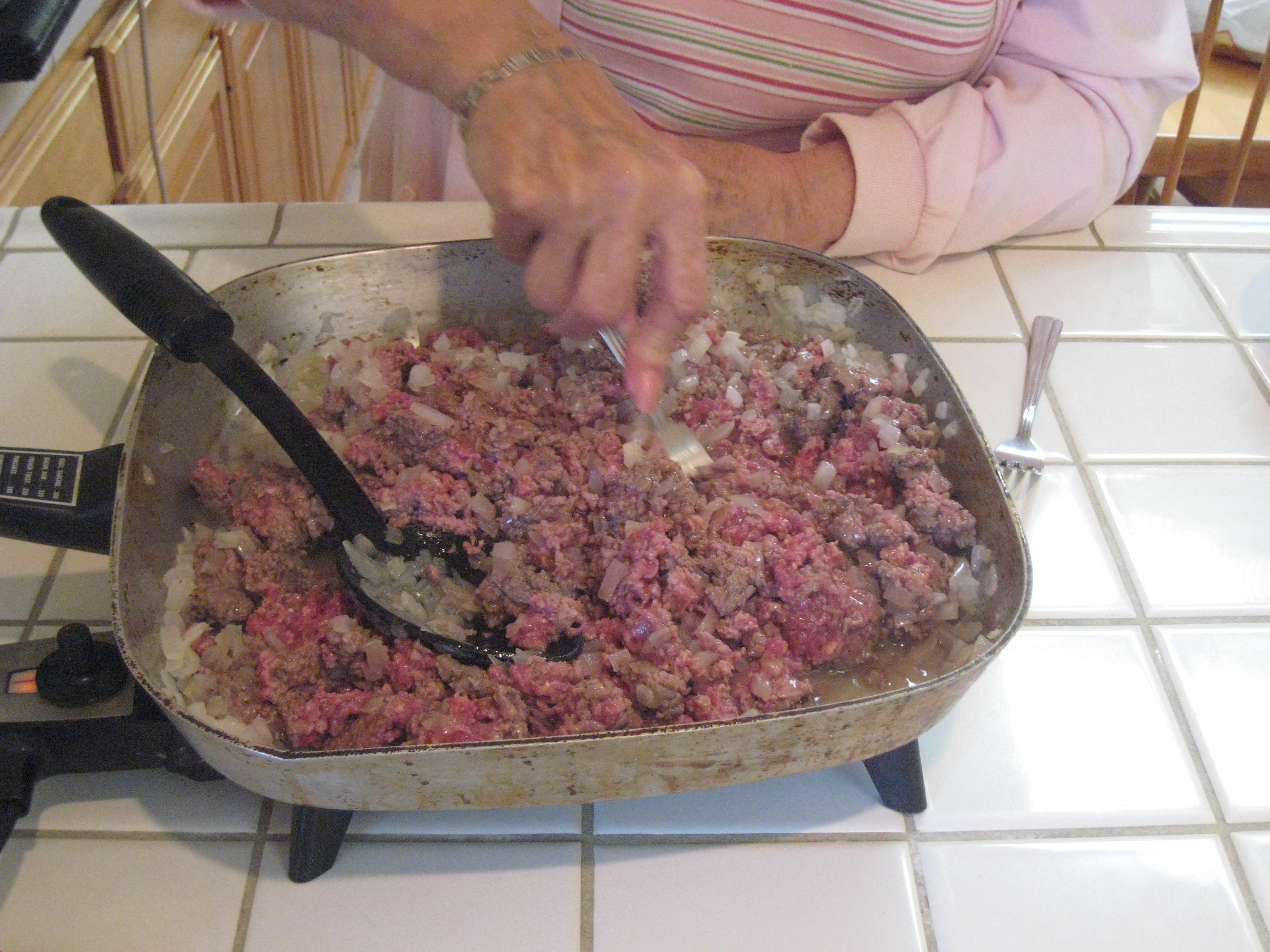
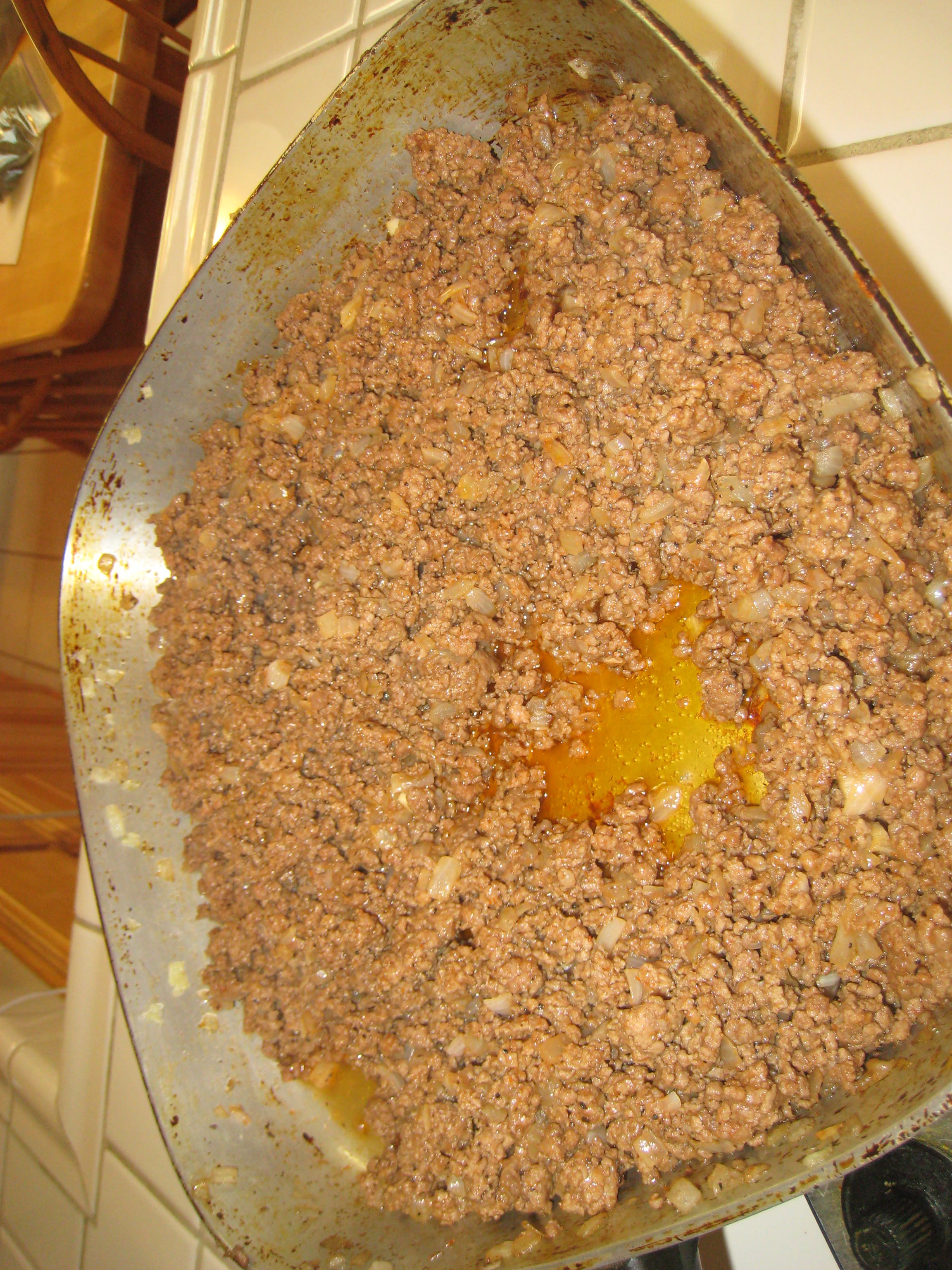
Brown meat with onions in oil; transfer to bowl and allow to cool. Add salt, pepper, parsley and farfel (or matzah). Add 2 beaten eggs at a time until 8 eggs are mixed in.

Grease 9 x 13 inch pan (pyrex type) and heat in oven for 2 – 3 minutes. Pour mixture into pan. Spread remaining 2 beaten eggs to top of mix. Bake at 400 degrees for 30 minutes or until golden brown. Allow to cool. Cut into squares and serve. Delish!!!!

As with all things Passover…..enjoy the opportunity to be with family and friends. Document your family recipes and traditions, cook together, enjoy the time. With each dish we serve and each traditional song we sing, we recall lovingly those family members who are no longer with us, whose recipes and memories are present at our table, and whose names we mention at various time throughout the evening (and throughout our many family gatherings).

As we retell the Passover story, so too, we retell our family stories. I love the fact that our sons, aged 19 and 23, “know” and talk about family members, several who passed away years before the boys were born…..but whose life lessons and stories are still very much a part of our family gatherings. Memories live on!

We would love to share some of your family stories with “Bendichas Manos” readers…..please feel free to send them on to us! Most important, share them at your seders. This keeps our histories and our stories alive!

~”Bendichas Manos”

Our Family’s Haroset

My cousin Sarita (Hasson Fields) is a great cook! She has learned our traditional family recipes and often adds a new and novel twist to update a dish and make it her own. She just finished making Haroset for our family Seder……a gathering of about 35+ at our cousin Leon’s home this year.

I always enjoy cooking with Sarita. On occasion, we’ve cooked with my mom and pass the time telling family stories of days gone by, reflecting, remembering and laughing. At times, she and I have cooked and try adapting recipes…..sometimes more successfully than others! Always a good time together. I wish we lived closer…especially when she was cooking today, so I could have filmed and photographed her making the Haroset.

Here is her recipe for Rhodesli Haroset, as made by her mom, Belina Beton Hasson (z’l) {*similar to the recipe in the Atlanta Sephardic Sisterhood Cookbook)…..for 35 people (with leftovers, for the many who like to take some home, and spread it on matzah for a treat!!) You can cut it in half ( or quarter), depending on the size of your crowd.

50 – 60 oz pitted dates
10 large red apples peeled and chopped
5 – 6 C finely chopped nuts (pecans and walnuts)
1 1/2 C sweet red wine
1/2 C white vinegar

Place apples and dates in a pot and cover with water. Cook until soft. Drain and let cool a bit. Place apple/date mixture in food processor and puree, a batch at a time. Add wine to mixture. Add chopped nuts. Add vinegar.
(Sarita’s note…..mixture should not be watery. If it is, add more nuts; if it seems too hard, add more wine.)

It is definitely delicious. Give it a try…..and let us know what you think! “Bendichas Manos”!

Keftes di Prassa con Carne AND an Egyptian Leek Mina

I posted the recipe for Kefte di Prassa (leek patties) earlier this week. The recipe is as my mom has made them for all the years I can remember. Morrie Y. Angel has asked for a recipe that includes meat. Although we’ve never made them this way, I recall a year that Lenora (di Morris) Mizrahi (z’l) made them with meat and brought them to our Seder. I called her daughter, June Grossman, to see if she could share the recipe. She referred me to her sister-in-law, Sue (di Edward) MIzrahi. Sue took out her cookbook, and found the recipe (“handwritten on a gin rummy score sheet of Morris and Lenora…. incidentally Lenora won that particular nightly game by 36 points”). These are family heirlooms! Here is Lenora Mizrahi’s recipe for Keftes di Prassa con Carne as shared by Sue:

10 medium leeks
2 large potatoes boiled and mashed (approximate 1 cup)
1 lb ground beef
2 eggs beaten
1 tsp salt
pepper (to taste)
1 tbs chopped parsley

oil for frying

Soak and clean leeks well. Cut leeks into 1/4 inch pieces and boil in water until soft. Boil potaoes until soft, about 15 minutes. Drain well. Add leeks and mashed potatoes and mix well with ground beef. Add eggs, chopped parsley, salt and pepper. Form into patties. Fry until golden brown. Remove from frying pan onto absorbent paper towels (on top of brown paper bags).
Can be frozen and then reheated.

*MW: I asked Sue how long she warmed them when removing from the freezer. She responded: “When I would ask Madre how long to cook them she would say…”Ija, you’ll know,” but I don’t…I just guess each time and hope for the best!!!”

A great recipe….and memories of a great lady!!! Thanks, Sue, for sharing the recipe (and stories!).

*******

In addition, I am linking a blog I enjoy called “the carrot and the jew”. There was a posting this week by Elizabeth Alpern where she writes about an ‘Egyptian Leek Mina’, a variation on our Pesah megina. Looks yummy! Check it out and perhaps, try something new this year!

Lots of cooking going on! Enjoy. “Bendichas Manos!”

Ashuplados (meringues),,,,,a Pesah treat!

Ashuplados!

Meringue clouds…..a divine confection of the Gods!  A special occasion delicacy passed down by our grandmothers !

Growing up, we knew it was a very special occasion when Grandma made Ashuplados……meringue clouds!  Sweet….light as a feather, a light shell on the outside. Texture, sweetness……simply….divine!!!

They look beautiful on a sweet table, and delight young and more mature and sophisticated palettes alike!

These are one of my mom’s signature delicacies.  Last year, we prepared this post when my mom made these for my young cousin’s  “Banyo di Novia”. (She prepared them again this month for the Brit Milah and Pidyon haBen of the new baby son of the same cousin……mashala!!!) They are a superb Pesah treat, as well. Continue reading

Baklava…and pictures from our cooking day for the Rhodesli Luncheon

What a joy it was, being with some of my favorite people at Sephardic Temple Tifereth Israel in Los Angeles as we prepared for our Rhodesli Luncheon. Spending many hours on their feet, this group came, recipes in hand, ready to prepare our traditional dishes with love. All were willing to share their recipes, techniques and ideas, and encouraged others to participate and learn. Their time and effort is greatly appreciated…..and the love came through in the delicious foods they prepared and served at the luncheon!

This slideshow requires JavaScript.

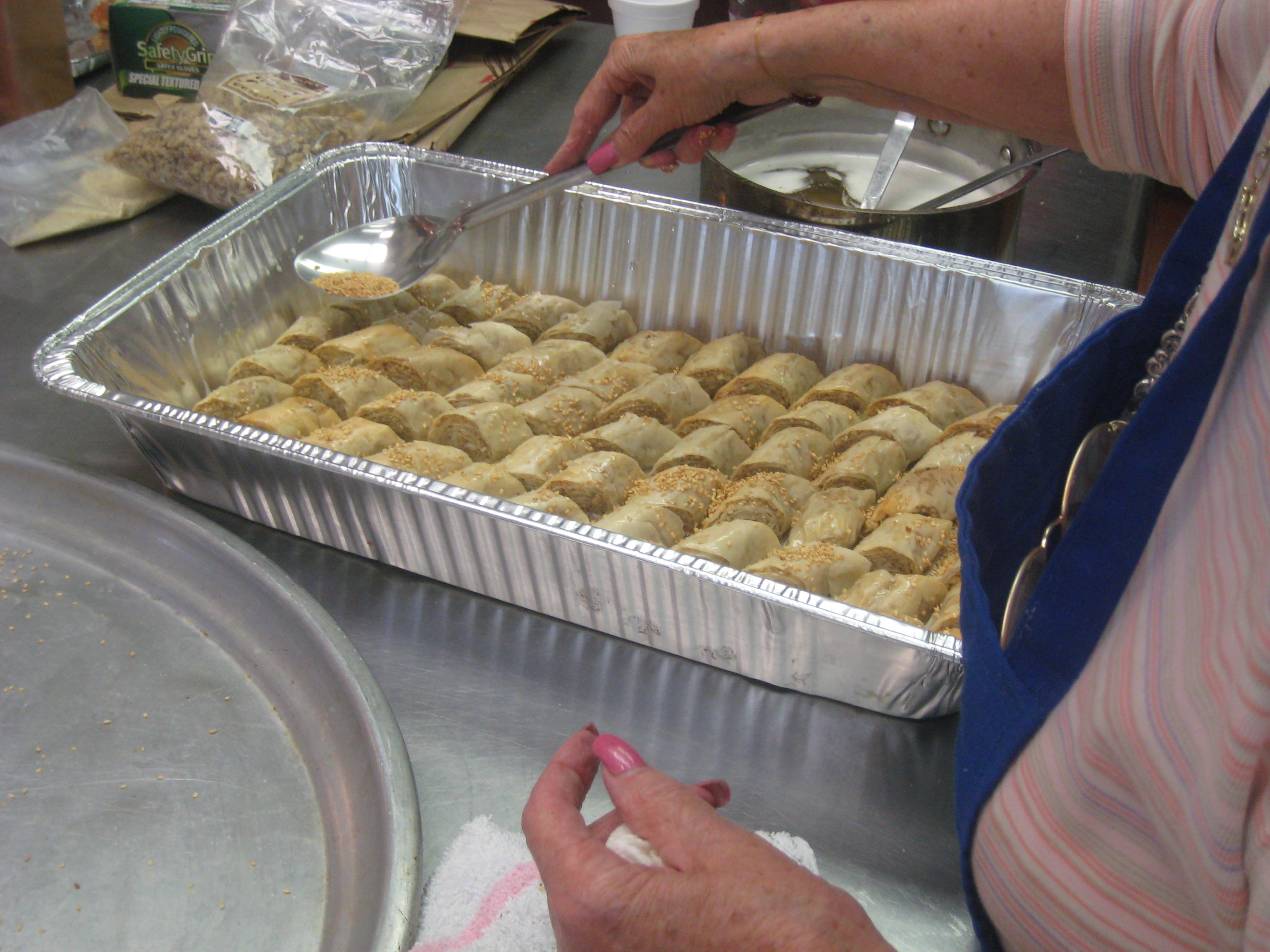
Baklava is a sweet pastry made of layers of Filo dough filled with chopped nuts and bathed in a sweet syrup. It is labeled as a Turkish, Greek or any of a variety of Middle Eastern delicacy. Our families made it on the Island of Rhodes, so we claim it as our own.

There are many variation in making Baklava. Different communities feature different nut mixtures and dIfferent configurations when baking. My mom makes a rolled variety. Here is her recipe:

Kaye Hasson Israel makes Baklava

ingredients:

1 Lb prepared FIlo Dough
5 Cups almonds, ground (or other nuts of your choosing)
1 C Sugar
1/2 tsp ground Cinnamon
1 tsp ground cloves
1 C oil in a small bowl.
1/2 C Tasted Sesame Seeds (optional)

Prepare a mixture using ground nuts, sugar, cinnamon and gloves. Set aside.

Open package of Filo. Keep moist and usable by placing a moist cloth over the waxed paper covered batch of Filo that you are not currently using ( otherwise, Filo has a tendency to dry out).

Place one layer of Filo on your work surface. Brush with oil. Place a second layer of Filo directly on top. Brush second layer with oil.

Sprinkle nut mixture in a thin, even layer on brushed Filo. Top with one additional sheet of Filo. Brush with oil.

Begin to roll Filo tightly. Slice rolled Filo log at a diagonal. Cut approximately 1 inch in length. Place cut pieces on a cookie sheet, lined with parchment paper.

Bake in a 350 degree oven for approximately 20 minutes (Since ovens vary, watch as it bakes…when it begins to take on color, you can remove from the oven)

Allow to cool.

In the meantime, prepare syrup.

Syrup ingredients:

1 1/2 C Honey
1 1/2 C Sugar
1 C Water

Combine all ingredients. Boil on stove. Cook until it becomes “sticky” (if you have a cooled bit between your fingers, it should form “strings”)

When syrup is ready, pour over tray of baked Baklava. Allow syrup to soak in.

For serving, “soaked” piece of Baklava can be placed in size-to-fit paper Bake Cups (often called Cupcake liners) and placed on a serving platter.

Divine!!!!!

My good friend, Linda Capeloto Sendowski, in addition to being one of the most fun and positive people I know, is a veteran gourmet food blogger. She has published a video of my mom making Baklava as well as a few photos of our cooking day on her blog, The Boreka Diary. Check her blog often…. she is a wonderfully creative cook!

Aron Hasson has also published some pctures on the Rhodes Jewish Museum site. Another fun site to browse!!!

Enjoy visiting our sites….tell us about your cooking adventures.

Bendichas Manos!!!!

Fasulia (Green Beans a la Turka) {with added video!!}

For our last Rhodesli luncheon, we decided to have a homemade meal, “comida di casa”. Cooking for our families…we can do. Cooking for extended family gatherings, o.k. Cooking for a group of 100 (turned out to be 118)……a bit of a challenge!!!! However, an incredible group of volunteers made the arrangements, purchased and carted all the necessary ingredients, brought their recipes and energy and spent the day(s) in the Sisterhood Kitchen of STTI and got the job done!!!

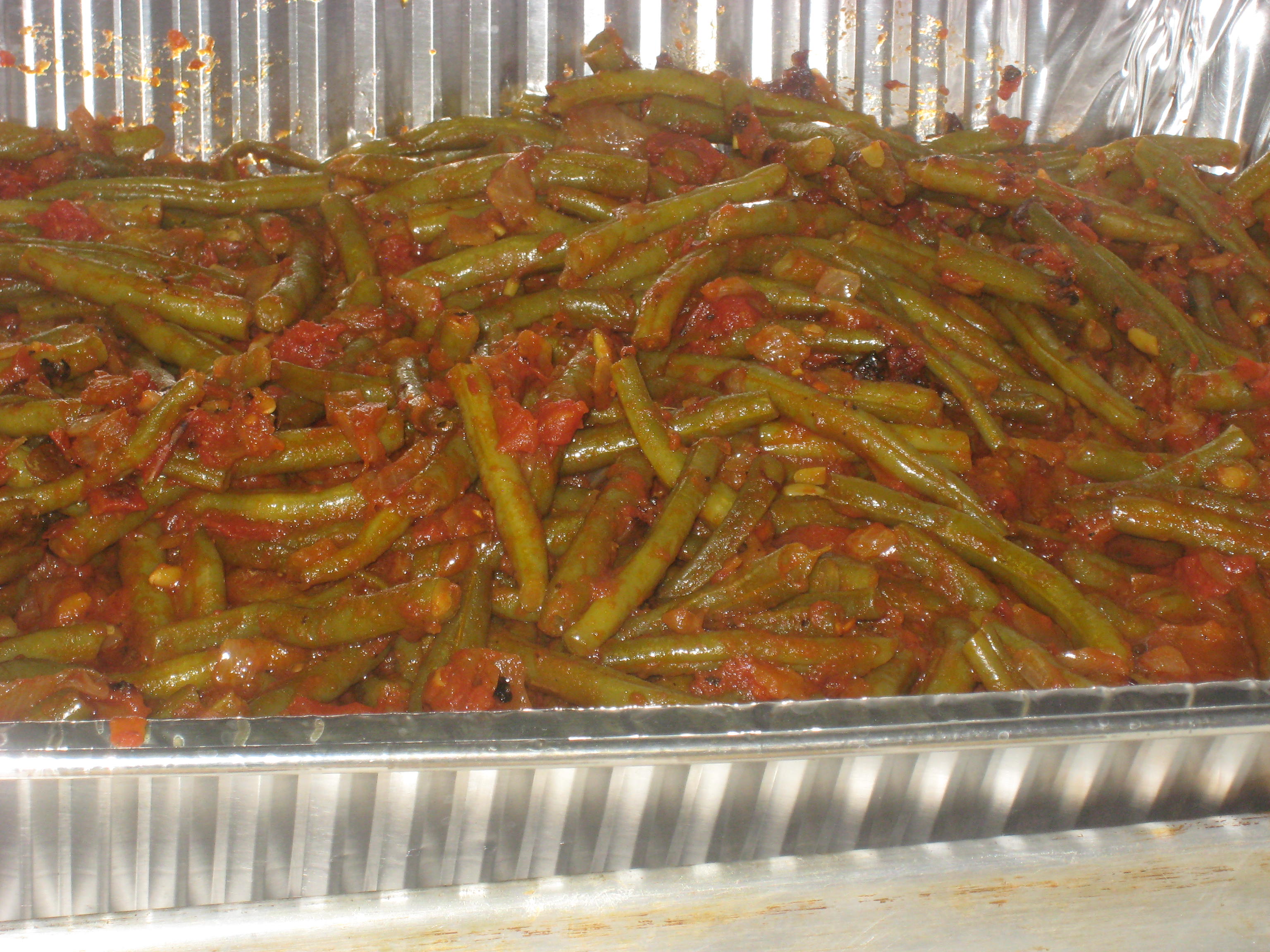
Morrie Y. Angel made Fasulia (green beans) for us!

Here he shares his ingredients list and recipes:

Fasulia
(Green Beans a la Turka)

3 – 4 lbs Fresh Green Beans
2 Onions, peeled and chopped
2 Tblsp Olive Oil
2 Cans ( 14.5 oz size) Diced Tomatoes (Morrie prefers Fire Roasted)
Juice of 1 Lemon
1 Tblsp Sugar
1 Small Can Tomato Sauce
Mrs. Dash Seasoning, to taste

Wash and cut tips off green beans. If bean seems too long, cut in half.
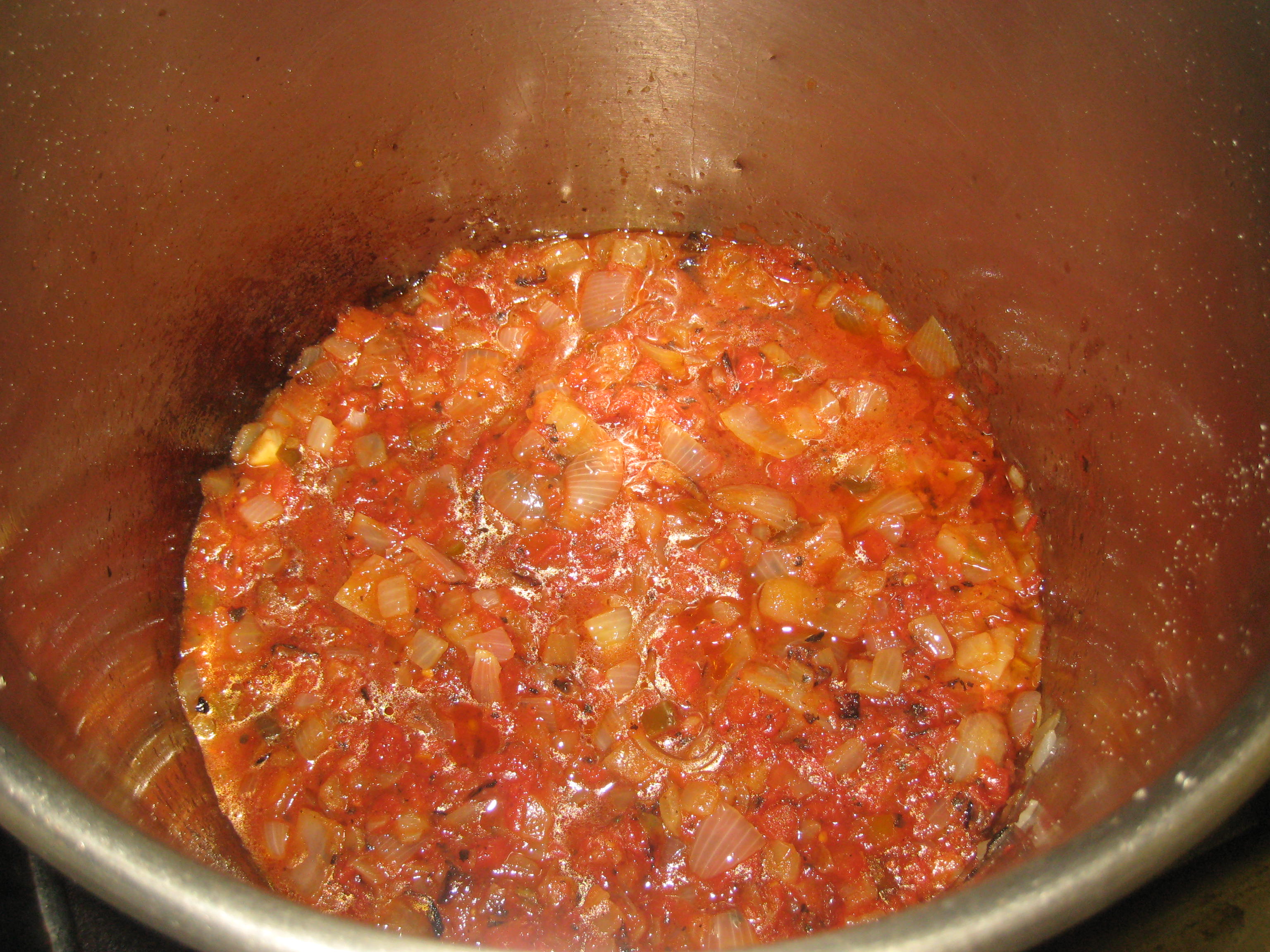
Saute chopped onions in 2 tblsp oil, until translucent.
Add two cans of diced tomatoes, juice of 1 lemon and 1 tblsp of sugar. Add Mrs. Dash’s Seasoning, to taste.
Simmer for 20 – 30 minutes.

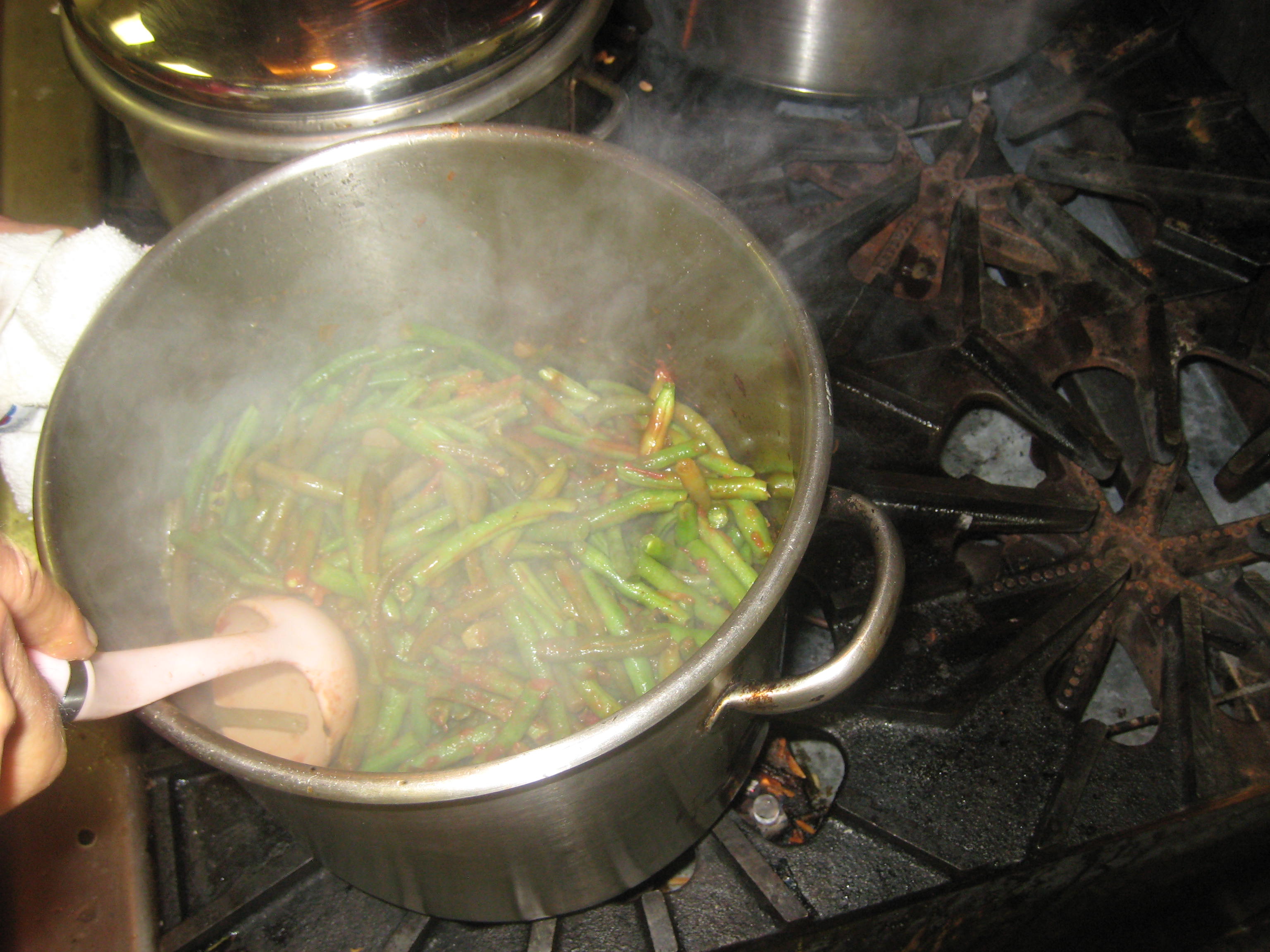
Add string beans to simmering sauce. Coat beans, bringing sauce up from bottom of pan. Add 1 small can of tomato sauce, for more “caldo” (sauce). Cook over medium heat for 1 hr, turning and basting every 15 minutes.

(editors note: Green beans were crisp, flavorful and excellent!!!!!!)

Pastelles (Pastelicos)…..Savory Meat Pies (updated with “how to” video)

Pastelles (Pastelicos)

 
Savory Meat Pies

Beautiful to behold – a delectably delightful treat!  Something special to add to a Meze (appetizer), or as part of a special meal!
My boys grew up enjoying the treat of their grandmother’s pastelicos.  I remember my mom taking them out of the oven and onto the “Bancu” (countertop) to cool. My two sons, playing that day with their cousins of similar ages, stopped by the kitchen a dozen times that afternoon….walking out with a fresh and warm pastelico each time!!!!  As my mom recalls, “a grandmothers true joy!”, seeing them enjoying the labor of her heart and hands!!!!
Pastelicos are made from the same dough as burekas ( a great dough to use for an All-American pie, as well!!)
When baking with my mom, we make the “conduchu” (filling) first.
 
Ingredients for Meat Filling
 
2 onions, peeled and diced
2 lbs ground beef
5 tsp tomatoe sauce
a dash of cayenne pepper (or pepper flakes) and garlic powder
Salt & Pepper to taste
1/4 C rice
1 egg
1/2 C chopped parsley
Parboil rice. To do so, bring 3/4 C water to a boil.  Add 1/4 C rinsed rice.  Cook covered on stove approximately 10 minutes on low/simmer heat.  Rice should be only partially cooked.
Next, in a large skillet (or electric frying pan) saute diced onions, using 3 -4 Tblsp of oil.
Add 2 lbs of ground beef and brown.  Add tomato sauce and spices, Add parboiled rice, followed by chopped parsley.  Add 1/4 C of water to mixture.   Cover and cook on medium heat until all water is absorbed. Add egg to mixture to bind.  Should take approximately 35-40 minutes to cook.
While cooking, begin making dough.
Ingredients for Dough ( to make pastelicos and burekas)
3 C Ice water
2 1/2 C oil
1 tsp salt
10 – 12 C flour
Put ice in measuring cup and ice water to 3 cups.
Add  oil and salt.
Incorporate flour into dough as you add it.  (Ice cubes will melt and/or will “pop up” and you will remove as dough is mixed.)
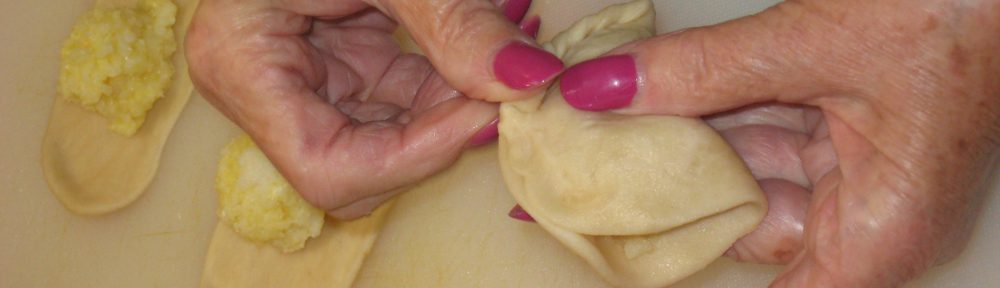
Once dough is ready, prepare balls the size of an apricot for the “cup”, and a ball the size of a walnut for the “hat”.
Using your thumb, open the “cup”. Fill with a scoop of the meat mixture.  
Take a walnut sized ball and dip it in a bowl of sesame seeds, then flatten. Place on top of the filled “cup” (sesame seed side facing out).  Crimp close the edges.  Place in a cupcake tin. (helps pastelicos keep their shape). Brush with an egg wash (beat an egg with a few drops of water).
Place in oven at 350 degrees,
Keep on lower shelf until bottom begins to turn color (golden)….about 20-25 minutes.  {this will depend on your particular oven.  Check a few times first time to be sure}.
Move to top shelf until tops are a gold color.
Pastelicos are delicious right out of the oven! (after a few minutes of cooling).  They freeze well.  Pack in airtight freezer bags or boxes.   To enjoy from the freezer, defrost (or zap in the microwave) and reheat at 350 degrees in the oven.
Enjoy!!   Bendichas Manos!!!

Mimouna….a celebration marking the end of Passover

Passover will end this Tuesday evening.  The Moroccan Jewish community marks the occasion with a wonderful celebration called “Mimouna”, an evening filled with symbolic foods,  special delicacies and good wishes. Thank you to Rabbi Daniel Bouskila for sharing this story about Mimouna with us to share with “Bendichas Manos” readers!

We are blessed with many and varied traditions in our communities…..May we all have the opportunity to share in this beautiful, traditional celebration at some point, and appreciate the “salad bowl”, the colorful and meaningful variety of those traditions we share.

http://www.tabletmag.com/life-and-religion/29821/it-is-risen/print/

It Is Risen

At the end of Passover festival known as Mimouna, Moroccan Jews return to yeasty treats in grand style

BY LARA RABINOVITCH | 7:00 am Apr 2, 2010

Many Jews will mark the end of Passover unceremoniously, with a slice or pizza or a piece of toast. Yet for Moroccan Jews, and increasingly for other Jews as well, the transition back to eating bread and other yeasty foods is celebrated in grand style with a feast known as Mimouna.

Traditionally, Mimouna is celebrated in Moroccan homes after sundown on the last day of Passover with a sumptuous spread piled high with sweet delectables, including stuffed dates, candies, brightly colored jams made of carrots, beets, or citrus fruits (known as mazune), and zabane (almond nougat). Most importantly, mufleta, thin pancakes doused in honey, are eaten with abandon. Thus in a similar way to how Yom Kippur is ended with an elaborate breakfast, on Mimouna tearing into a plate of freshly baked food signals the end of matzo-filled days and the start of something new.

The Mimouna table is not set as usual but is covered with “an array of symbols that are basically variations on a theme,” explains Continue reading

Ashuplados!!!! Meringue Clouds…..

Meringue clouds…..a divine confection of the Gods!  A special occasion delicacy passed down by our grandmothers !

Growing up, we knew it was a very special occasion when Grandma made Ashuplados……meringue clouds!  Sweet….light as a feather, a light shell on the outside. Texture, sweetness……simply….divine!!!

They look beautiful on a sweet table, and delight young and more mature and sophisticated palettes alike!

These are one of my mom’s signature delicacies.  They were prepared this week for my young cousin’s  “Banyo di Novia”.  They are a superb Pesah treat, as well. Continue reading