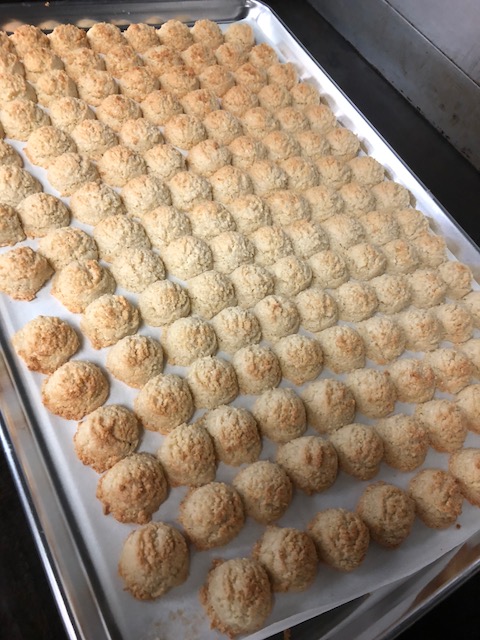
Marochinos are a favorite for Passover. My mom has taught a class at our synagogue, and several people have adopted these as a special pareve (non-dairy) dessert that they now make throughout the year. Thanks to the availability of Almond Flour (we like the Kirkland label at Costco), we can now make these even more easily! Give them a try and let us know what you think.
Ingredients:
2 C almond flour
1 C sugar
2 eggs…whites only
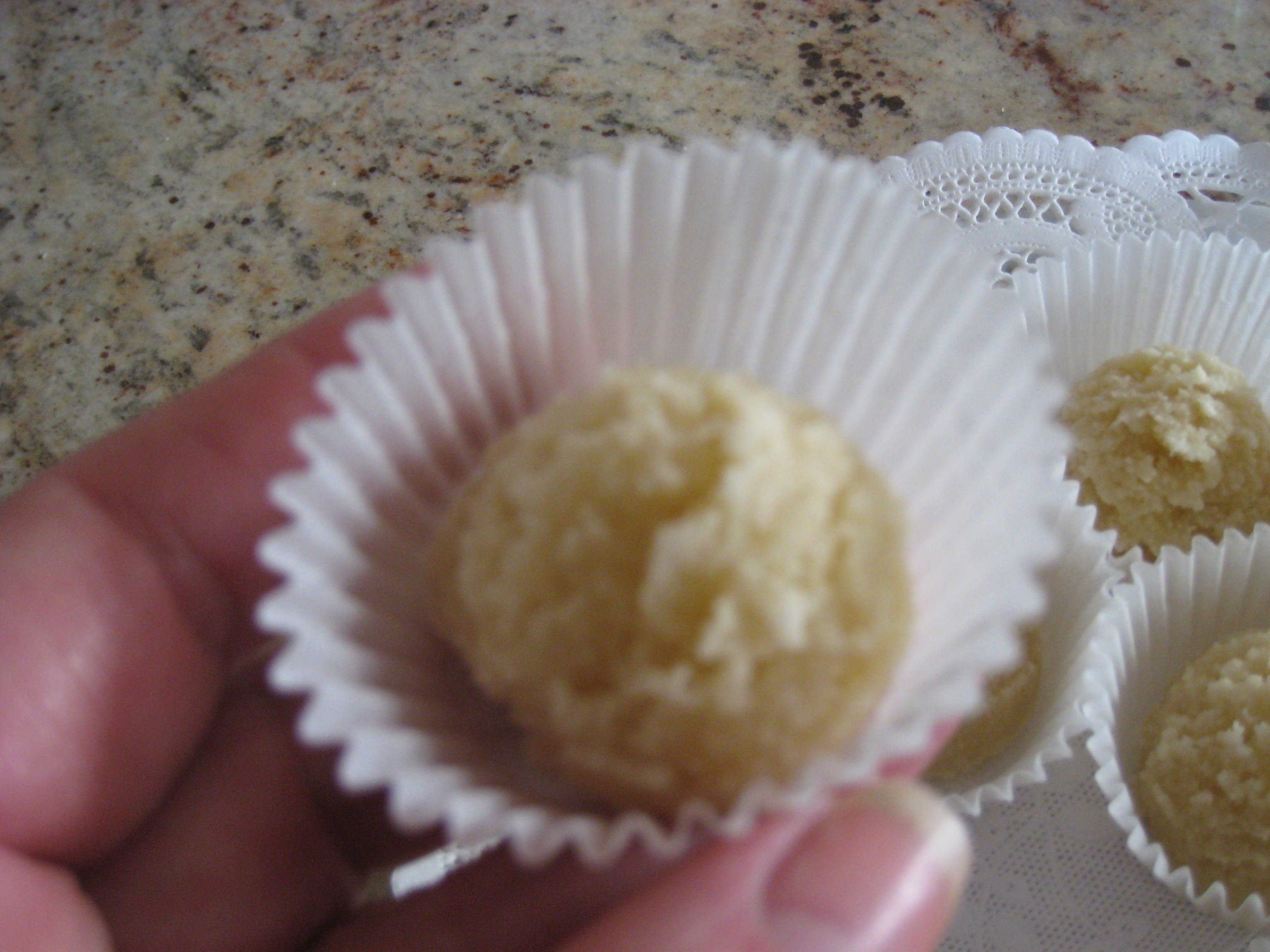
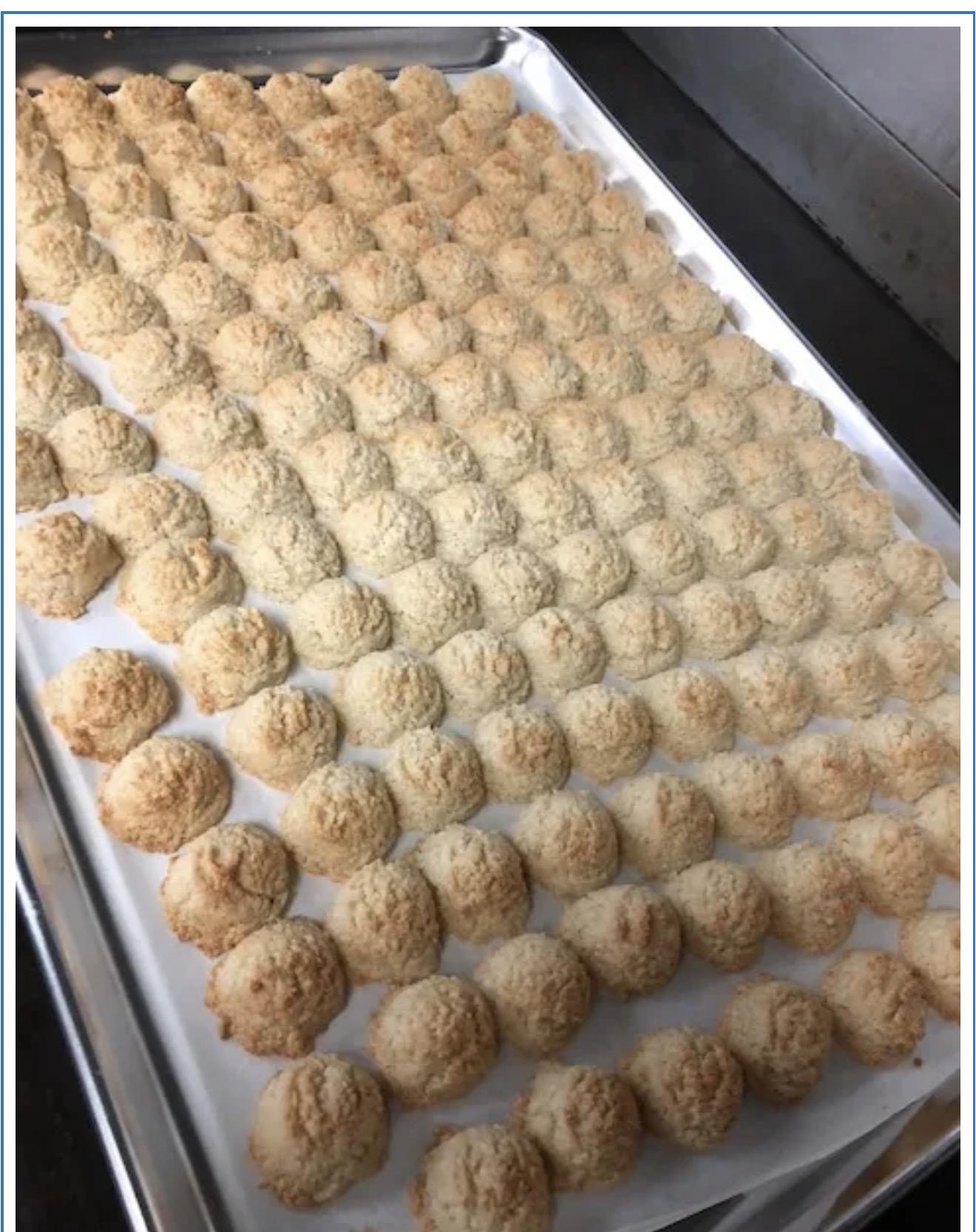
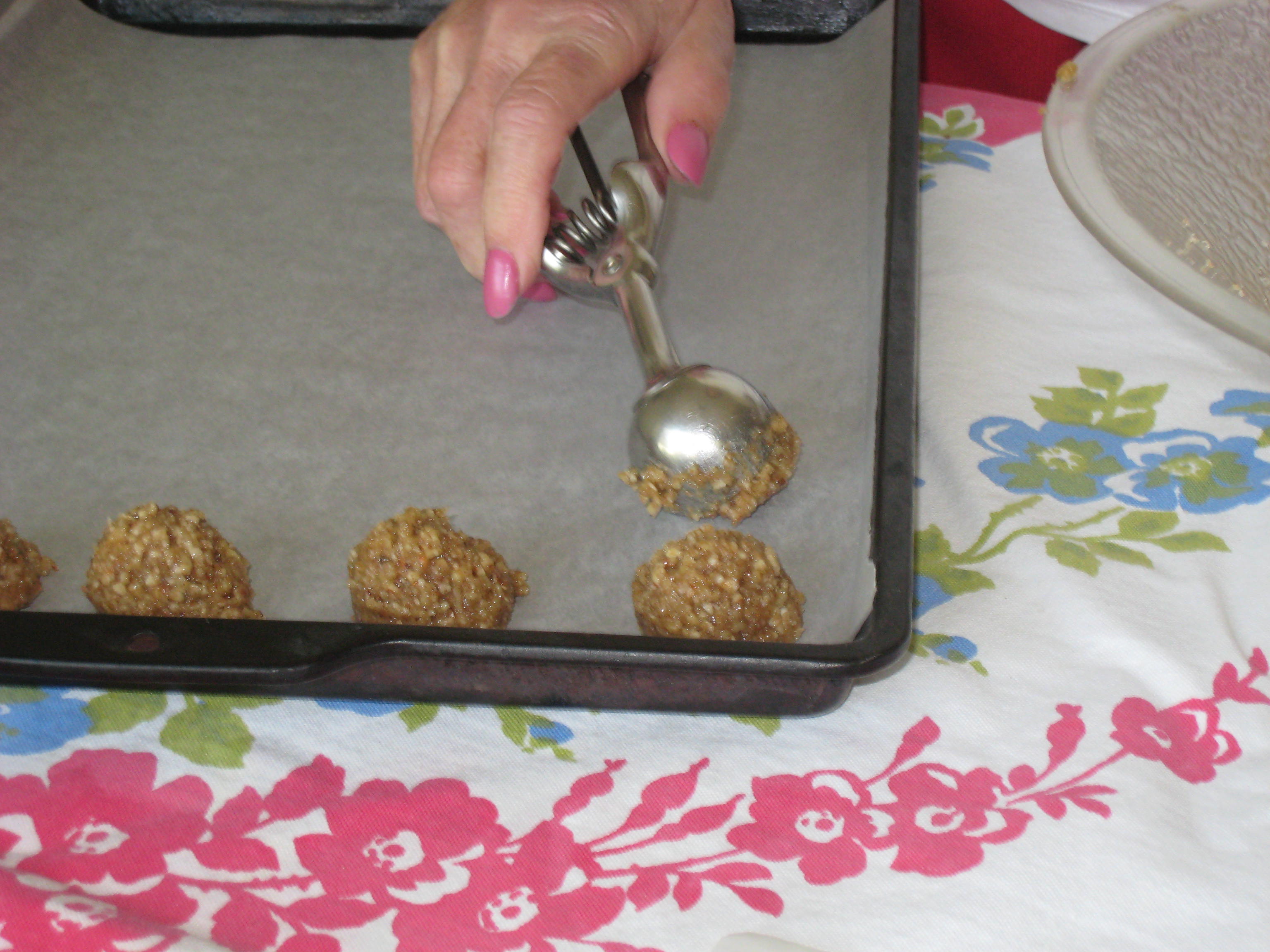
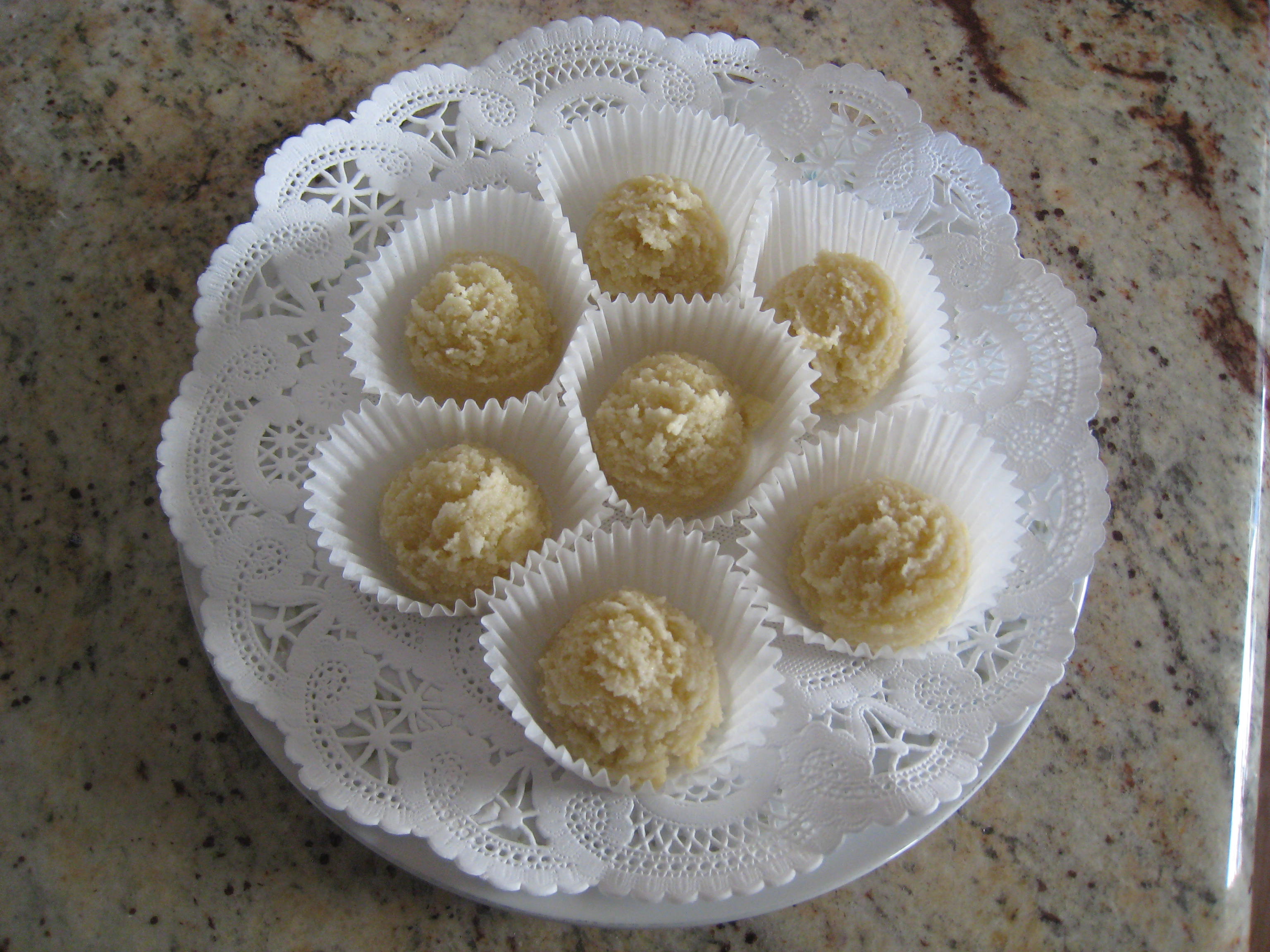
Mix all in a bowl. (Put on some kitchen gloves and mix it together) The consistency should be like a biscuit dough. Use a scoop or spoon to drop 1” apart on a parchment covered baking sheet. Bake in a preheated oven at 350 for 10 minutes, or until they just begin to brown. Allow to cool completely before handling; they will harden a bit as they cool.
Enjoy! Wishing all a meaningful (and delicious) Pesah.
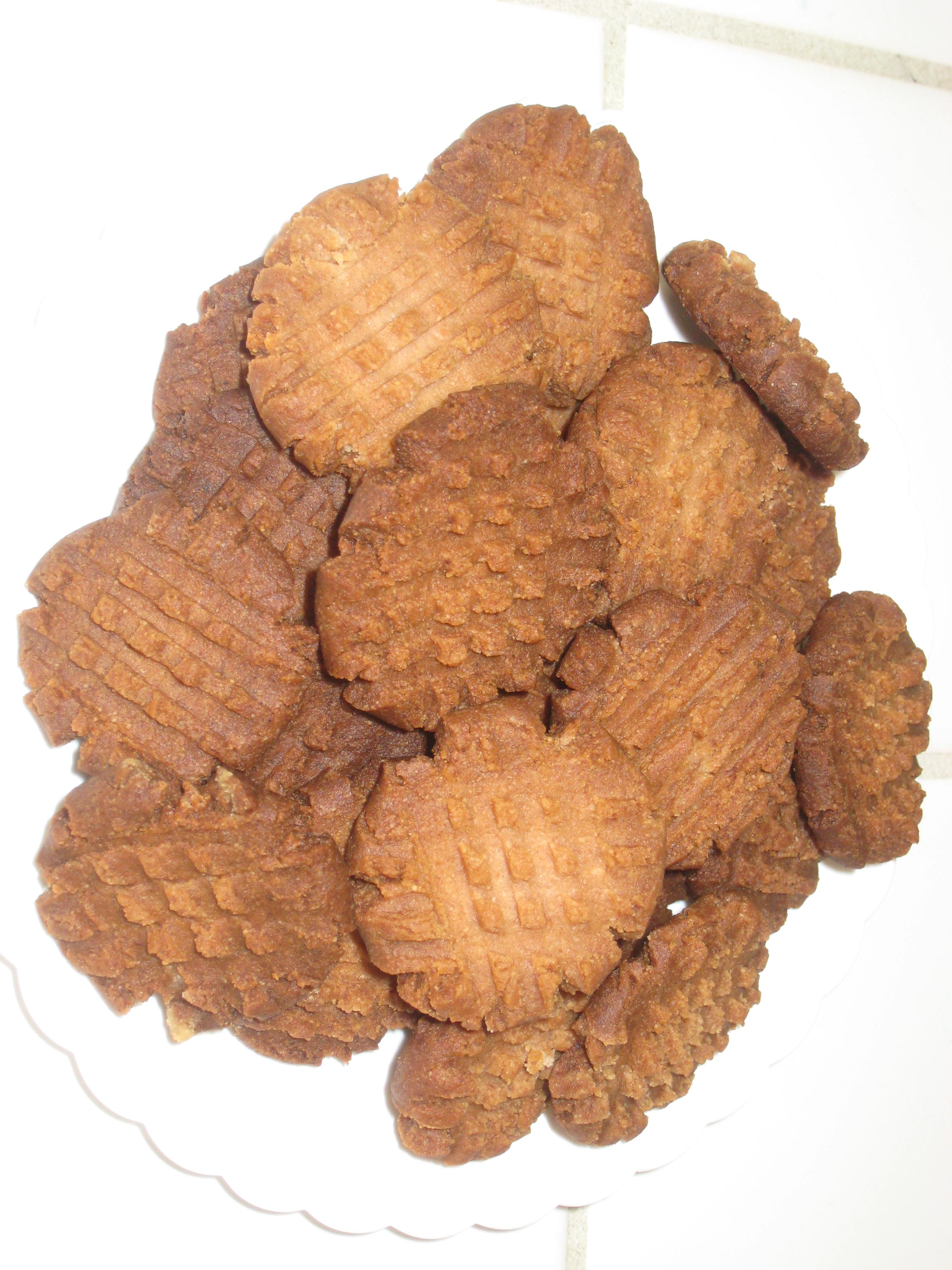
Each holiday has it’s special flavors and textures. One of the special treats we prepare for Pesah is “masa di vino”, a wine cookie with a delightful and unique taste and texture. They are easy to make and freeze well. My cousin, Leon Hasson, has become our ‘Go To’ guy for these treats……he has the recipe down pat to produce a crispy, flavorful cookie. Give them a try!
Ingredients:
1 C oil
3/4 C sweet wine
3/4 C sugar
1 egg
2 C Passover cake meal
1 C chopped nuts (optional)
1/2 C Passover potato starch
Mix sugar, oil and wine well. Add egg and dry ingredients.
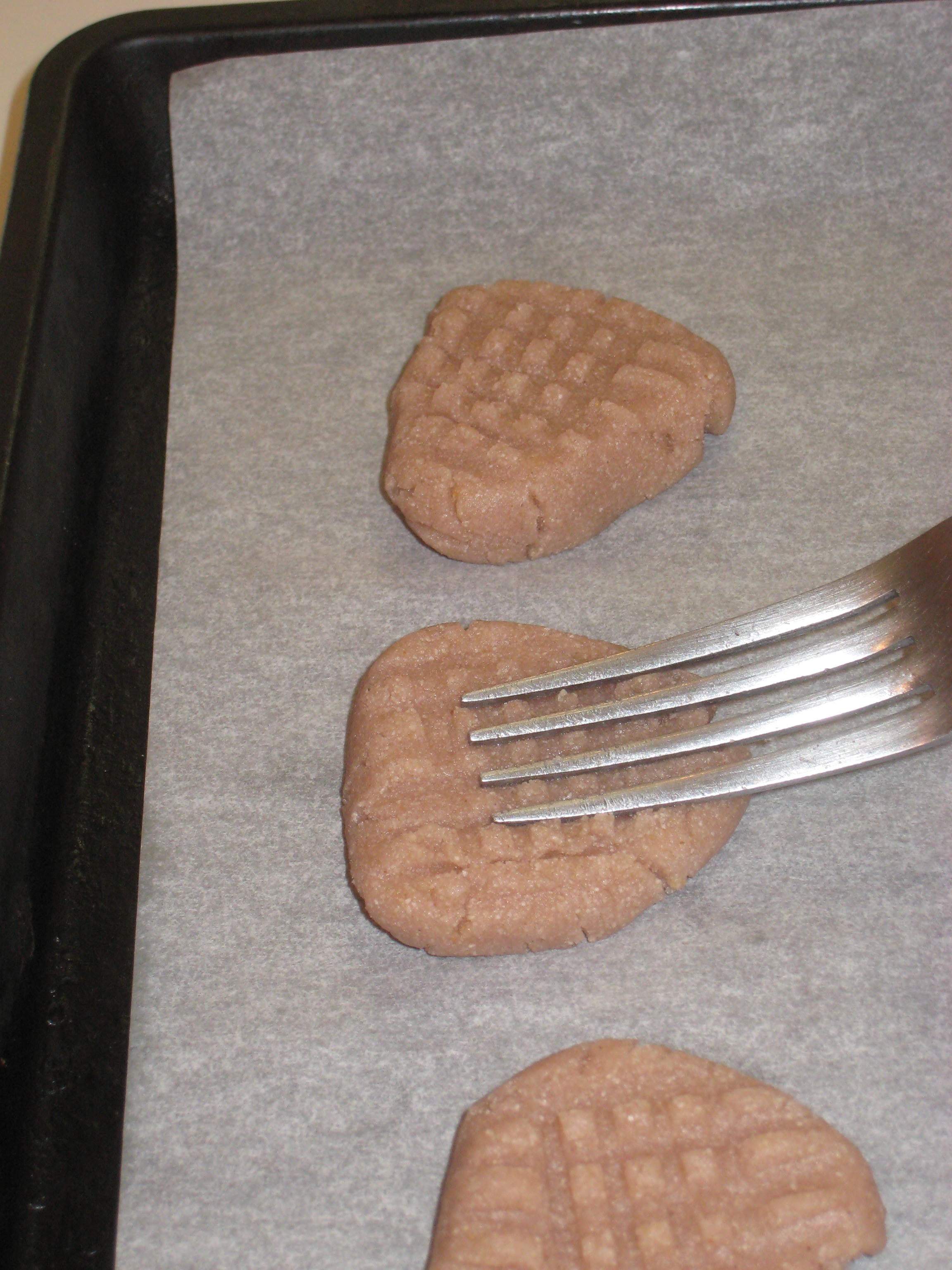
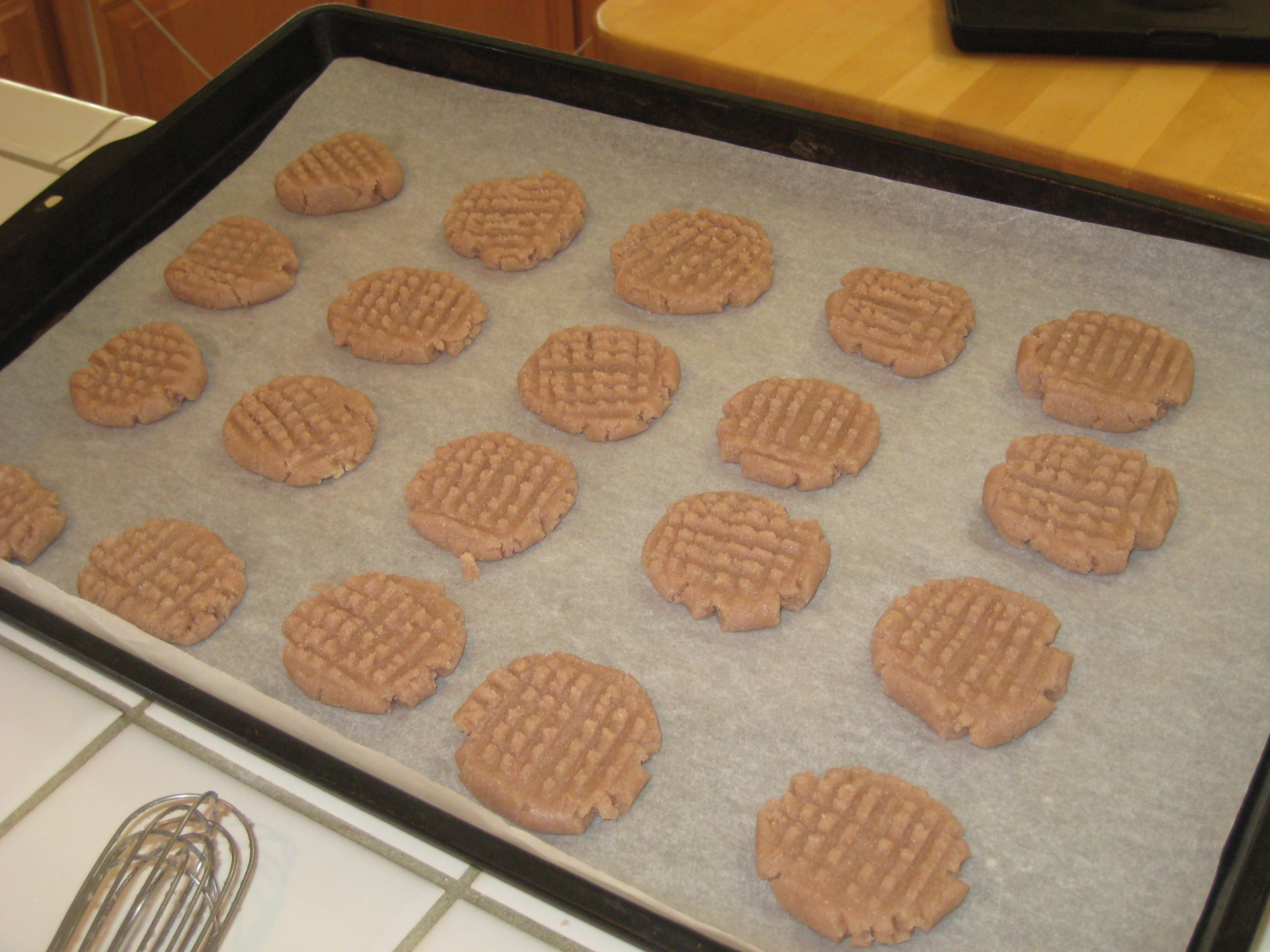
Take walnut sized pieces of dough. Roll into a ball. Place on a parchment lined cookie sheet.
Flatten by hand. With tines of a fork, press each cookie to produce a design.
My cousin Avi introduced the ‘Bibhilu’ to our Passover Seder, a beautiful Moroccan tradition which Rabbi Daniel Bouskila explains in an article in the Jewish Journal a few years ago. It is so deep and rich with meaning, so beautiful, that I am printing that story here (the link no longer seems to work.)
How beautiful and woven with richness is our tradition! May we all have opportunities to share these traditions and always add new ones to our families, as well!
Pesah blessings, my friends!
The Jewish Journal April 21, 2005 The Blessing of Bibhilu
A Sephardic ritual calls attention to God’s place at the seder table.
The Passover seder is both a reader’s experience and a moviegoer’s. We sit around the table and read the haggadah, and we also witness a host of rituals. But how does the seder leader creatively capture an audience and draw it into the experience from the beginning?
My father is neither novelist nor screenwriter, but from childhood he exposed me to a Moroccan seder ritual that immediately drew all those around the table into the full experience of a seder. This ritual is affectionately known amongst Moroccans as Bibhilu.
Following the kiddush, the karpas, and the yahatz (division of the matzah), the leader takes the brass seder plate, adorned with all of the ritual items, and he begins to walk around the table, waving the seder plate over each person’s head. As the plate is being waved, the entire gathering at the seder chants in unison: “Bibhilu yatsanu mimitsrayim” (“In a hurry we left Egypt”). When my father did this, each of us wondered whether he would simply wave the plate above our heads or knock us over the head with it. This ritual created lots of positive energy — between the anticipation of your turn under the plate and the chanting in unison of Bibhilu.
Yes, it’s a lot of fun. But is there a deeper spiritual meaning, or is this ritual simply some gimmick meant to create excitement among those who might be otherwise bored?
Throughout my life, I have always celebrated the seder in Moroccan fashion, Bibhilu and all. But only a few years ago did I first see a Moroccan haggadah.
At the beginning, there was, as in all haggadot, a drawing of the seder plate, illustrating the placement of each ritual item, which generally followed the Sephardic tradition. I had always known that Sephardic Jews arrange the seder plate differently than Ashkenazim, but again, I never knew why.
The Sephardic pattern, I knew, derives from tradition attributed to the great kabbalist from Safed known as the Ari (Rabbi Isaac Luria). In this haggadah, the drawing not only reflected the Ari’s Sephardic arrangement, but it added something that I had never seen, something which suddenly tied together for me the logic behind the Sephardic arrangement, and the reason behind the Moroccan Bibhilu ritual. Next to each ritual item on the plate was written one of the 10 kabbalistic sefirot, the mystical dimensions describing the sacred attributes of God. The three matzahs correspond to keter (crown), chochmah (wisdom) and binah (understanding); the shank bone corresponds to hesed (kindness); the egg corresponds to gevurah (strength); the bitter herbs correspond to tiferet (beauty); the charoset corresponds to netzach (victory), the karpas corresponds to hod (splendor), the hazeret corresponds to yesod (foundation); and the seder plate itself represents malchut (kingship).
It suddenly dawned upon me that, with this mystical arrangement, the seder plate is no longer just a platter carrying a selection of ritual items. The Ari’s Sephardic arrangement transformed the seder plate into a sacred representation of God, which means that when the seder plate is waved above your head during Bibhilu, you are being blessed by the spiritual strength of the Shekhina. The body of God, as represented by the sefirot, is now being waved above your head, and for the rest of the evening, the presence of the seder plate on the table represents the presence of the Shekhina in your midst.
From then on the Bibhilu ritual suddenly meant a lot more to me, because I now understood that, in addition to drawing in the audience, the Bibhilu ritual also represented a spiritual blessing for each participant as he or she prepares to set off on the haggadah’s storytelling journey from slavery to freedom.
As an American Jew raised in a Moroccan Jewish home, the Bibhilu ritual will always be part of my life. Having experienced it from childhood, and now coming full circle to understand its meaning, I will always look at the seder plate as a source of blessing and sanctity throughout the evening. Whether you are Moroccan or not, this ritual can become a powerful way to help infuse your seder with a newfound spiritual depth.
As it turns out, my father is now in a wheelchair, so he has transferred this privilege and responsibility to me. And yes, after all of those years under the seder plate, it’s lots of fun banging my father over the head while we all chant Bibhilu.
My cousin Sarita (Hasson Fields) is a great cook! She has learned our traditional family recipes and often adds a new and novel twist to update a dish and make it her own. She just finished making Haroset for our family Seder……a gathering of about 35+ at our cousin Leon’s home this year.
I always enjoy cooking with Sarita. On occasion, we’ve cooked with my mom and pass the time telling family stories of days gone by, reflecting, remembering and laughing. At times, she and I have cooked and try adapting recipes…..sometimes more successfully than others! Always a good time together. I wish we lived closer…especially when she was cooking today, so I could have filmed and photographed her making the Haroset.
Here is her recipe for Rhodesli Haroset, as made by her mom, Belina Beton Hasson (z’l) {*similar to the recipe in the Atlanta Sephardic Sisterhood Cookbook)…..for 35 people (with leftovers, for the many who like to take some home, and spread it on matzah for a treat!!) You can cut it in half ( or quarter), depending on the size of your crowd.
50 – 60 oz pitted dates 10 large red apples peeled and chopped 5 – 6 C finely chopped nuts (pecans and walnuts) 1 1/2 C sweet red wine 1/2 C white vinegar
Place apples and dates in a pot and cover with water. Cook until soft. Drain and let cool a bit. Place apple/date mixture in food processor and puree, a batch at a time. Add wine to mixture. Add chopped nuts. Add vinegar. (Sarita’s note…..mixture should not be watery. If it is, add more nuts; if it seems too hard, add more wine.)
It is definitely delicious. Give it a try…..and let us know what you think! “Bendichas Manos”!
Meringue clouds…..a divine confection of the Gods! A special occasion delicacy passed down by our grandmothers !
A perfect dessert to make for Passover.
Growing up, we knew it was a very special occasion when Grandma made Ashuplados……meringue clouds! Sweet….light as a feather, a light shell on the outside. Texture, sweetness……simply….divine!!!
They look beautiful on a sweet table, and delight young and more mature and sophisticated palettes alike!
These are one of my mom’s signature delicacies.
Give them a try! And let us know how they turn out!!
Kaye (Hasson) Israel’s Ashuplados
Ingredients:
1 ¾ Cup sugar
6 eggs – (you will use the whites ONLY)
Preheat oven to 400 degrees.
Separate eggs. Use whites ONLY. Place in a COMPLETELY dry mixing bowl. (moisture will adversely affect the creating of the meringue)
Using an electric stand mixer, begin mixing the egg whites and gradually add the sugar. Continuing beating on high for approximately 20 minutes. Mixing will be done when the mixture stands in very stiff peaks
Line two baking sheets with parchment paper. ( there was a time when brown paper bags were cut and used to line these pans to ensure a very dry surface. However, parchment seems a more sanitary alternative available these days!!)
Spoon mounds of the meringue onto the lined cookie sheets. Ashuplados can be made as large or small as you wish. My mom used heaping tablespoons to create these clouds.
We sprinkle nonpareils on top for a festive look.
Before putting them in the oven, TURN HEAT DOWN to 225 degrees. Bake for one hour.
Ashuplados can be made one day before serving. They are best enjoyed for a day or two after preparation. By the third or fourth day they become dry and are not as good as when first prepared. (* however, we have learned over the past few years that ashuplados freeze beautifully! Package delicately and freeze within the first day they are made).
A favorite for Pesah – or a good parve dessert year round
In our home, we have always used a variety of nuts in baking……almonds and walnuts, in particular. Moustachudos make a good Pesah dessert. The cloves give them a special “kick”. These treats can be made in advance and freeze well.
Ingredients for Moustachudos:
1 1/2 C pecans or walnuts, coarsely ground
1 1/2 C almonds, coarsely ground
3/4 C sugar
1/2 tsp cinnamon
1/2 tsp ground cloves
1 egg
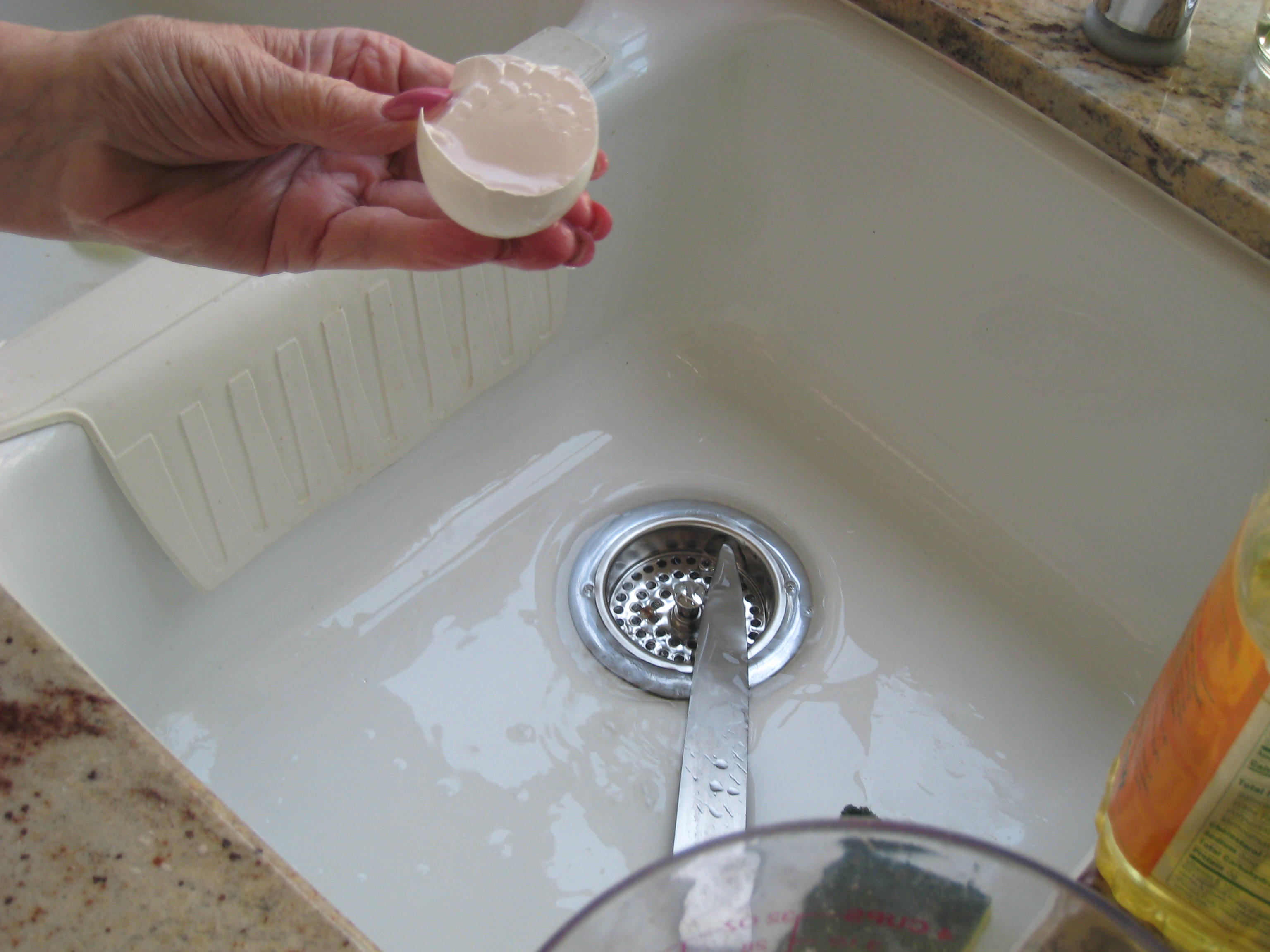
water – 1/2 eggshell full
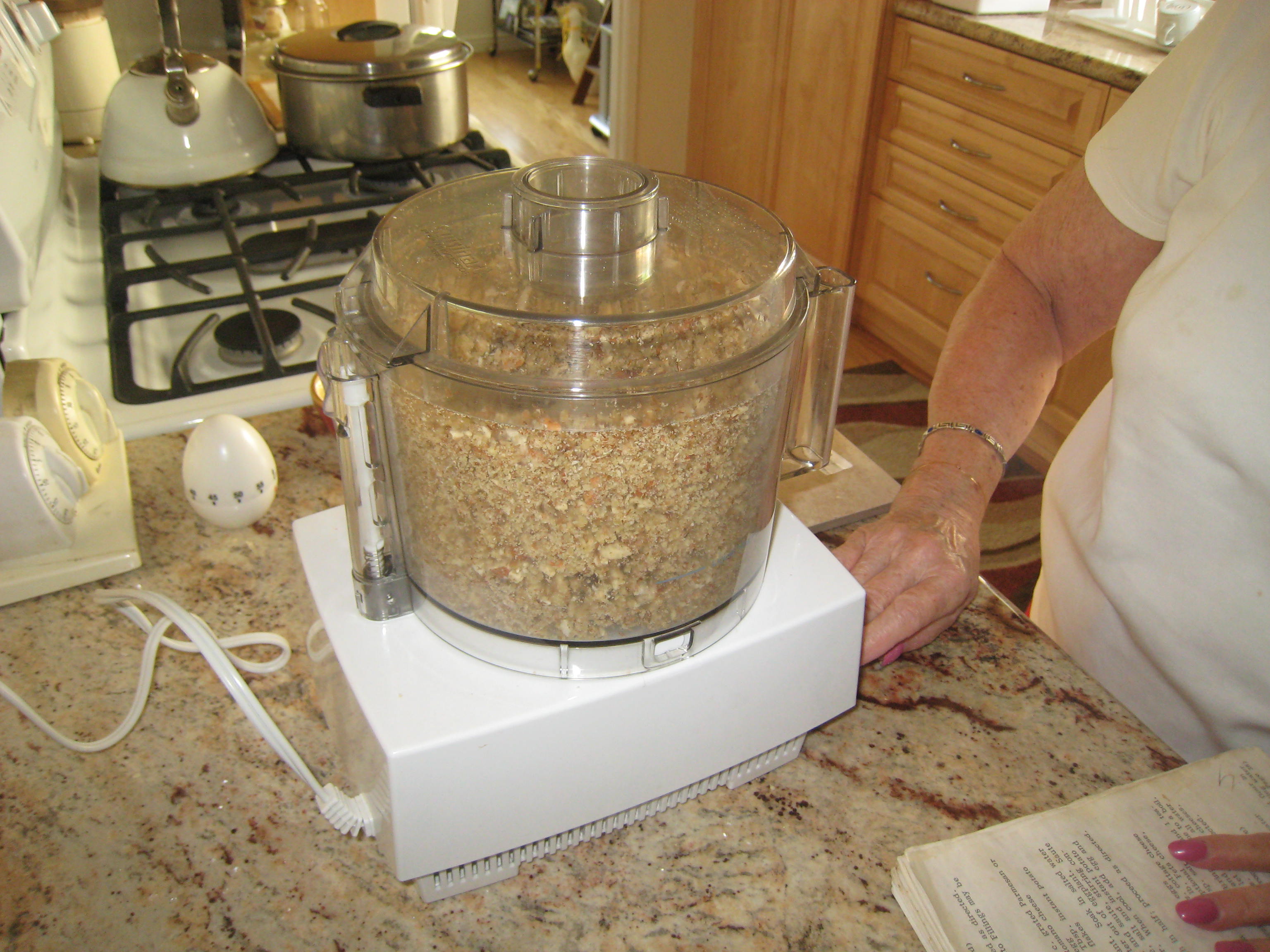
Coarsely grind all nuts.
Add other ingredients including 1/2 eggshell filled with water. (folks, that’s how it’s done!!)https://video.wordpress.com/embed/K3o9O2op?hd=0&autoPlay=0&permalink=1&loop=0&preloadContent=metadata&muted=0&playsinline=0&controls=1&cover=1
Shape into triangle or ball shapes about 1″ in diameter.
Place on cookie sheet lined with parchment paper. Bake for 5 or 10 minutes in a 400 degree oven until lightly brown.
Allow to cool and harden before removing from pan. Sprinkle with confectioners’ (powered) sugar.
A favorite for Pesah….delightful as a pareve dessert during the year!
Ingredients:
2 C blanched almonds
1 C sugar
2 eggs…whites only
Grind blanched almonds to near a fine consistency.
Mix in a bowl with sugar.
Add egg whites to almonds and sugar. Mix by hand until biscuit-dough consistency. Using a tablespoon or metal scoop, drop 1″ apart on cookie sheet lined with parchment paper. Bake for 10 minutes in a pre-heated 350 degree oven.
Allow to cool completely before handling. Will harden as they cool.
A favorite during Pesah and a great parve dessert during the year.
A few year back, my friend Murray Weiss and I were leaving a meeting and talking about the upcoming Passover holiday. Recalling our shared Sephardic backgrounds we started talking (rather singing to each other!) the various Ladino songs our families sing for this holiday. We knew the same top choices from the Sephardic Hit Parade. Then Murray asked about “Mos Abastava”… Mos what??? Murray told me it was the Ladino version of Daiyenu. Something brand new to me!
I saw my folks later and mentioned “Mos Abastava” which they both recalled with delight, saying that it was sung at their family Seders in their youth. We have included the words in our family Haggadah for this year, hoping it will become part of our collective tradition.
Bits and pieces of our tradition….sometime hidden for a awhile, only to be uncovered, recalled, reclaimed and shared again.
Here are the words of “Mos Abastava”, from the Passover Agada ; according to the Seattle Sephardic Tradition, 1995:
Ladino Version
Kuantos grados buenos a el Kriador sovre nos:
Si mos kitava de Ayifto, i non aziya en eyos justicias, mos abastava
Si aziya en eyos justicias, i non aziya en sus dioses, mos abastava
Si aziya en sus dioses, i non matava a sus mayores, mos abastava
Si matava a sus mayors, i non dava a nos a sus aciendas, mos abastava
Si dava a nos a sus aciendas, i non rasgava a nos a la mar, mos abastava
Si rasgava a nos a la mar, i non mos aziya pasar entre eya por lo seco, mos abastava
Si mos aziya pasar entre eya por lo seco, i non afinkava muestros angustiadores entre el, mos abastava
Si afinkava muetros angustiadores entre el, i non abastesia maestro menester en el dizierto cuarenta anyos, mos abastava
Si abastecia muestro menester en el dizierto cuarenta anyos, i non mos aziya comer a la magna, mos abastava
Si mos aziya comer a la magna, i non dava a nos a el Shabbath, mos abastava
Si dava a nos a el Shabbath, i non mos ayegava delantre monte de Sinai, mos abastava
Si mos ayegava delantre monte de Sinai, i non dava a nos a la ley, mos abastava
Si dava a nos a la ley, i non mos aziya entrar en tierra de Yisrael, mos abastava
Si mos aziya entrara en tierra de Yisrael, i non fraguava a nos a cas de el Santuvario, mos abastava
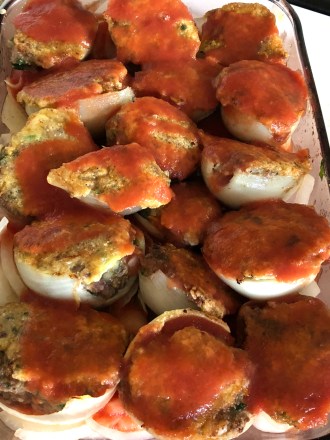
One of our family favorites is Sevollas Reinados, stuffed onions. Savory and delicious, with a simple substitution, it can be Pesah friendly, and always appreciated as part of a holiday meal. These are made with ground beef (although I prepare it with ground chicken which makes it a bit lighter, and my family prefers the taste.) Another item that can be made ahead and frozen. Give it a try and let us know what you think!
Approx 12 smaller sized onions
1 C matzah meal
1 lb ground beef
1 egg
S & P to taste
‘Handful’ of chopped parsley – I recommend 3/4 C (you can substitute or mix in cilantro for a punch)
1 beat egg and 1 C Matzah meal or Matzah Cake Flour to use to coat top of each before browning
Sauce:
I C tomato sauce
1 C water
1 tsp sugar
Cut onions in half lengthwise.
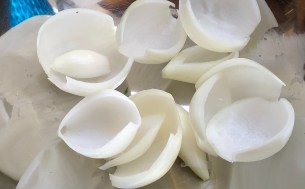
Separate outer layers in double thickness. (Save inner pieces)
Combine ground beef, egg, parsley, and chopped onion (from inner core saved when separating sections.) (You knew we’d use them sonewhere!). Add matzah meal.
Fill onion shells with this mixture
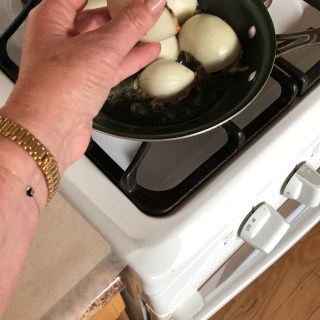
Dip meat side into the matzah meal or Pesah cake flour then into beaten egg before placing into frying pan with heated oil to brown.
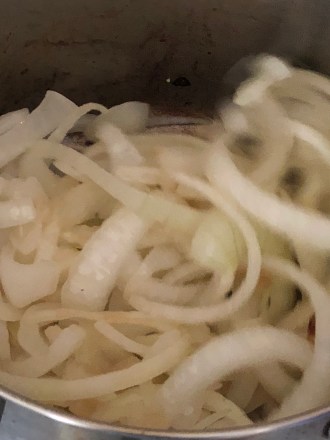
After browning, place meat side up in casserole pan in which bottom has been covered with remaining sliced and chopped onions.
Cover with sauce made of tomato sauce, water and a tsp of sugar. Cover casserole and bake in oven at 300 degrees for 1 hour.
This is one of many stuffed vegetable dishes we frequently prepare – stuffing tomatoes, zucchinis, small eggplants, bell peppers, cabbage leaves. During the year, instead of matzah meal we often add bread crumbs or softened slices of bread for a binder – some use potato flakes (I like to use Panko). Often, a ‘grainiko’ (a small grain – a handful) of rice is added to the meat mixture. { I would make a heartier sauce – tomato sauce, lemon juice, water, garlic, S & P – and simmer it while I prepare my vegetables. Then pour it over the vegetables. That would make much more ‘caldo’ (sauce) when the stuffed vegetables are served with rice and the sauce spooned over the rice – but that’s for another time during the year!}
So many dishes to prepare for the week! My mom has already started! There is megina (Meat and matzah quajado), Keftes de prassa (Leek patties), Bamya (okra), my cousin Sarita will make our family’s Haroset – then there’s the desserts – marochinos(almond macaroons), mustachudos (nut confections), ashuplados (meringue clouds)…… wow!
Some of the best memories are made while preparing and cooking for the holidays. Spend time with your families. Remember and reflect on holidays past – tell stories; remember relatives. L’dor v’dor. This is how we keep traditions fresh – how we keep memories alive.
Which reminds me – watch the movie ‘Coco,’ the Pixar/Disney film. Beautiful lessons on family, traditions, memory. Nice to share other’s cultural traditions – nice to know the similarities we share – the importance of family and memory. Beautiful film. Perfect season to share it.
Busy time in the kitchen. We’ll share more in the days to come. Looking forward to hearing of your menus, your traditions and your memories.
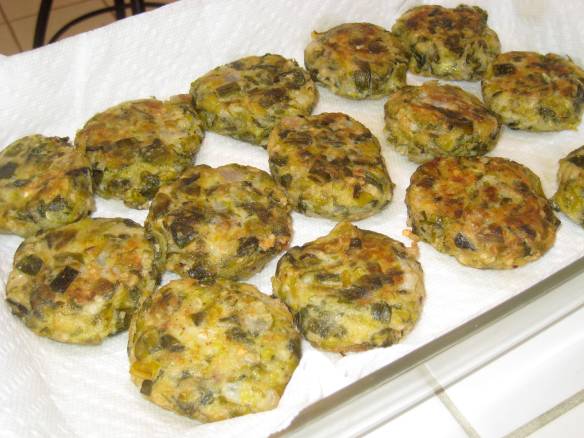
My Mom has gone shopping for fresh, beautiful leeks and is preparing leek patties for Passover evening. She knows they are a favorite for so many in our family and she wanted to make sure she had them made and ready for the family to enjoy!!
In our family, there are vegetarians – (other families make them with ground meat.) This is my mom’s method for Keftes de Prassa.
Ingredients:
1 large onion – chopped
8 medium stalks of leek
3 eggs
2 tblsp matzah meal
1 C mashed potato or 1 C mashed potato flakes
pepper to taste
*optional pinch of red pepper flakes
*****(One side note – for ease of preparation: Trader Joe’s has packages of pre-cut leek in the freezer section – cuts down on preparation time! Boil the leek for about 20 − 30 minutes until soft. Rise under cool water. Squeeze water from leek. (then squeeze again – and again. Then, just one more time – it is amazing how match liquid can be removed, and so doing will help ensure the best possible results. Separately chop and boil the onion in a pot of water. Then continue as below.)
Prepare leeks. Cut 1/4″ from top and bottom. Cut in half vertically. Soak and clean leeks throughly. (leeks, by nature, often have a good amount of fine dirt between leaves. Make sure to clean carefully) Cut into 1/2″ pieces.
Boil cut leek and chopped onion in a pot of water ( covering mixture), until vegetables are soft and limp.
Drain ( squeeze out) all liquid. Add additional ingredients. Blend into an even leek-onion mixture. Shape into patties.
Fry : 2/3 C oil
Fry on medium heat until both sides are slightly browned.
Drain on a paper towel. Divine freshly made…..can be frozen, sealed tight.
Defrost and place on a cookie sheet and warm in the oven at 300 degrees for about 10 minutes, or until warmed throughly.












 BendichasManos.com
